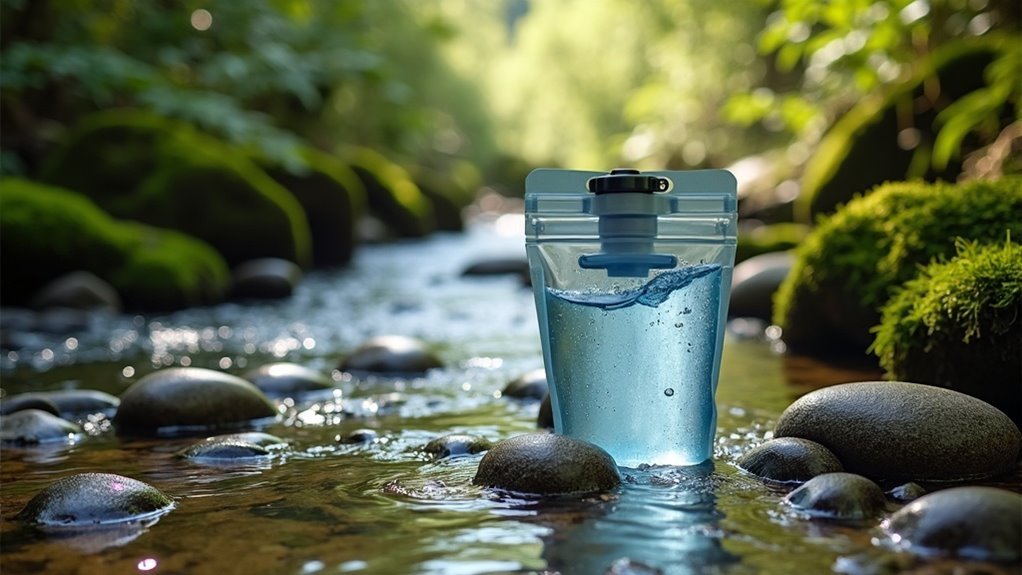
When backcountry hiking, filter water from clear, flowing streams or rivers upstream from campsites and livestock for the safest hydration. Avoid murky water, and consider using a filtration system like a Sawyer Squeeze or MSR Nano Filter. Chemical treatments, such as chlorine dioxide, can enhance safety, especially if visibility is low. Don’t forget to maintain a proper distance from trails while collecting water. Stick around to uncover more ways to guarantee your water is safe and invigorating.
Key Takeaways
- Choose clear, flowing water sources upstream from camping areas to minimize contamination risks.
- Utilize effective filtration methods like Sawyer Squeeze or Katadyn BeFree for safe drinking water.
- Consider chemical treatments such as chlorine dioxide to enhance water safety alongside filtration.
- Use UV purification devices like Steripen for quick treatment, ensuring the water is clear beforehand.
- Always collect water at least 200 feet away from trails and campsites to avoid pollutants.
Importance of Choosing the Right Water Source
When you’re out in the backcountry, choosing the right water source is essential for your health and safety.
Look for clear, flowing water from streams and rivers, as it’s less likely to be contaminated. Always avoid sources downstream from camping areas, agricultural fields, or livestock, since these can harbor harmful pathogens.
Upstream sources are your best bet, providing water that hasn’t been affected by pollutants. Stay clear of saltwater sources, too, which can lead to dehydration.
Recommended Water Filtration Techniques
After identifying a safe and reliable water source, the next step is filtering that water to guarantee it’s safe to drink. You can use a Sawyer Squeeze or Micro Squeeze filter for effective filtration from various water sources. For dirty water, pre-filtering with a bandana helps remove larger debris. In clear water, the Katadyn BeFree is quick and user-friendly. Here’s a quick comparison of filtration techniques:
| Filtration Technique | Best Use |
|---|---|
| Sawyer Squeeze | Direct from streams |
| MSR Nano Filter | Pre-filtering dirty water |
| Katadyn BeFree | Clear, flowing water |
| Gravity-fed filters | Larger groups |
| Inline filters | Direct drinking options |
Choose wisely to purify water safely!
Chemical Water Treatment Options
While filtering water is essential, chemical treatment options can offer an effective alternative or complement to your purification efforts.
Chlorine dioxide is highly recommended for purifying your water, as it effectively eliminates most pathogens with minimal aftertaste.
Iodine tablets are lightweight but can’t tackle Cryptosporidium, making them less reliable.
If you choose Aquamira, remember it can purify up to 30 gallons but requires proper mixing and a wait time of at least 20 minutes for safe, potable water.
Always verify accurate dosing for chlorine dioxide to guarantee your filtered water is safe and invigorating on your backcountry adventures!
Ultraviolet Light Purification Methods
Ultraviolet light purification is a powerful method to eliminate pathogens like bacteria, viruses, and protozoa from your water.
For the best results, make sure the water is clear, as any turbidity can hinder the UV light’s effectiveness.
With devices like the Steripen, you can easily treat your water in about 90 seconds, ensuring you stay safe and hydrated on your backcountry adventures.
Effectiveness Against Pathogens
When you’re hiking in the backcountry, ensuring your water is safe to drink is essential, and UV purification methods excel in this area. These methods effectively combat pathogens like bacteria, viruses, and protozoa by scrambling their DNA, making them unable to reproduce. They require just about 90 seconds of exposure to purify the water, making them one of the fastest options available. However, remember that UV Light won’t filter out solid particulates or chemicals, so pre-filtering dirty water is vital.
| Pathogen Type | Effectiveness | Notes |
|---|---|---|
| Bacteria | High | Kills common bacteria |
| Viruses | High | Effective against viruses |
| Protozoa | High | Targets harmful protozoa |
Ideal Water Conditions
For effective UV purification, it’s crucial to start with clear water, as any turbidity can markedly reduce the method’s efficacy.
If you encounter dirty water, use a pre-filter to remove particulates before treating it with UV light. This step guarantees the light penetrates effectively, making your water safe to drink.
After pre-filtering, swirl your UV bottle in the water for at least one minute for ideal water treatment.
Remember, while UV purification is excellent against all pathogens, it doesn’t remove solid debris.
My Personal Water Purification Preferences
Choosing the right water purification method can make all the difference during your backcountry hikes.
I personally prefer the Sawyer Squeeze for its lightweight design, effectively filtering dirty water from various sources. For clear, flowing water, the Katadyn BeFree filter offers quick access to safe drinking water without pumping.
I always pre-filter with my Sawyer Squeeze when using chemical treatments like Aquamira. It’s essential to carry a backup method, like iodine tablets, in case of failures.
Familiarity with water sources helps me filter strategically, maximizing both efficiency and safety.
- Lightweight systems
- Fast filtration
- Pre-filtering importance
- Backup methods
- Water source knowledge
Additional Tips for Safe Water Collection
When you’re out in the backcountry, knowing how to identify clean water sources is essential for your safety.
Use proper collection techniques to guarantee you’re gathering water without introducing contaminants, and always maintain good sanitation practices.
Identify Clean Water Sources
How can you guarantee that the water you collect during your backcountry adventures is safe to drink?
Start by identifying clean water sources. Here are some tips to verify you find the best water:
- Look for clear, flowing water like streams and rivers.
- Choose upstream locations, away from camping areas and runoff.
- Avoid proximity to trails and campsites—aim for at least 200 feet away.
- Inspect water clarity; murky water often harbors pathogens.
- Be cautious with seasonal changes that may impact water quality.
Use Proper Collection Techniques
To guarantee the water you collect during your backcountry hikes is safe, it’s essential to use proper collection techniques.
Always choose a clean, flowing water source like a stream, ideally upstream from campsites or agricultural areas to avoid contamination. Carry a wide-mouthed container and scoop water without letting it touch the inside, minimizing the risk of pathogens.
If the water appears murky, use a bandana or coffee filter to prefilter it before purification. Additionally, don’t forget to sanitize your hands and the container’s mouth before and after collecting to guarantee a safe and enjoyable experience for everyone.
Maintain Sanitation Practices
Maintaining sanitation practices during water collection is essential for ensuring the safety of your drinking supply. Follow these tips to avoid contamination:
- Choose clear, flowing water sources over stagnant ones.
- Wash your hands or use hand sanitizer before scooping water.
- Use a clean container, avoiding contact with the inside or spout.
- Filter the collected water through a cloth or coffee filter to remove particulates.
- Collect water upstream from campsites or agricultural areas to minimize risks.