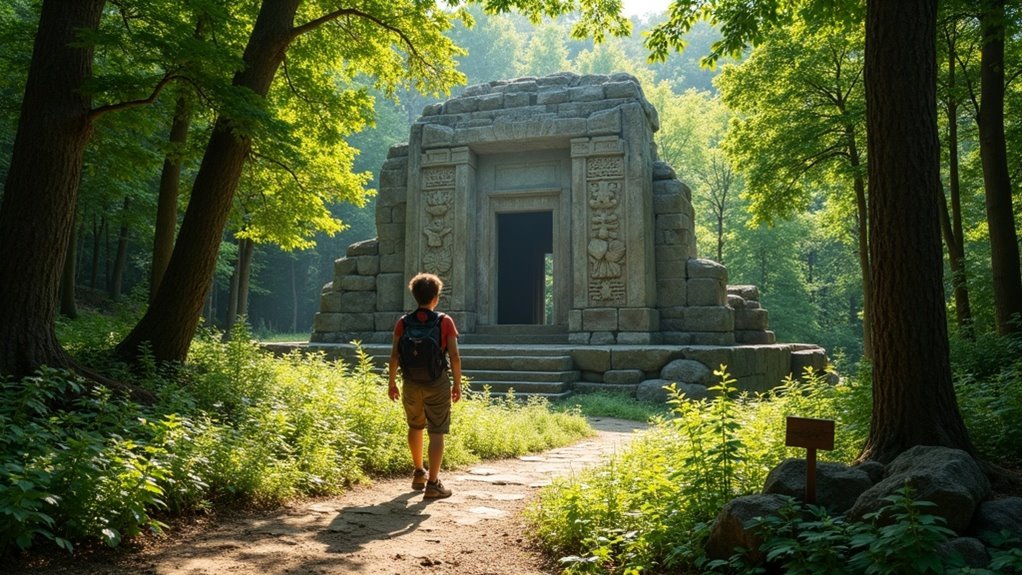
To respect cultural sites encountered on hiking trails, always seek permission from local Indigenous communities before visiting. Familiarize yourself with their customs and avoid disturbing fragile structures or removing artifacts. Practice Leave No Trace principles—pack out trash and minimize your impact. Observe ceremonies from a respectful distance and honor sacred spaces. Engage with local businesses and traditions to support sustainable tourism. There’s much more to learn about responsible behaviors that protect these invaluable heritage landmarks.
Key Takeaways
- Seek permission from local Indigenous communities before visiting sacred sites to honor their cultural protocols and stewardship.
- Avoid disturbing or removing artifacts and objects to preserve historical integrity and respect Indigenous meanings.
- Maintain a respectful distance during ceremonies and observe without interfering to honor sacred practices.
- Follow Leave No Trace principles by packing out trash and minimizing environmental impact during hikes.
- Engage with local communities and support their businesses to promote sustainable tourism and cultural appreciation.
Understanding the Importance of Cultural Sites
When you hike through areas rich in cultural heritage, you encounter sites that aren’t just remnants of the past but living connections to Indigenous peoples’ identities and histories.
These cultural resources, like rock art and ceremonial structures, hold profound spiritual significance for tribes such as the Navajo and Hopi. In places like Bears Ears National Monument, the preservation of these landmarks is vital for honoring the traditions of Indigenous people.
However, increased tourism can threaten these irreplaceable sites through erosion and vandalism. Understanding their importance fosters responsible visitation practices, ensuring these connections endure for future generations.
Leave No Trace Principles and Cultural Preservation
Understanding the significance of cultural sites is just the beginning; practicing Leave No Trace principles is vital for their preservation. By respecting sacred sites and minimizing your impact, you contribute to the integrity of these areas. Here’s how you can help:
| Action | Importance | Impact on Sacred Sites |
|---|---|---|
| Pack out trash | Protects landscapes | Reduces pollution |
| Avoid artifacts | Preserves historical knowledge | Maintains site integrity |
| Observe from afar | Respects local beliefs | Honors sacred time/space |
| Follow guidelines | Supports cultural preservation | Guarantees respectful engagement |
| Educate others | Spreads awareness | Fosters community respect |
Embrace these principles for future generations.
Seeking Permission and Respecting Local Customs
Respecting local customs and seeking permission before visiting sacred sites are essential steps in fostering a meaningful connection with the culture you’re engaging with.
Here are some guidelines to follow:
- Always seek permission from site caretakers or local indigenous groups.
- Familiarize yourself with local customs regarding attire and behavior.
- Understand unique beliefs about sacred time and space, approaching with sensitivity.
- Maintain a respectful distance during ceremonies and request permission before taking photographs.
Responsible Behavior at Sacred Sites
Visiting sacred sites requires a commitment to responsible behavior that honors the traditions and values of the cultures you encounter.
Always seek permission from site caretakers before entering sacred places, ensuring you respect cultural protocols.
Avoid walking on fragile ruins or entering ceremonial areas, as this can damage significant heritage.
Refrain from disturbing or removing objects, which hold deep meaning for Indigenous communities.
Observe ceremonies from a respectful distance, allowing practitioners to engage without distraction.
If appropriate, leave tangible offerings aligned with local customs, demonstrating your respect for the beliefs tied to sacred lands.
Your awareness fosters meaningful connections.
Photography Etiquette for Cultural Locations
When you approach cultural locations for photography, it’s crucial to recognize the significance these sites hold for local communities.
Adhering to proper photography etiquette guarantees respect for sacred spaces. Here are four key points to take into account:
- Always ask for permission before photographing, respecting local customs.
- Be mindful of the spiritual significance; avoid shooting during ceremonies.
- Maintain a respectful distance to honor the experience of others.
- Familiarize yourself with local attire and customs to promote appropriate behavior.
Avoiding Damage to Fragile Structures
When hiking near fragile structures, it’s essential to stay on designated paths, as wandering off-trail can cause erosion and damage.
Observing these sites from a distance helps preserve their integrity, allowing you to appreciate their beauty without risking harm.
Stay on Designated Paths
Staying on designated paths is essential for preserving fragile cultural structures, such as rock art and burial grounds, which are often vulnerable to damage from foot traffic.
By adhering to marked trails, you can:
- Prevent soil erosion and protect delicate vegetation.
- Maintain the ecological balance of fragile landscapes.
- Avoid disturbing sacred sites or artifacts.
- Enhance your hiking experience while showing respect for the land’s cultural history.
Following these guidelines guarantees that future generations can appreciate these sites, allowing them to remain untouched and meaningful.
Your mindful choices today can safeguard valuable cultural heritage for tomorrow.
Observe From a Distance
While exploring hiking trails, it’s crucial to observe sacred sites from a distance to protect their integrity and significance.
Sacred sites and archaeological sites often hold deep spiritual meaning for Indigenous communities. By maintaining distance, you minimize foot traffic that can erode or damage fragile structures like rock art and ceremonial areas.
This respectful approach aligns with the National Historic Preservation Act, which emphasizes safeguarding cultural resources. Engaging with these sites through designated viewing areas helps preserve their landscape while honoring traditional beliefs about sacred time and space.
Avoid Touching Structures
Touching or climbing on fragile cultural structures poses a significant risk, as even the slightest contact can lead to irreversible damage.
To protect these invaluable sites for future generations, you should:
- Keep your distance to avoid displacing materials.
- Observe cultural protocols that respect the integrity of the site.
- Engage with educational resources or ranger-led tours for deeper understanding.
- Be aware of legal protections, as damaging structures may lead to fines.
Supporting Indigenous Perspectives on Preservation
When you encounter cultural sites on hiking trails, it’s essential to integrate Indigenous knowledge and practices into your experience.
This means approaching these sacred spaces with cultural sensitivity and seeking to understand the local customs that shape their significance.
Indigenous Knowledge Integration
Integrating Indigenous knowledge into conservation efforts is essential for preserving the cultural and ecological integrity of sacred sites.
By respecting cultural sites, you can contribute to meaningful stewardship. Consider these key aspects:
- Recognize Indigenous communities as stewards of the land.
- Understand the spiritual connections Indigenous peoples have with their environment.
- Engage with Indigenous insights to enrich conservation methods.
- Follow principles that align with Indigenous values during your visits.
Embracing Indigenous knowledge integration fosters collaboration, enhances environmental sustainability, and honors the cultural heritage that sacred sites represent.
Your actions can help protect these crucial areas for future generations.
Cultural Sensitivity Practices
Understanding and practicing cultural sensitivity is essential for anyone hiking near sacred sites, as it allows you to honor the traditions and beliefs of Indigenous communities.
Always seek permission from site caretakers before visiting, demonstrating respect for their stewardship. Learn local customs regarding attire and behavior, as these reflect the site’s significance.
Observe ceremonies from a respectful distance, acknowledging their sacredness. Avoid disturbing fragile ruins, preserving cultural landmarks crucial to Indigenous history.
Finally, engage with local communities to understand their perspectives, fostering mutual respect and deeper appreciation for the cultural significance of the sites you encounter on your hikes.
Collaborative Stewardship Efforts
Respecting cultural sites on hiking trails goes hand in hand with collaborative stewardship efforts that incorporate Indigenous perspectives.
To support these initiatives, consider the following:
- Engage with Indigenous communities to understand their connection to the land.
- Follow guidelines from local tribes, respecting sacred sites and traditions.
- Adhere to Leave No Trace principles to minimize your impact in National Parks.
- Participate in educational campaigns, like the Bears Ears Partnership’s Visit with Respect, to foster shared responsibility.
Engaging With the Community and Local Traditions
How can you make your hiking experience more enriching while honoring the cultural heritage of the places you explore? Engaging with the community is essential, especially in areas with significant Native American presence.
Attend local events to learn about customs and deepen your appreciation for the land. Consider learning basic phrases in the local language to foster positive interactions. Supporting local businesses not only aids the economy but also encourages sustainable tourism.
Before visiting sacred sites, ask about local customs to show respect for cultural protocols. This mindful approach enriches your journey and honors the traditions of those who call the land home.