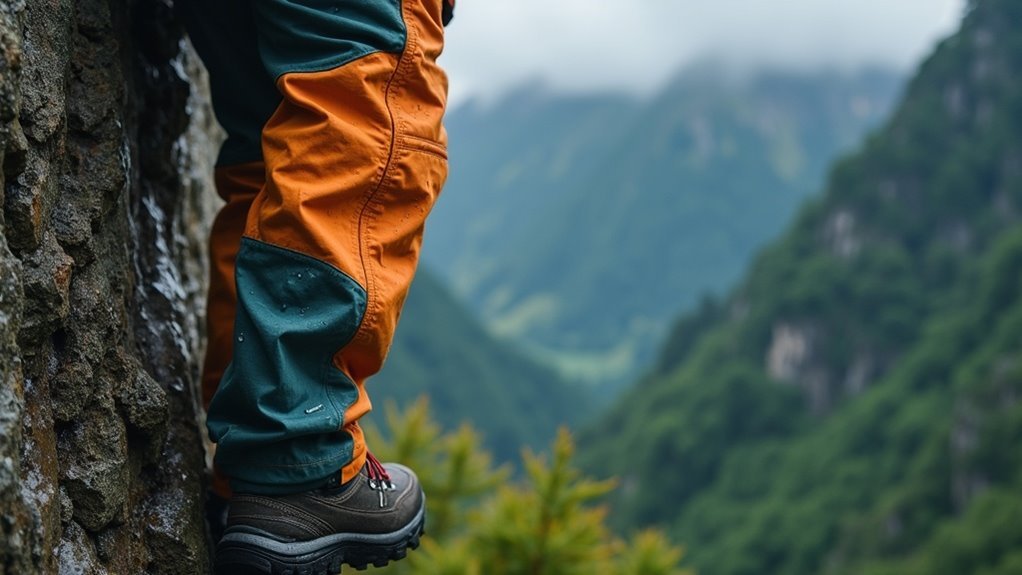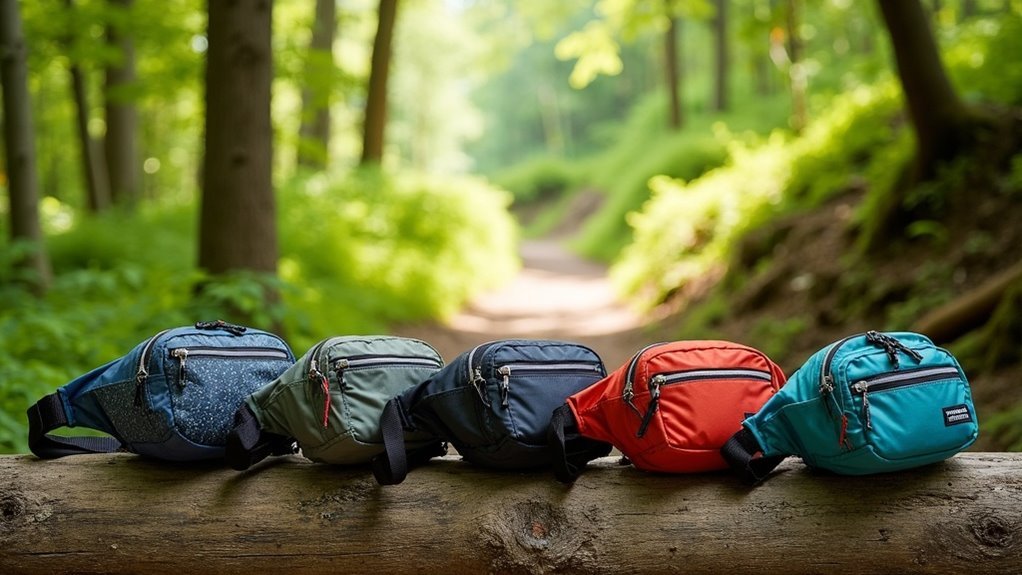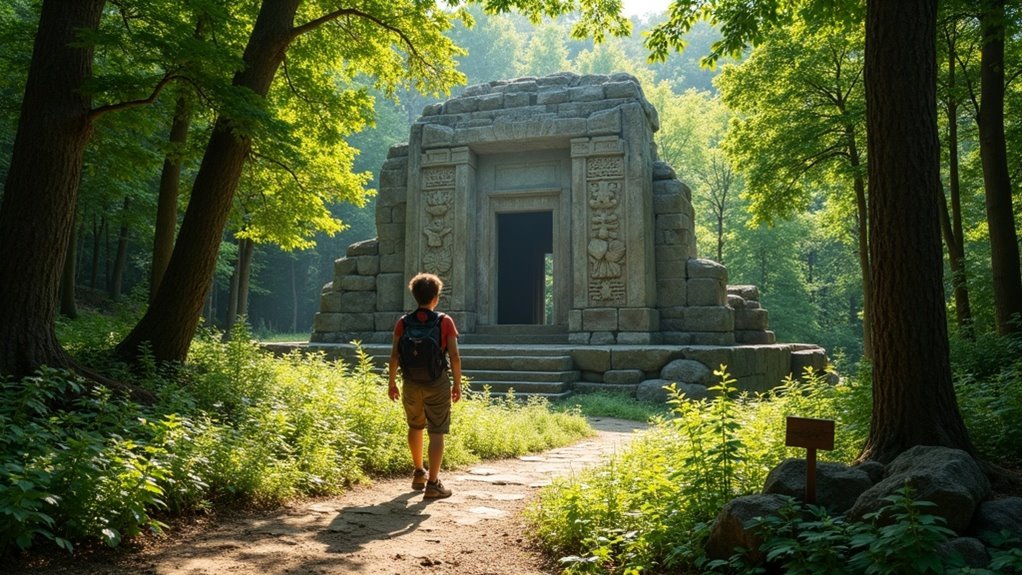
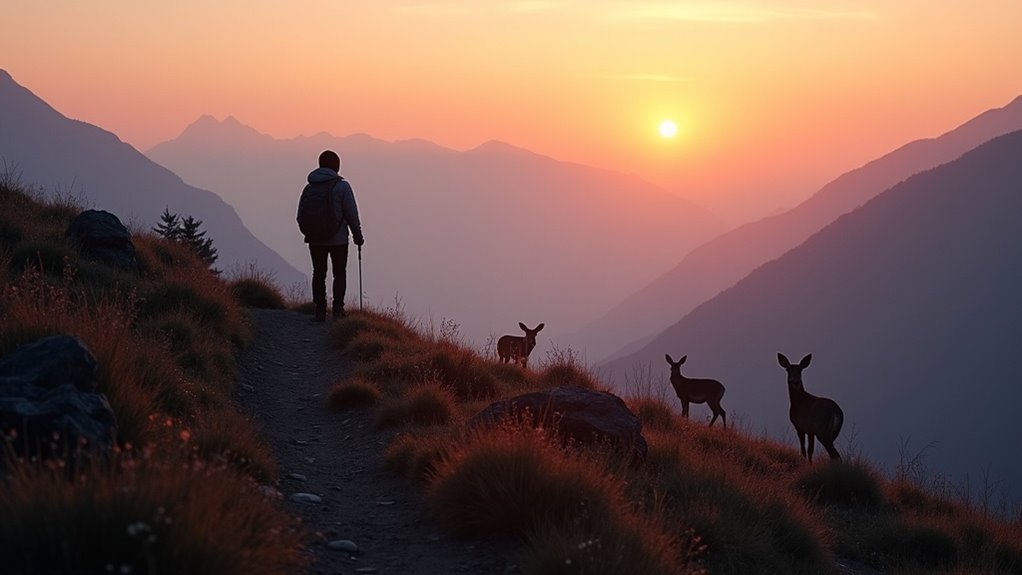
To plan a sunrise hike without disturbing wildlife, choose well-marked trails away from dense forests and water sources. Go mid-morning when animals are less active, and make noise to alert them of your presence. Use soft-soled shoes and speak quietly. Understand local wildlife behaviors—like deer being active at dawn. Bring essential gear, including bear spray, and always follow Leave No Trace principles. There are more strategies to enhance your experience while protecting nature around you.
Key Takeaways
- Choose well-maintained trails away from dense forests and water sources to minimize wildlife encounters at sunrise.
- Plan your hike to start slightly after dawn, allowing wildlife to settle before your arrival.
- Use soft-soled footwear and maintain quiet conversations to reduce noise during the hike.
- Carry a strong headlamp with a red light feature to avoid startling nocturnal animals while navigating in low light.
- Follow Leave No Trace principles by staying on marked trails and packing out all trash to respect wildlife habitats.
Selecting the Right Trail for Wildlife Safety
When planning your sunrise hike, selecting the right trail is essential for both your safety and the well-being of local wildlife.
Choose well-known trails with good trail conditions, as these areas typically see more human activity, prompting wildlife to avoid them. Avoid routes near dense forests or water sources where animals might be more active.
Select popular trails with good conditions to minimize wildlife encounters, and steer clear of dense forests or water sources.
Opt for well-marked and maintained trails to minimize underbrush disruption. Plan your hike for mid-morning, when wildlife is less active.
Remember to make some noise to let animals know you’re there, encouraging them to move away and stay safe during your adventure.
Best Practices for Minimizing Noise
As you set out on your sunrise hike, remember that minimizing noise is key to preserving the tranquility of the environment.
Keep your footsteps soft by choosing quiet footwear and encourage your group to engage in controlled, low-volume conversations.
This way, you can enjoy the beauty of nature while being respectful to the wildlife that calls it home.
Soft Footsteps Technique
To truly immerse yourself in the peacefulness of a sunrise hike, mastering the Soft Footsteps Technique is essential.
Start by choosing soft-soled footwear, like hiking shoes with rubber soles, to minimize noise. Move at a slow, deliberate pace, allowing you to observe wildlife without startling them.
Opt for trails with softer ground cover, such as dirt or grass, to further lessen sound. Be mindful of your surroundings, avoiding sudden movements and loud conversations during dawn’s active hours.
When using trekking poles, place them gently on the ground to avoid clattering, ensuring a serene experience for both you and the wildlife.
Controlled Group Conversations
How can you guarantee your group’s conversations enhance rather than disrupt the serene atmosphere of a sunrise hike?
Here are some best practices for controlled group conversations:
- Use soft voices, avoiding loud discussions that may startle wildlife.
- Communicate through hand signals or quiet gestures, especially near wildlife-rich areas.
- Designate a “quiet zone” to foster wildlife observation and tranquility.
- Schedule regular quiet intervals, allowing everyone to immerse themselves in nature’s sounds.
Understanding Local Wildlife Behaviors
Understanding local wildlife behaviors is essential for a safe and enjoyable sunrise hike, especially since many animals, like deer and bears, are most active during this time. To minimize disturbances, consider their patterns and habitats. Here’s a quick reference:
| Wildlife | Active Times |
|---|---|
| Deer | Dawn and Dusk |
| Bears | Early Morning |
| Coyotes | Night and Dawn |
| Birds | Morning Feeding |
Researching seasonal migration and feeding habits is important at night, guiding your hike to avoid high wildlife activity areas. Respect their space, and you’ll foster a harmonious hiking experience.
Essential Gear for Responsible Hiking
While you’re preparing for your sunrise hike, having the right gear can make all the difference in ensuring both your safety and the well-being of the local wildlife.
Preparing for a sunrise hike requires the right gear to ensure your safety and protect local wildlife.
Here’s what you’ll need for your first sunrise hike and hiking at night:
- A strong headlamp with a red light feature to minimize disturbance to nocturnal animals.
- Trekking poles for balance on uneven terrain, reducing noise and falls.
- A lightweight first aid kit and emergency whistle for quiet safety.
- Bear spray for added safety in bear country, paired with periodic noise to alert wildlife.
Respecting nature starts with you!
Strategies for Hiking in Small Groups
When hiking in small groups, keeping your numbers to 6-8 people can greatly enhance your experience and reduce noise levels, making it more respectful to wildlife.
You can also adopt noise management techniques, like using hand signals, to stay connected without disturbing the peaceful environment.
Finally, choosing less-traveled trails and planning your hikes during weekdays helps maintain that tranquility, allowing everyone to fully enjoy the beauty of dawn together.
Group Size Considerations
Hiking in small groups can greatly enhance your experience while also protecting the natural environment. When planning your hike, keep in mind these group size considerations:
- Minimize noise: Smaller groups of 2-4 reduce disturbances to wildlife during sensitive dawn hours.
- Stay together: Compact groups enhance communication and help avoid unexpected wildlife encounters.
- Encourage soft voices: Using gentle tones and limiting sudden movements can ease wildlife’s stress.
- Designate a leader: This streamlines decision-making, ensuring a focused approach to minimize impact on nature.
Together, you can enjoy a memorable hike while respecting the beauty around you.
Noise Management Techniques
To guarantee a peaceful and enjoyable sunrise hike, it’s essential to manage noise effectively within your small group. Keep your group size between 4-6 people to minimize disturbances.
When hiking in the dark, communicate softly; let them know your plans without loud conversations. Use trekking poles to reduce footfall noise and maintain balance.
Encourage gentle humming or soft singing to signal your presence to wildlife, allowing them to safely move away. Additionally, avoid sudden movements and maintain a steady pace, as calm behavior helps prevent scaring animals.
Together, you can enjoy nature while respecting its inhabitants.
Trail Etiquette Guidelines
While enjoying the beauty of a sunrise hike, it’s important to follow trail etiquette guidelines that respect both the environment and fellow hikers.
Here are some strategies for hiking in small groups:
- Keep your group size to 6-8 people to limit the environmental impact.
- Maintain a quiet demeanor to avoid startling wildlife during their active dawn hours.
- Stick to established trails, respecting wildlife habitats and minimizing disruption.
- Make sure everyone knows wildlife safety practices, like making noise to alert animals of your presence.
Following Leave No Trace Principles
As you commence your sunrise hike, embracing Leave No Trace principles is essential for protecting the delicate ecosystems you’ll encounter.
Staying on marked trails minimizes habitat disruption, especially important when hiking at night or during dawn when wildlife is active.
Plan your hike to avoid nesting or feeding times for birds and other animals.
Make noise periodically to alert wildlife, reducing surprise encounters.
Always maintain a safe distance from large animals, and quietly observe them.
Finally, carry out all trash and leftover food to prevent attracting wildlife to human areas, preserving their natural behaviors and habitats.