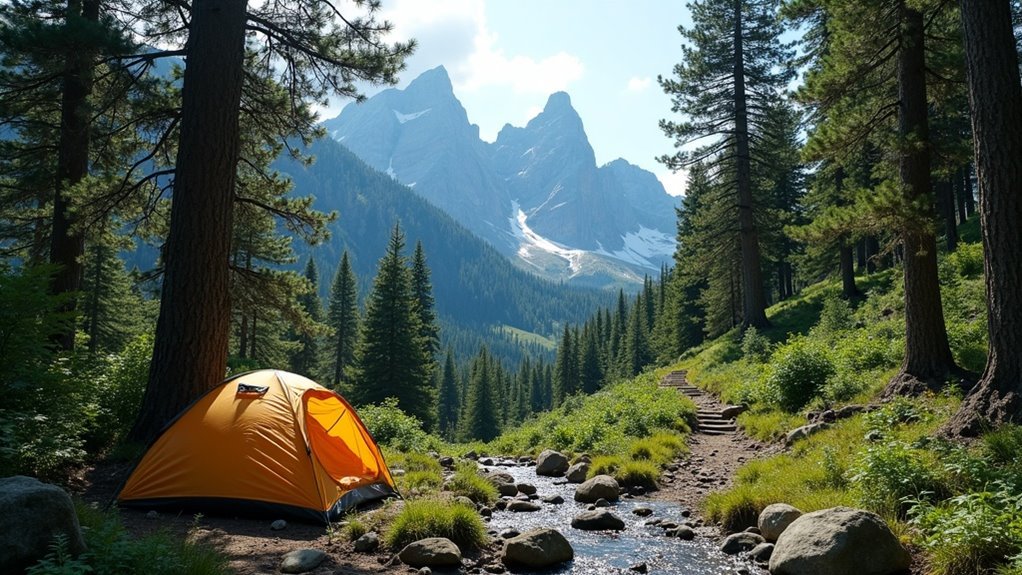
When hiking in national forests, you can legally camp at designated campgrounds or in dispersed camping areas, but always check local regulations first. Use maps and signage to avoid restricted spots, and embrace “leave no trace” principles to protect nature. Maryland offers beautiful places like Green Ridge and Savage River State Forests. For hidden gems and insider tips, local ranger districts are your best resource. There’s so much more you can uncover for your trip!
Key Takeaways
- Check designated campgrounds and dispersed camping rules on the USDA Forest Service website for legal camping locations.
- Consult local ranger district offices for specific regulations and hidden camping spots in national forests.
- Use maps and signage in the area to identify restrictions and permitted camping zones.
- Practice “leave no trace” principles to minimize environmental impact while camping.
- Ensure you camp at least 200 feet from lakes and streams to protect water quality.
Understanding National Forest Camping Regulations
When you venture into a national forest, knowing the camping regulations can make all the difference between an enjoyable experience and a frustrating encounter with local authorities.
Familiarize yourself with designated campgrounds and dispersed camping rules, as each national forest may have specific guidelines. Always verify local regulations online or contact the USDA Forest Service for clarity.
Familiarize yourself with campground and dispersed camping rules to ensure a respectful and enjoyable experience in each national forest.
Pay attention to signage indicating restrictions, especially near roads and rivers. Remember to embrace “leave no trace” principles to preserve the environment.
Engaging with local ranger districts can provide crucial insights, ensuring your camping experience isn’t only legal but also fulfilling and respectful of nature.
Exploring Dispersed Camping Opportunities
When you’re ready to escape the crowds, exploring dispersed camping opportunities in U.S. National Forests can be a rewarding adventure.
Make sure to check local guidelines and find designated areas where you can set up camp legally.
Designated Dispersed Camping Areas
Exploring designated dispersed camping areas opens up a world of adventure for outdoor enthusiasts seeking a more secluded experience. Many national forests provide these special zones for camping, allowing you to set up outside traditional campgrounds.
As you explore, remember to check maps and signs for restrictions. Utilize resources like the USDA Forest Service website for detailed information on these areas. Engaging with local ranger districts can reveal hidden gems and seasonal guidelines.
Always practice “leave no trace” principles, choosing durable surfaces for tents and packing out all waste. Your respect for nature guarantees these beautiful spots remain for others to enjoy.
Local Guidelines Compliance
Understanding local guidelines is key to enjoying the freedom of dispersed camping while respecting the natural environment. Before you head out, check your local U.S. Forest Service website or contact the ranger district for specific regulations. These can vary considerably between forests.
Remember to camp at least 200 feet from water sources to protect fragile ecosystems. Always follow “leave no trace” principles—pack out all trash and minimize your impact.
Seasonal restrictions may apply, so verifying these details guarantees a responsible and enjoyable camping experience. By adhering to guidelines, you’ll help preserve the beauty of our national forests for everyone.
Popular Camping Areas in Maryland
Maryland boasts a variety of stunning camping areas that cater to outdoor enthusiasts seeking both adventure and tranquility.
Green Ridge State Forest offers primitive camping, allowing you to immerse yourself in nature with limited amenities.
If solitude’s what you crave, head to Savage River State Forest, where backpack camping invites off-trail exploration.
Garrett State Forest also permits backpack camping, showcasing Maryland’s breathtaking landscapes.
While most public campgrounds may not provide the primitive experience you desire, local U.S. Forest Service ranger districts can guide you to legal camping areas, ensuring your adventure remains safe and enjoyable.
Embrace the wild beauty of Maryland!
Best Practices for Primitive Camping
When you head out for primitive camping, it’s essential to choose the right locations and respect local regulations.
Adopting “leave no trace” principles not only helps protect the environment but also guarantees that these beautiful spots remain pristine for future campers.
Leave No Trace
Camping in pristine wilderness can be a breathtaking experience, but to truly enjoy it, you need to prioritize the principles of Leave No Trace.
By following these best practices, you’ll preserve the beauty of BLM lands for future campers:
- Camp at least 200 feet from lakes and streams to protect water quality.
- Use established trails and campsites to minimize environmental impact.
- Pack out all trash and leftover food to prevent wildlife foraging.
- Avoid cutting vegetation; opt for a stove instead of a fire to prevent landscape damage.
Being considerate enhances everyone’s experience in nature.
Choose Appropriate Locations
Finding the right location for your camping adventure can make all the difference in your experience. In National Forests, research local regulations to discover designated dispersed camping spots.
Aim for areas at least 200 feet from water sources and away from established trails to minimize your environmental impact. Consider less-traveled sites, like user-maintained areas or along long, unmaintained trails, to enhance your connection with nature and avoid crowds.
Always check for signs indicating prohibited camping areas and consult local ranger districts for the latest information on camping legality and safety. This careful planning guarantees a respectful and enjoyable wilderness experience.
Respect Local Regulations
Respecting local regulations is essential for ensuring a safe and enjoyable primitive camping experience. Here are some best practices to follow:
- Check local regulations on the USDA Forest Service website or contact ranger districts for specific rules.
- Adhere to “Leave No Trace” principles—pack out trash and minimize campfire impact.
- Camp at least 200 feet away from water sources and avoid fragile vegetation.
- Familiarize yourself with designated camping areas and prohibited zones to avoid fines.
Engaging with local hiking communities can also provide valuable insights.
Local Insights for Hidden Campsites
Ever wondered where the best hidden campsites might be? Building relationships with locals can reveal those elusive spots, often off the beaten path.
Seek out user-maintained sites, which aren’t found in typical guides, offering a unique experience away from crowded campgrounds. Long, unmaintained trails may lead you to serene locations, perfect for peaceful camping anywhere.
Engage with local hiking and camping communities online for valuable local insights for hidden campsites. Don’t forget to visit nearby outdoor stores and ranger districts—these resources can uncover unadvertised camping areas that promise tranquility and solitude in nature.
Happy camping!
Resources for Planning Your Camping Trip
When planning your camping trip, tapping into the right resources can make all the difference in ensuring a smooth and enjoyable experience.
Tapping into the right resources can transform your camping trip into a smooth and enjoyable adventure.
Here are some key tools to take into account:
- Visit the USDA Forest Service website for detailed camping options and regulations.
- Check local ranger district offices for specific guidelines and restrictions.
- Download land use maps to identify camping regulations, available sites, and prohibited areas.
- Engage with online hiking communities for insights on hidden gems and tips.
Always practice “leave no trace” principles and familiarize yourself with safety guidelines specific to the national forests and state parks you’ll explore.