Strenuous hiking grades are typically classified as Difficulty 4 and above. These trails feature rugged terrain, steep climbs, and significant elevation changes, requiring exceptional fitness levels and advanced skills. You’ll encounter unmarked routes with obstacles and may cover distances of 30 kilometers or more. Proper preparation and conditioning are essential to tackle these challenges effectively. Want to know more about selecting the right trail and preparing for your adventure?
Key Takeaways
- Strenuous hiking trails are typically rated as Difficulty 4 or higher, featuring demanding physical requirements and rugged terrain.
- Difficulty 4 trails often include steep sections and significant elevation changes, exceeding 7,000 feet.
- Difficulty 3 trails offer a moderate challenge but still require good fitness levels and some hiking experience.
- Strenuous trails often involve 30 kilometers or more of distance, demanding endurance for 8-10 hours of hiking.
- Proper preparation, including physical conditioning and essential gear, is crucial for safely navigating strenuous trails.
Understanding Strenuous Hiking Grades
When you step onto a strenuous hiking trail, you’re entering a world designed for seasoned adventurers.
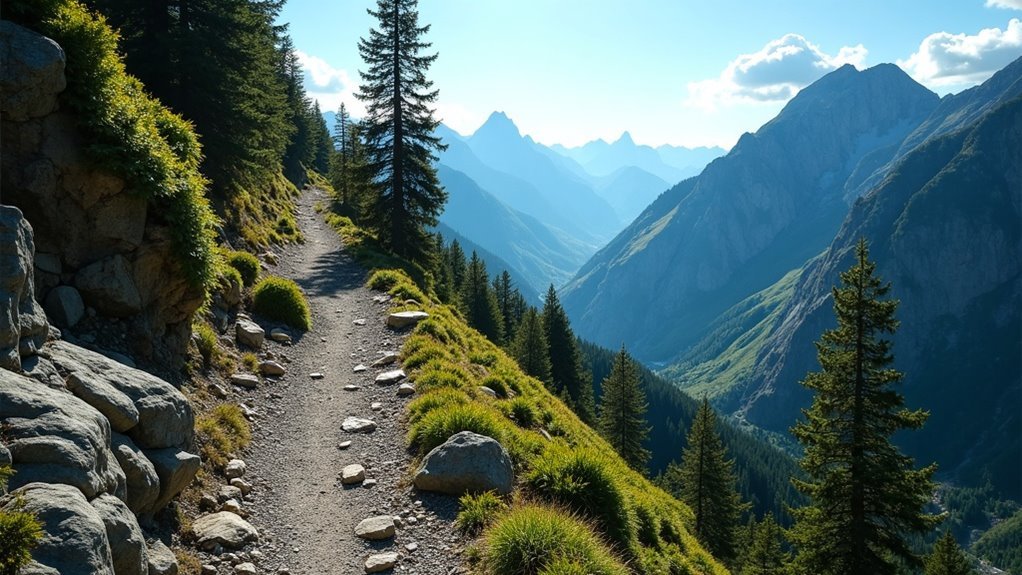
Strenuous hiking grades challenge you with steep climbs, significant elevation changes, and rugged terrain. These trails demand a high level of fitness, often requiring 8-10 hours of endurance as you cover distances of 30 kilometers or more.
Strenuous trails test your limits with steep climbs and rugged terrain, demanding endurance for 30 kilometers in 8-10 hours.
You might find yourself traversing exposed areas and using fixed ropes, making advanced skills essential. Proper preparation is vital, ensuring you assess your fitness and the trail conditions.
Embrace the challenge, and you’ll discover a rewarding experience that pushes your limits and enriches your spirit.
Characteristics of Difficulty 3 Trails
After conquering the challenges of strenuous trails, you might find yourself ready for something slightly less intense yet still rewarding.
Difficulty 3 trails offer a moderate hiking experience, typically spanning 5-7 hours and covering up to 20 kilometers. Expect a mix of terrain, including steep ascents and rocky patches, which require good fitness levels and some hiking experience.
While these trails are more accessible, they still present a variety of conditions that can test your skills. Proper preparation is key, as the physical demands can be significant compared to easier walking track grading.
Embrace the adventure that awaits!
Characteristics of Difficulty 4 Trails
While you might feel ready to tackle more challenging terrain, Difficulty 4 trails push your limits with their demanding physical requirements and rugged landscapes.
These strenuous paths often feature steep sections, rocky surfaces, and may lead you through remote areas with limited access to water.
Expect to navigate unmarked trails filled with obstacles, requiring advanced skills and considerable experience.
With trail ratings indicating a maximum distance of less than 20 miles and elevation changes exceeding 7,000 feet, your endurance and resilience will be rigorously tested.
Prepare yourself for a physically challenging adventure that promises breathtaking views and unforgettable experiences.
Preparing for Strenuous Hiking Conditions
To conquer strenuous hiking trails, you’ll need to be well-prepared both physically and mentally. These hikes, with difficulty ratings indicating tough climbs and descents, often last 8-10 hours and cover over 30 kilometers per day. Make sure you’re equipped with sturdy boots and weather-appropriate gear, focusing on hydration and nutrition for energy. Familiarizing yourself with hazards is essential for safety. Here’s a quick reference to aid your preparation:
| Preparation Element | Description |
|---|---|
| Physical Conditioning | Endurance and strength |
| Gear | Boots and weather clothing |
| Nutrition | Sufficient food and water |
| Trail Familiarity | Understand potential hazards |
Importance of Trail Selection and Personal Fitness
Selecting the right trail is just as important as your physical preparation when it comes to strenuous hiking. Each trail has a rating that indicates its difficulty, and understanding this helps you choose wisely.
Consider your daily distance; trails often demand 30km or more, with steep ascents and descents. Your personal fitness level must align with the trail’s challenges, including traversing exposed areas and rugged terrain.
Without adequate conditioning, you risk injuries and diminish your enjoyment. Prioritizing trail selection guarantees safety, allowing you to fully embrace the adventure ahead while serving as a role model for others in their hiking journeys.