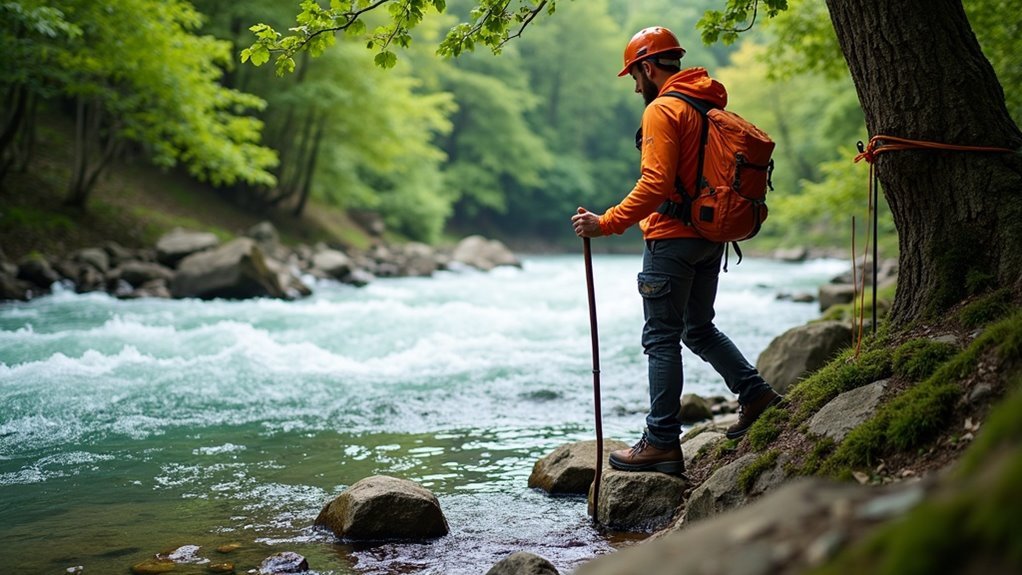
To reduce river crossing risks while hiking, assess water conditions by checking flow speed and depth before attempting to cross. Scout for wider, slower sections of the river and use safety equipment like trekking poles. Always cross during low water times, ideally early in the morning, and choose marked crossing points. Stay aware of weather changes that could affect water levels. These steps can help guarantee your safety, and there’s more to explore about safe techniques.
Key Takeaways
- Check water speed and depth before crossing; avoid deeper than mid-thigh in fast-moving water.
- Scout for wider, slow-flowing sections of the river to find safer crossing points.
- Use trekking poles for stability and consider a rope for group crossings in difficult conditions.
- Assess weather forecasts and avoid crossing during peak snowmelt or after heavy rain to reduce risks.
- Unclip backpack straps for quick escape if swept away; prioritize ditching the pack if necessary.
Assessing River Conditions
When you’re considering a river crossing, it’s essential to assess the conditions carefully.
Start by checking the water speed; toss a stick into the river. If it flows away quickly, strong currents are present, and you should approach with caution.
Next, assess the depth—avoid crossing if it’s deeper than mid-thigh in fast-moving water.
Evaluate the riverbed by observing small ripples; these often indicate a safer, rocky bottom.
Always face upstream while crossing to maintain your balance, walking diagonally downstream to reduce the risk of being swept away.
Finally, monitor weather forecasts for heavy rain that could raise river levels.
Timing and Seasonal Considerations
When planning your river crossings, timing is vital to guarantee safety.
Avoid crossing during peak snowmelt periods and aim for early morning when water levels are lower.
Always stay alert to changing conditions, as even clear water can be unexpectedly fast-flowing.
Avoid High Water Levels
To guarantee your safety during river crossings, it’s crucial to plan these encounters for early morning, as cooler temperatures can help mitigate the risk of rising water levels due to snowmelt throughout the day.
Avoid crossing during shoulder seasons, when snowmelt can greatly elevate river depths and currents.
Research potential flash floods and increased water levels along your route, especially after rainfall or rapid snowmelt.
Remember, even clear water can flow quickly, so visually evaluating conditions mightn’t be reliable.
If conditions appear unsafe, wait for the water to lower before attempting a safe crossing at your chosen point.
Early Morning Crossings
Planning your river crossings for early morning offers the best chance for safety and stability. During this time, river levels are typically lower due to overnight cooling, reducing the risk posed by swift currents.
Aim to cross before mid-morning, as daily melting from warmer temperatures can lead to dangerous conditions. Avoid shoulder seasons when snowmelt can cause rapid increases in water levels.
Always monitor weather forecasts for heavy rain that could elevate water levels later in the day. Research routes known for stable water conditions, ensuring safer crossing opportunities during your hike.
Prioritize safety for yourself and others.
Finding Safe Crossing Points
How do you guarantee a safe crossing when faced with a river during your hike? Start by scouting both upstream and downstream to identify wider sections of the river. Look for slow-flowing areas, especially near lakes, to cross rivers safely. Always assess downstream hazards like boulders or logs that could pose risks. Prefer marked crossing points, choosing sites that minimize dangers.
| Safe Crossing Strategies | Key Considerations |
|---|---|
| Identify slow-flowing areas | Assess downstream hazards |
| Look for wider sections | Choose marked points |
| Use braided sections | Select shallow areas |
Safety Equipment and Techniques
Once you’ve pinpointed a safe crossing point, equipping yourself with the right safety gear and techniques becomes essential.
Use trekking poles for stability, as they help you safely cross by providing extra points of contact with the riverbed. Always assess water levels and current strength before entering; if conditions seem overwhelming, consider using a rope for group crossings.
Remember to unclip your backpack’s hip belt and sternum straps to enable a quick escape should you fall. If you’re swept off your feet, ditch your pack to reduce weight and improve your chances of breaking the current effectively.
Crossing Techniques
When you approach a river crossing, it’s crucial to use effective techniques to guarantee your safety.
Always face upstream while you cross, walking diagonally downstream to counter the current. Use trekking poles to probe the riverbed, creating extra points of contact for stability.
Shuffle-step across the river, keeping your legs wide to enhance balance and prevent slipping. Before crossing, unclip all pack straps to reduce the risk of being dragged under if you fall.
If conditions feel overwhelming, calmly return to the starting shore and reassess before attempting the crossing again. Your safety is paramount.
Recovery and Post-Crossing Assessment
After crossing the river, it’s essential to assess yourself for any injuries and check your gear for damage.
Take a moment to regain your balance and rehydrate, allowing your body to recover from the exertion.
Finally, evaluate your next steps based on your condition and the surrounding environment to guarantee your continued safety.
Assess for Injuries
As you regain your footing on stable ground following a river crossing, it’s crucial to assess yourself and your group for any injuries. Check for cuts, bruises, or signs of hypothermia, especially if the water was cold or swift.
Next, inspect your gear for damage, ensuring that backpacks and trekking poles are intact and functional. Take a moment to recover and catch your breath on a stable surface, allowing everyone to rehydrate and regain energy.
If any group members feel unwell or fatigued, consider pausing to evaluate the overall condition before proceeding with your hike. Document your experience for future reference.
Regain Balance
Regaining your balance after a river crossing is essential for your safety and well-being.
Make sure to assess for any injuries or gear damage immediately. Take a moment to recover on the shore, allowing your body to stabilize after the exertion.
If you’ve lost your footing, catching your breath is vital. Rehydrate and rest briefly to combat fatigue and dehydration.
If you’re in wet clothes, change promptly to avoid hypothermia, especially in cooler conditions.
This recovery period not only helps you regain balance but also prepares you for safe decision-making as you evaluate your next steps.
Evaluate Next Steps
Once you’ve regained your balance, it’s important to evaluate your next steps carefully. First, assess yourself and your gear for any injuries or damage. Rehydrate to regain strength and communicate with your group about the crossing’s challenges. If you left your pack behind, retrieve it when it’s safe to do so.
| Action | Purpose | Notes |
|---|---|---|
| Assess injuries | Verify safety | Check gear as well |
| Rehydrate | Regain strength | Rest briefly if needed |
| Communicate | Account for the group | Discuss challenges faced |
Evaluate conditions before proceeding further.