
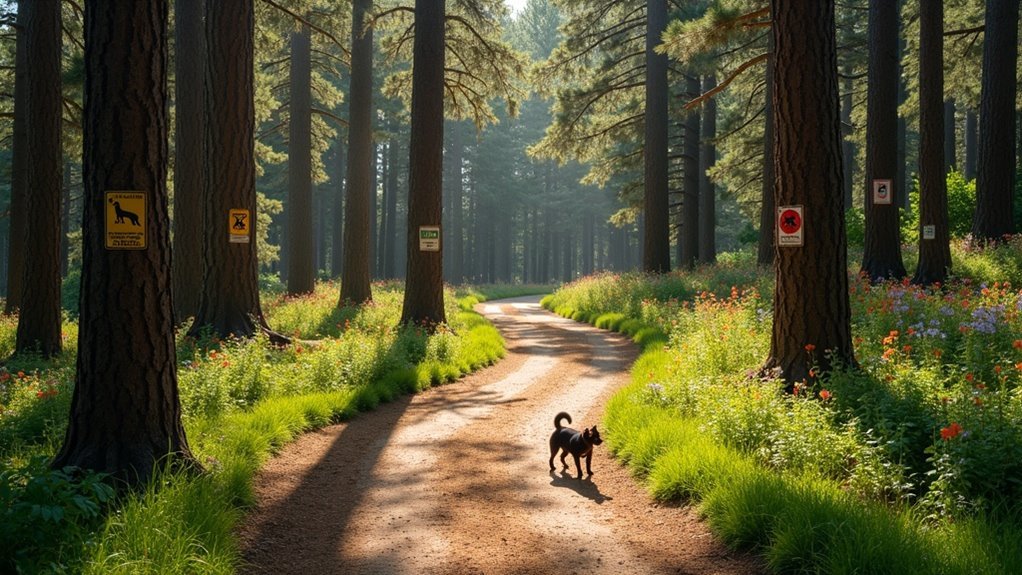
Land use rules greatly affect your ability to hike with dogs on trails. Many areas restrict dogs to protect wildlife, especially during sensitive breeding seasons. It’s important to comply with leash requirements and avoid off-trail activities that can harm the environment. Additionally, policies vary by location, with some areas allowing dogs only in developed spaces like campgrounds. Understanding these regulations and their purpose is essential, and further insights await to enhance your outdoor experience.
Key Takeaways
- Many federal lands have regulations that require dogs to be leashed to protect wildlife and their habitats.
- Certain sensitive wildlife areas legally prohibit dogs to prevent disturbances during breeding seasons.
- Dog access is often restricted to developed areas like parking lots and campgrounds to minimize environmental impact.
- Local trail regulations may vary seasonally, necessitating current research on pet policies before hiking.
- Compliance with pet policies is essential to avoid fines and ensure a safe experience for all trail users.
Protection of Wildlife
When you take your dog hiking, it’s essential to reflect on the impact on local wildlife.
Dogs allowed in federal lands can cause significant disturbances, especially during vital breeding seasons. By ensuring pets are leashed, you help protect wildlife from stress and potential harm.
Leashing dogs on federal lands is crucial to protect wildlife during sensitive breeding seasons from stress and potential harm.
The scent of dogs can deter native species from behaving naturally, jeopardizing their survival. Responsible pet management is important for maintaining ecological balance and conserving endangered species.
Uncontrolled encounters can result in injuries for both dogs and wildlife, emphasizing the need for awareness and adherence to guidelines that protect these vulnerable ecosystems.
Environmental Impact
While hiking with your dog can be an enjoyable experience, it’s vital to recognize the environmental impact your pet can have on the ecosystem.
Dogs can trample fragile undergrowth on trails, leading to habitat degradation and negatively impacting biodiversity. Off-trail activities, like digging and defecating, disrupt natural habitats, contributing to soil erosion and root damage.
Additionally, dog waste introduces harmful bacteria, contaminating soil and water sources. The scents left by dogs can confuse native wildlife, disrupting their behaviors and causing stress, particularly during breeding seasons.
Understanding these factors is significant for responsible pet policies on federal lands.
Health and Safety Considerations
Understanding health and safety factors is essential for anyone planning to hike with their dog.
Understanding health and safety is crucial for a successful hiking experience with your dog.
Prioritizing safety guarantees a pleasant experience for both you and other trail users. Here are key points to reflect on:
- Always keep your dog on a leash to prevent wildlife encounters and injuries.
- Assess trail conditions to avoid rough terrains or extreme weather that could harm your dog’s health.
- Be mindful of the presence of unfamiliar dogs, as their aggression can lead to dangerous encounters.
Preservation of Human Enjoyment
To guarantee all hikers enjoy their time on the trails, it’s crucial to recognize the diverse range of preferences and sensitivities among outdoor enthusiasts.
Many individuals, including those with allergies or fears, may feel uneasy around dogs, particularly off-leash pets. Noise from barking can disrupt the serene environment sought by many in national parks and recreation areas.
As a result, clear pet policies and rules at each location help preserve human enjoyment. Trail regulators work towards a balanced experience, ensuring that dog owners and other users coexist respectfully on federal lands, fostering an atmosphere conducive to all forms of outdoor recreation.
Legal and Policy Constraints
Legal and policy constraints surrounding dog access to hiking trails are shaped by the need to protect wildlife and preserve delicate ecosystems.
Many national parks impose specific restrictions on pets to minimize disturbances. It’s vital for you to understand the following:
- Legal mandates often prohibit dogs in sensitive wildlife areas.
- Dogs are typically limited to developed spaces like parking lots and campgrounds.
- Compliance with park access policies is necessary to avoid fines and promote responsible pet ownership.
Seasonal changes can also affect these restrictions, so always research current policies before your visit to guarantee a respectful and enjoyable experience for all.
Alternatives for Dog Owners
For dog owners seeking alternative hiking options, numerous trails across federal lands managed by the Bureau of Land Management (BLM) and the U.S. Forest Service offer about 440.2 million acres of pet-friendly terrain.
Many national forests allow off-leash hiking, making them ideal for adventurous dogs. While state parks vary in pet policies, some provide better access than national forests, so it’s essential to research specific park regulations.
Many national forests welcome off-leash hiking, perfect for your adventurous pups, while state parks may offer varying pet policies to explore.
Although national parks impose strict pet restrictions, places like Acadia and Shenandoah allow dogs on designated trails.
Utilizing interactive maps can help you find suitable off-leash hiking trails nearby.