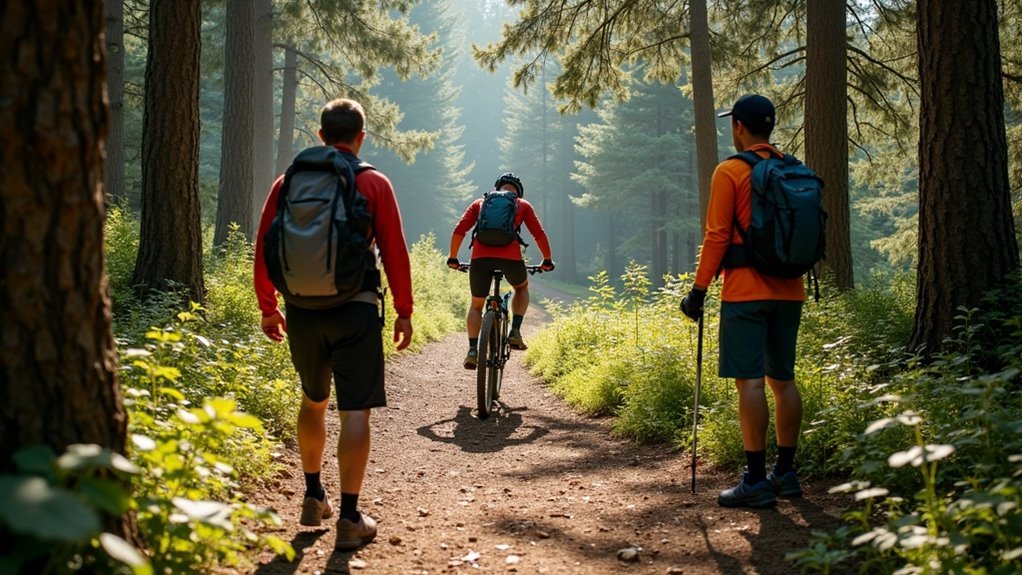
When hiking, uphill hikers have the right of way. They need this priority to maintain their momentum and safety, as climbing can be physically challenging. Yielding to uphill hikers helps them avoid stopping in difficult spots. Remember, trail conditions can affect right of way decisions, so be aware of your surroundings. Respect this guideline promotes a courteous hiking environment. To enhance your trail experience, you’ll find more insights on this topic.
Key Takeaways
- Uphill hikers have priority over downhill hikers to allow them to maintain momentum and rest when needed.
- Downhill hikers should yield to uphill hikers, especially in steep or challenging terrain, to ensure safety.
- Group size impacts right of way decisions; larger groups should yield to smaller ones for smoother trail traffic.
- Clear communication about intentions and group size helps prevent misunderstandings regarding right of way on trails.
- Uphill hikers face unique challenges and limited visibility, making it essential to respect their right of way for a harmonious experience.
Understanding Right of Way Principles
Understanding the principles of right of way on trails is essential for a safe and enjoyable hiking experience. Uphill hikers have priority, as they face more challenges and exertion. When you encounter an uphill hiker, it’s courteous to yield if you’re descending, allowing them space to rest or pass.
Conversely, downhill hikers benefit from better visibility, enabling them to yield when necessary. Always consider situational factors like trail conditions and group sizes, prioritizing communication and flexibility.
Uphill right of way is built on mutual respect, ensuring both types of hikers contribute to a safe and harmonious trail experience.
The Importance of Uphill Hiker Rights
When you’re hiking uphill, you’re exerting more energy and may struggle to regain your momentum if you stop.
It’s important to recognize that your limited visibility and the weight of your backpack can make yielding to downhill hikers challenging.
Prioritizing uphill hiker rights fosters safety and courtesy on the trails, ensuring a more respectful hiking experience for everyone.
Uphill Hiker Momentum
Though it might seem courteous to yield to downhill hikers, uphill hikers deserve priority on the trails due to the physical demands of their ascent.
Uphill hikers are often in a rhythm, and stopping disrupts their momentum, making it harder to continue. The exertion required to climb means it’s more challenging for them to regain their pace after pausing. Additionally, their limited field of vision makes anticipating oncoming traffic difficult.
Uphill hikers, usually carrying backpacks, face more obstacles when stopping; stepping off the trail is easier for them than for downhill hikers traversing unstable footing.
Prioritizing uphill hikers benefits everyone.
Safety and Courtesy
Respecting the right of way for uphill hikers not only enhances safety but also fosters an atmosphere of courtesy on the trails. Uphill hikers expend more energy and often have fewer options to step aside, making it vital for you to yield when you encounter them.
Uphill hikers navigate challenging terrain and maintain their momentum, whereas you can more easily control your descent. Remember, forcing uphill hikers to stop suddenly increases their risk of injury.
Physical Challenges of Uphill Hiking
As you tackle an uphill hike, you quickly realize that the physical demands are far greater than those encountered while descending. Uphill hikers face unique challenges, especially when maneuvering through technical sections of the trail.
Stopping frequently for downhill traffic can disrupt your momentum and balance, particularly with a heavy backpack. Your limited field of vision makes it tough to spot oncoming hikers, adding to the strain.
Additionally, finding safe spots to step off the trail on steep terrain can be risky. Resuming your climb after a pause is often more difficult than continuing downhill, as gravity isn’t on your side.
Safety Considerations on the Trail
Steering through trails requires more than just physical stamina; safety considerations play an essential role in ensuring a smooth hiking experience.
To promote safety for uphill hikers and everyone on the trail, keep these points in mind:
- Yield to uphill hikers to help them maintain their momentum.
- Be cautious of trail conditions, like steepness and slippery surfaces.
- Communicate effectively to avoid misunderstandings about right of way.
- Recognize that uphill hikers may struggle to find safe stopping spots.
The Role of Communication in Right of Way
How can effective communication enhance your hiking experience? Clear communication is essential for establishing right of way on the trails. Uphill hikers should signal their presence to promote courtesy, while downhill hikers can respond with phrases like “I got you” to acknowledge right of way.
If you’re a faster hiker, announcing yourself when approaching from behind helps others yield appropriately. Engaging in open dialogue about right of way and trail etiquette with your hiking group fosters respect and enhances safety for everyone.
Situational Factors Affecting Right of Way
When you’re on the trail, conditions like mud, rocks, or steep inclines can greatly affect right of way decisions.
Additionally, the size of your group can complicate things, as larger groups may need more space to navigate safely.
Staying aware of these situational factors helps guarantee a smooth and respectful experience for everyone.
Trail Conditions Impacting Decisions
While traversing trails, various conditions can greatly impact your decisions about right of way.
Here are some key factors to contemplate:
- Steepness: Uphill travelers face more challenging terrain and may need to pause.
- Slippery surfaces: These can make maneuvering difficult for both parties.
- Technical sections: Hikers may require extra space to navigate safely.
- Visibility: Limited sightlines require clear communication to avoid confusion.
When you’re traveling uphill, prioritize safety and be ready to yield when trail conditions demand it.
Group Size Considerations
As you navigate trails, the size of your group can greatly influence right of way decisions.
Larger groups should often yield to smaller ones to guarantee a smooth flow of traffic. If you’re part of a small group of uphill hikers taking a break, don’t hesitate to let a larger downhill group pass.
Remember, steep or technical terrain can complicate yielding for uphill hikers, making it harder for them to step aside safely. Clear communication about your intentions and group size fosters respect and helps everyone enjoy the trail.
Prioritizing the needs of others enhances the hiking experience for all.
Common Misunderstandings About Trail Etiquette
Although many hikers hit the trails with the best intentions, misunderstandings about right of way can lead to confusion and frustration.
Misunderstandings about right of way can create confusion and frustration among well-intentioned hikers on the trails.
Here are some common misconceptions:
- Uphill Hikers Have Right of Way: Many new hikers don’t realize that those going uphill should be prioritized.
- Momentum Misconception: Downhill hikers often assume their speed gives them the right of way.
- Local Regulations Vary: Not all trails have clear signage about right of way, causing confusion.
- Physical Challenges: Hikers heading uphill face unique challenges, making it essential to respect their journey.
Open communication can clear up these misunderstandings.
Fostering a Culture of Respect Among Hikers
To foster a culture of respect among hikers, it’s essential to prioritize clear communication and situational awareness on the trails. Uphill hikers typically have the right of way due to their exertion and limited options to step aside. A simple nod or greeting can enhance mutual respect.
Be mindful of trail conditions and group sizes when deciding to yield, promoting trail etiquette. Uphill hikers can also show courtesy by temporarily yielding for a break, reinforcing positive behavior.
Engaging in community discussions about these practices helps educate new hikers and cultivates a harmonious environment for everyone on the trail.