The Big Three in hiking gear planning are your tent, backpack, and sleeping system. These items are essential for a comfortable backpacking experience. You’ll want a lightweight tent, like the REI Half Dome 2 Plus, a snug-fitting backpack between 50 to 70 liters, and a quality sleeping system with a 30-degree sleeping bag and a supportive sleeping pad. Each component plays a key role in ensuring your comfort and efficiency on the trail. Stick around to discover more tips for your adventures.
Key Takeaways
- The Big Three includes the tent, backpack, and sleeping system, essential for any hiking or backpacking trip.
- Aim for lightweight options for each item, ideally under 3 pounds, for an efficient pack.
- A recommended tent for solo trips is the REI Half Dome 2 Plus, weighing between 2 to 5 pounds.
- An optimal sleeping system consists of a 30-degree sleeping bag and a quality sleeping pad for comfort and insulation.
- When selecting a backpack, ensure it fits well, distributing weight evenly, and is between 50 to 70 liters in capacity.
Understanding the Big Three: Tent, Backpack, and Sleeping System
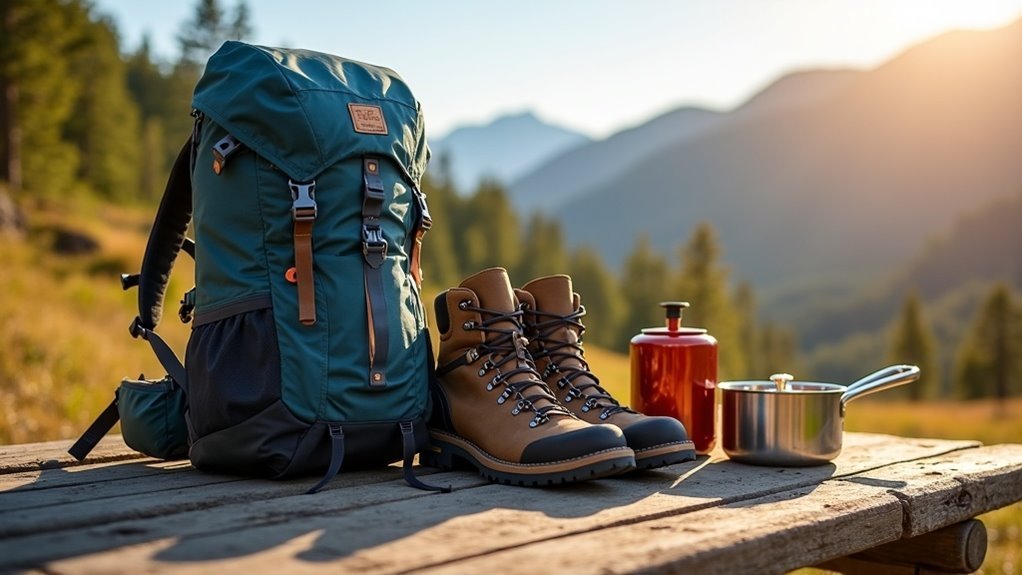
When you’re gearing up for a backpacking adventure, understanding the Big Three—your tent, backpack, and sleeping system—becomes crucial to your overall comfort and efficiency on the trail.
Aim for lightweight options, keeping each item under 3 pounds for a total pack weight of around 9 pounds. Choose a tent like the REI Half Dome 2 Plus for solo trips, weighing between 2 to 5 pounds.
Aim for lightweight gear, with each item under 3 pounds, and consider the REI Half Dome 2 Plus tent for solo trips.
For your sleeping system, a 30-degree sleeping bag paired with a quality sleeping pad guarantees comfort and insulation.
Finally, select a backpack with a capacity of 50 to 70 liters for a perfect fit on your journey.
The Evolution of Backpacking Gear
As backpacking enthusiasts sought to enhance their outdoor experiences, gear technology has evolved remarkably, transforming the way you approach your adventures.
The Big Three—tent, backpack, and sleep system—have seen significant advancements, enabling you to reduce overall base weight without sacrificing comfort.
- Modern tents now average below 3 lbs, compared to older models over 4 lbs.
- Sleeping bags have become lighter and more compressible, often weighing under 2 lbs.
- The shift towards ultralight gear encourages prioritizing weight management, aiming for a total base weight under 20 lbs.
These improvements make your hiking gear more efficient and enjoyable.
Selecting the Right Tent for Your Needs
Choosing the right tent for your backpacking adventures can greatly impact your overall experience.
For first-time backpackers, consider a two-person tent, like the REI Half Dome 2 Plus, balancing weight and durability. Weights typically range from 2 to 5 lbs, so opt for lighter options like the Nemo Hornet 2P if you’re weight-conscious.
For beginner backpackers, a lightweight two-person tent like the Nemo Hornet 2P offers the perfect mix of comfort and portability.
Look for waterproof materials and features like vestibules for gear storage, ensuring comfort in various weather conditions.
Borrowing a tent from experienced friends can help you gain valuable insights before investing in your own gear.
Select wisely to enhance your backpacking enjoyment and protection!
Choosing an Optimal Sleeping System
When choosing an ideal sleeping system, you’ll want to focus on the right combination of sleeping bag, sleeping pad, and pillow for maximum comfort without exceeding 3 pounds.
A 30-degree sleeping bag is perfect for summer, while down bags offer lightweight compressibility that backpackers love.
Don’t underestimate the importance of a good sleeping pad; it not only boosts comfort but also insulates you from the chilly ground.
Sleeping Bag Types
Selecting the right sleeping bag can make a significant difference in your outdoor experience, ensuring you stay warm and comfortable through the night.
When choosing, consider these key factors:
- Shape: Mummy bags offer better insulation and compressibility, while rectangular bags provide more room.
- Insulation: Lightweight down bags are ideal for weight-conscious hikers, especially for three-season camping.
- Temperature Rating: A 20-degree bag suits cooler weather, while a 30-degree option or quilt is perfect for summer.
Brands like Western Mountaineering and Big Agnes offer excellent choices regarding quality and packability, enhancing your hiking gear setup.
Sleeping Pad Importance
Although many hikers focus on their sleeping bags, a quality sleeping pad is just as essential for a restful night outdoors. A sleeping pad enhances comfort and insulation, considerably boosting your sleep quality while backpacking. Consider the following table when choosing your sleeping pad:
| Feature | Importance |
|---|---|
| Comfort | Provides cushioning for better sleep |
| Insulation | Keeps warmth from escaping |
| Weight | Lightweight options minimize pack load |
| R-value | Higher values suit colder conditions |
| Investment | A premium pad enhances overall experience |
Investing in a good sleeping pad guarantees your body stays warm and rested, making all the difference on those multi-day adventures.
Insulation and Compressibility
To guarantee a comfortable night’s sleep in the great outdoors, you need to take into account both insulation and compressibility in your sleeping system.
Consider these key factors:
- Sleeping Bag Choice: Opt for a 20-degree down sleeping bag for three-season camping; it’s lighter and compressible.
- Weight and Cost: Aim for a total weight under three pounds, balancing quality and expenses.
- Sleeping Pad: Don’t overlook its role in insulation and comfort.
Brands like Western Mountaineering and Big Agnes offer excellent options, ensuring you stay warm while minimizing pack size.
Prioritize these elements for an enjoyable outdoor experience!
Finding the Perfect Backpack Fit
How can you guarantee your backpack fits perfectly for your hiking adventures? Start by measuring your torso length and hip size to secure a snug fit.
A well-fitted backpack distributes weight evenly, enhancing comfort during long hikes. Choose a pack between 50 to 70 liters, depending on your gear needs.
Weigh the backpack options, aiming for 2 to 3 pounds, or even under 2 pounds for ultralight models. Don’t forget to test the pack with realistic weights; carrying over 15 pounds can become uncomfortable.
Finally, verify adjustable straps and a comfortable hip belt for ideal load management, making your hikes enjoyable.
Tips for Reducing Weight and Enhancing Comfort
After securing the perfect fit for your backpack, it’s time to focus on reducing weight and enhancing comfort for your hiking trips.
Aim for your Big Three items—a tent, backpack, and sleeping bag—to weigh under 9 pounds total.
Here are three tips to help you:
- Choose lightweight tents like the Nemo Hornet 2P or Big Agnes Fly Creek HV UL 2.
- Opt for a 30-degree down-filled sleeping bag for compressibility and lighter weight.
- Regularly evaluate your gear list, replacing items over 3 pounds with modern, lighter options to reduce the weight and boost your comfort on the trail.