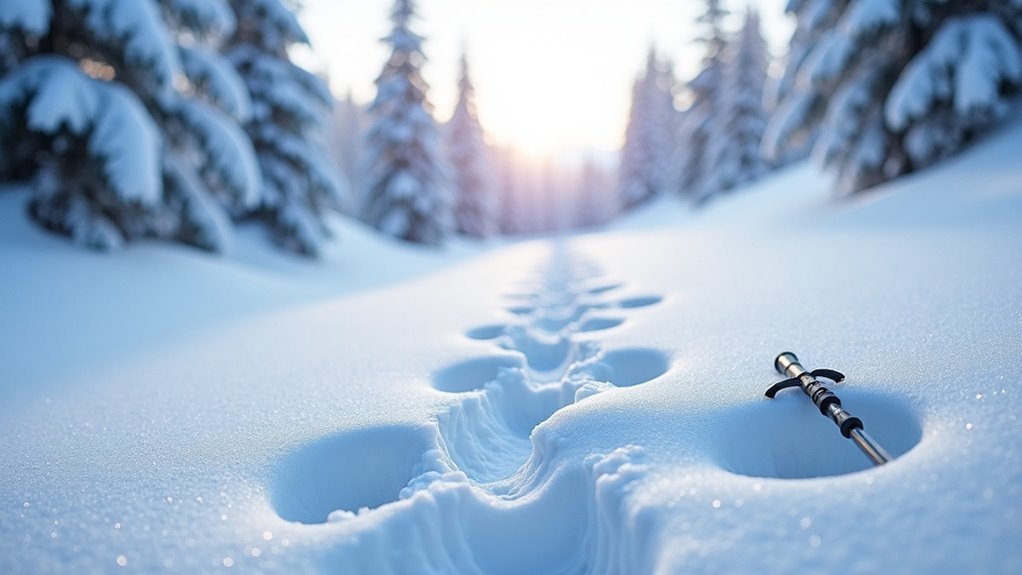
Postholing in winter hiking happens when you sink into soft, deep snow, making your trek more exhausting and challenging. This usually occurs in warmer conditions, fresh snowfall, or uneven terrains. Each step becomes a struggle as your legs tire from the effort, slowing your pace and possibly leading to injury. To navigate postholing territory effectively, you’ll want to know techniques and gear that can help you maintain stability and enjoy your winter adventure even more.
Key Takeaways
- Postholing occurs when hikers sink into soft, deep snow due to inadequate compaction, increasing fatigue and difficulty in movement.
- It is most common in warmer temperatures when snow softens and during fresh snowfall that hasn’t settled.
- Postholing can slow hiking pace, lead to frustration, and increase the risk of injury due to unstable footing.
- Techniques to avoid postholing include starting hikes early, choosing shaded paths, and using snowshoes for better stability.
- Monitoring weather conditions and familiarizing oneself with terrain can help navigate areas prone to postholing.
Understanding Postholing
When you venture out into the winter wilderness, understanding postholing is essential to your hiking experience.
Postholing occurs when your leg sinks deep into soft snow, creating frustrating holes that can slow you down. This often happens in warmer temperatures when the snow becomes softer.
To navigate deep snow effectively, you should use snowshoes, which distribute your weight and prevent your legs from sinking. Not only do they make your hike easier, but they also keep the trail safe for others, avoiding uneven, hazardous footprints.
Embracing snowshoes is key to enjoying a smooth, fulfilling winter adventure.
Priority #1: Avoid Postholing
To avoid postholing, you should hit the trail early in the morning when the snow is still firm and supportive.
Choosing shaded paths not only enhances your footing but also keeps you safe from the dreaded sink.
Don’t forget to use snowshoes effectively; they’re your best ally in maintaining stability and preventing fatigue on those winter hikes.
Start Early Morning Hikes
Starting your winter hikes early in the morning not only sets the tone for a successful adventure but also greatly minimizes the risk of postholing. As temperatures dip overnight, the snow remains compact and stable, making it easier for you to traverse without sinking.
You’ll likely encounter fewer trail users, allowing for a smoother experience as you navigate the terrain. To maximize your comfort and safety, wear snowshoes or skis, ensuring you glide over the surface rather than struggle like anyone else caught in softer afternoon snow.
Prioritizing these early outings can markedly enhance your winter hiking enjoyment.
Choose Shaded Trails
Opting for shaded trails can greatly enhance your winter hiking experience by reducing the chances of postholing. In these cooler areas, snow stays firmer longer, especially when the sun starts warming things up.
By choosing shaded routes, you’ll enjoy a more stable hiking experience, as the snowpack remains less prone to softening. Familiarizing yourself with local terrain helps you discover these hidden gems, enhancing both safety and enjoyment.
Plus, exploring shaded trails allows you to immerse yourself in stunning winter landscapes that maintain their pristine beauty. Embrace the tranquility of shaded routes and elevate your winter adventures!
Use Snowshoes Effectively
When you venture into deep snow for a winter hike, using snowshoes effectively can make all the difference in your experience.
Here are some tips to keep you gliding smoothly and avoiding postholing:
- Use snowshoes early in the day before the snow softens.
- Verify your snowshoes fit properly with a secure binding system.
- Follow existing tracks made by other hikers or skiers for firmer ground.
- Remember, snowshoes aren’t just helpful; they’re often essential on trails with 8+ inches of snow.
I’ve Hit Postholing Territory. Now What?
You’ve found yourself in postholing territory, and it’s essential to assess your surroundings before making a decision.
Check for any tracks from skiers or snowshoers that might lead you to firmer ground, and consider the weather—warmed snow can slow you down considerably.
If you’ve got snowshoes handy, now’s the time to put them on for better mobility and to ease your trek through the deep snow.
Assessing Safety and Conditions
As you navigate through the soft, powdery snow, evaluating your safety becomes essential when you hit postholing territory.
Consider these factors to make informed decisions:
- Assess whether it’s safer to turn back or continue based on your energy levels and snow conditions.
- Look for firmer ground, checking for existing tracks made by skiers or snowshoers.
- If you have snowshoes, use them to enhance your mobility and reduce postholing.
- Keep an eye on the weather, as warming temperatures can worsen snow softness.
Stay aware, and prioritize your safety while enjoying the beauty of winter hiking.
Finding Firmer Ground
Hitting postholing territory can quickly turn a pleasant hike into a challenging ordeal, but you don’t need to feel defeated.
Start by evaluating your surroundings—decide if it’s safer to turn back or push forward. Keep an eye out for tracks left by skiers or snowshoers; these often lead to firmer ground, offering better traction.
If you’re equipped with snowshoes, use them to glide over soft snow. Pay attention to weather conditions—hiking during cooler times can minimize postholing.
Finally, leverage your terrain knowledge to navigate around deep snow deposits and enhance your chances of finding that solid footing.
Equipment Considerations and Solutions
When you find yourself trudging through postholing territory, the right equipment can make all the difference in your hiking experience.
Always consider your options carefully, especially when conditions change. Here are some essentials to carry:
- Snowshoes: They provide better flotation and reduce postholing.
- Trekking Poles: These improve stability and help you gauge soft spots.
- Weather Awareness: Check forecasts to avoid warmer, softer snow conditions.
- Knowledge of Terrain: Familiarize yourself with the area to steer clear of postholing hotspots.
With the right gear and awareness, you can make your winter hiking more enjoyable and safer for everyone involved.
The Summer Version of Postholing
Bushwhacking during summer hikes presents its own unique challenges, much like the winter phenomenon of postholing. Instead of sinking into snow, you face dense vegetation that can ensnare you, making navigation tricky. Terrain awareness becomes vital; knowing where the underbrush thickens helps you stay on course. Sticking to established paths is essential to avoid getting stuck or lost. Here’s a quick comparison of summer hiking challenges:
| Challenge | Comparison to Postholing | Tips to Navigate |
|---|---|---|
| Overgrown Trails | Like sinking into snow | Stay on marked paths |
| Dense Vegetation | Traps you like snow | Use a map and compass |
| High Grass | Blocks visibility | Wear long pants |
| Wildlife Encounters | Unexpected hazards | Make noise while hiking |
Benefits and Coping Strategies
How can you turn the challenge of postholing into a rewarding experience? Embrace the absurdity and transform frustration into laughter while enjoying the great outdoors.
Here are some strategies to enhance your postholing adventure:
- Engage your muscles: Experience a unique full-body workout through high-stepping and crawling.
- Capture memories: Take photos to document your journey and preserve those unforgettable moments.
- Foster camaraderie: Connect with fellow hikers who share this common experience.
- Appreciate nature: Remember that even frustrating days outdoors beat the monotony of indoor chores.
With these approaches, postholing becomes an opportunity for growth and joy!
Equipment for Winter Hiking
As winter envelops the landscape in a blanket of snow, the right equipment becomes essential for a safe and enjoyable hiking experience.
Snowshoes are a must when tackling deep snow, especially over 8 inches, as they prevent postholing and help maintain trail conditions for others. Pair them with gaiters and insulated boots to keep snow out and guarantee warmth in frigid temperatures.
Carrying snowshoes reduces the risk of exhaustion and injury, while also fulfilling regulatory requirements in many areas. Familiarize yourself with avalanche safety gear and proper layering to enhance your overall safety and enjoyment on winter excursions.