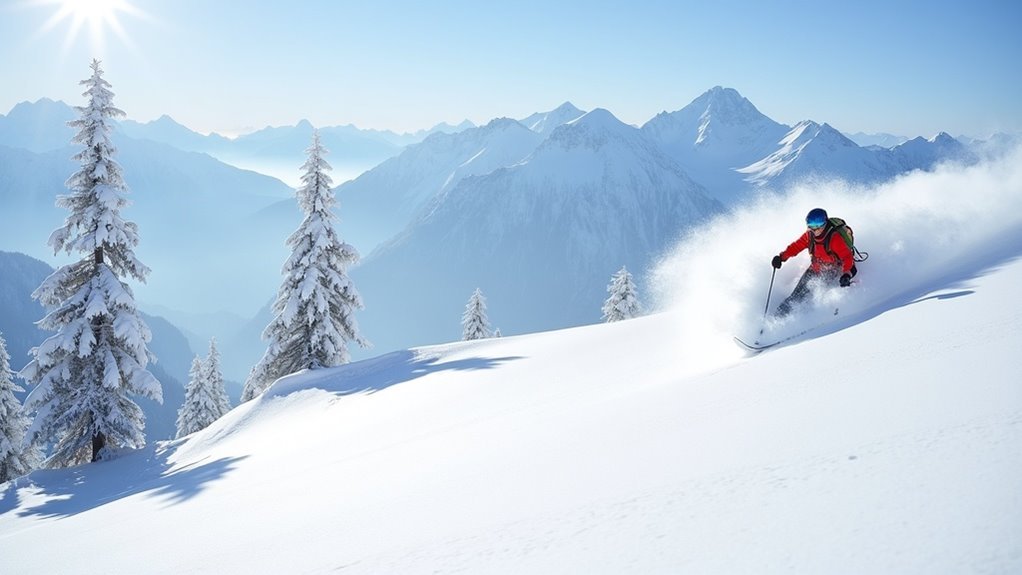
Glissading is a technique that lets you slide down snow or ice slopes, providing a quick descent while maintaining control. You should sit with your legs bent to absorb shocks, using an ice axe for safety. Always avoid crampons to prevent losing control. It’s vital to pick safe slopes with clear run-out areas and to be aware of potential hazards like crevasses. By mastering glissading, you’ll enhance your snow hiking experience. There’s more to explore on this essential skill.
Key Takeaways
- Glissading is a snow travel technique for sliding down slopes, usually performed seated for better control and speed.
- Safety is crucial; avoid wearing crampons to reduce the risk of loss of control and injuries.
- Always check the landing area for obstacles like crevasses or rocks before starting your descent.
- Carry an ice axe for self-arrest but ensure it is held diagonally for readiness during glissading.
- Use proper gear, including a helmet and gloves, to protect against falls and facilitate safe self-arrest maneuvers.
Understanding Glissading: Definition and Purpose
Glissading is an exciting snow travel technique that allows you to slide down snow or ice slopes with control and speed. Typically performed in a seated position, it enhances your descent after reaching a summit.
It’s most effective later in the day when the snow is softer, providing a smoother experience. However, safety is paramount; avoid using crampons while you glissade, as they can increase the risk of injury.
Always choose slopes with a clear run-out and no hazards like crevasses. Understanding these principles will help you serve others by ensuring safe and enjoyable snow travel experiences.
Essential Techniques for Safe Glissading
When preparing for a safe glissade, mastering essential techniques is crucial for an enjoyable descent. Follow these key practices:
- Seated Position: Glide seated with your legs bent to absorb shocks and maintain control while holding your ice axe diagonally for self-arrest readiness.
- Avoid Crampons: Never wear crampons while glissading, as they increase the risk of losing control and injury.
- Clear Run-Out Area: Verify the landing area is free from obstacles like crevasses or rocks.
Practicing self-arrest on gentle slopes first helps build confidence before tackling steeper terrains.
Stay aware of snow conditions and your surroundings for maximum safety.
Common Risks and Injuries Associated With Glissading
While enjoying the thrill of glissading, you must be aware of the common risks and injuries that can arise. High-speed descents increase the likelihood of uncontrolled falls, leading to serious impacts with hard ice or rocks. Wearing crampons can worsen injuries, causing loss of control and severe leg damage. Common injuries include cuts from ice axes, head trauma, and cold-related issues due to wetter snow. Always assess objective hazards like hidden crevasses and rocky terrain to avoid accidents.
| Common Risks | Potential Injuries |
|---|---|
| Uncontrolled falls | Dislocations |
| Crampon accidents | Severe ankle injuries |
| Ice axe cuts | Head trauma |
| Cold exposure | Frostbite |
| Hidden crevasses | Serious impacts |
Key Safety Rules to Follow
To guarantee a safe glissading experience, it’s essential to follow specific safety rules that minimize risks. Here are three key guidelines:
- Avoid crampons: Don’t wear crampons while glissading, as they can cause severe injuries and loss of control.
- Stay off rope teams: Never glissade if you’re part of a rope team to prevent chain reactions and accidents.
- Choose safe terrain: Avoid glaciers due to hidden crevasses and ascertain the run-out area is clear before you start.
Always carry your ice axe and prioritize caution—if unsure about the conditions, opt to walk down the slope instead.
Proper Gear for Glissading
Following the key safety rules enhances your glissading experience, but having the right gear is equally important.
A helmet is essential to protect your head from falls or ice axes, while gloves help with self-arrest maneuvers.
Don’t forget sunglasses to shield your eyes from sharp ice axe points and the sun’s glare on snow surfaces.
When you glissade, remove crampons to maintain control and reduce injury risk.
Secure loose gear inside your pack to avoid hazards during your descent.
Practicing self-arrest techniques with this gear is crucial for safe snow travel, especially on slopes with safe runouts.
Enhancing Skills and Situational Awareness
As you prepare for a glissading adventure, enhancing your skills and situational awareness is essential for a safe and enjoyable experience.
Make sure to:
- Assess Snow Conditions: Continuously evaluate snow quality and potential hazards like crevasses or rocks.
- Practice Self-Arrest Techniques: Master self-arrest in various positions and slopes to regain control if needed.
- Prioritize Individual Pace: Focus on comfort and safety, especially if you or your group members are inexperienced.