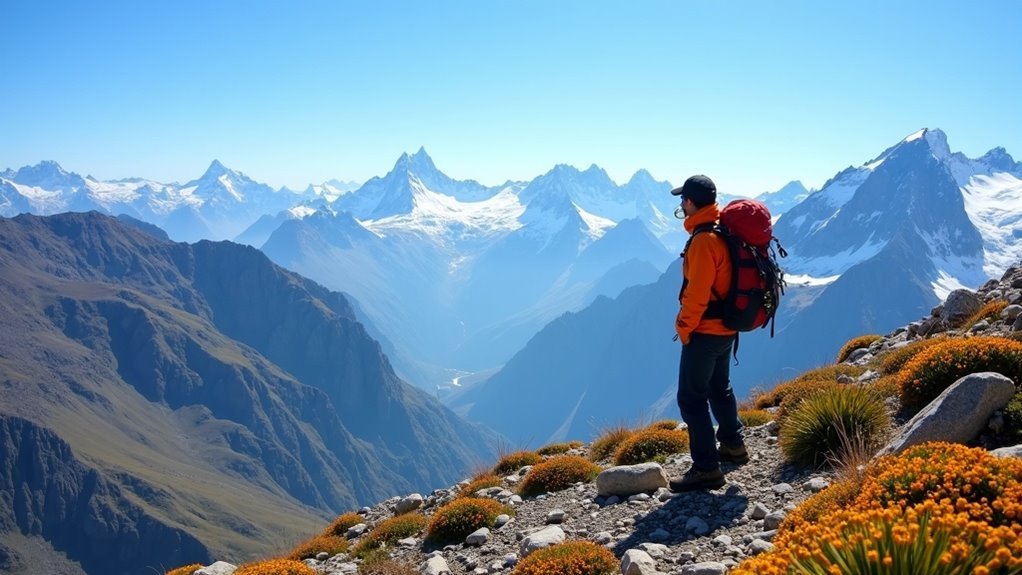
Acclimatization for high-altitude hiking is all about getting your body used to lower oxygen levels found at elevations between 8,000 and 12,000 feet. It takes about 1-3 days for your body to adapt, increasing red blood cell production and breathing rate. To avoid altitude sickness, you should ascend gradually, aiming for a maximum gain of 1,000 feet each day. Staying well-hydrated and adjusting your activity level is key. Want to know more strategies for a safe trek?
Key Takeaways
- Acclimatization is the body’s process of adapting to reduced oxygen levels at high altitudes, typically taking 1-3 days.
- Gradual ascent is recommended, limiting altitude gain to 1,000 feet daily above 10,000 feet to reduce altitude sickness risk.
- The “climb high, sleep low” method encourages effective acclimatization by allowing the body to adjust to higher elevations during the day.
- Staying well-hydrated, aiming for 3-4 quarts of fluids daily, helps improve oxygen transport and reduces altitude-related symptoms.
- Light physical activity supports acclimatization, while intense workouts may hinder the body’s adjustment to high altitudes.
Understanding High Altitude and Its Effects
When you venture into high altitudes, typically defined as elevations between 8,000 and 12,000 feet, you’ll notice a significant change in your environment, particularly in the availability of oxygen.
At these elevations, the oxygen concentration drops, challenging your body. The acclimatization process is essential; it typically takes 1-3 days for your body to adapt, increasing red blood cell production and enhancing your breathing rate.
Without proper acclimatization, you may experience symptoms of Acute Mountain Sickness (AMS) within 12-24 hours, leading to potential altitude illnesses.
Understanding these effects helps you prepare and serve others effectively in high-altitude adventures.
The Importance of Acclimatization
Acclimatization is essential for anyone tackling high-altitude hiking, as your body needs time to adjust to the lower oxygen levels.
Proper acclimatization can help you avoid altitude sickness, which brings symptoms like headache, dizziness, and nausea.
To acclimatize effectively, rise gradually, limiting your ascent to 1,000 feet daily above 10,000 feet. Staying well-hydrated enhances blood circulation and oxygen transport, aiding in your adaptation process.
Remember, full acclimatization can take weeks, with significant time needed at high altitudes.
Embrace this critical step to guarantee a safe and enjoyable hiking experience while your red blood cells increase to meet the challenge.
Strategies for Effective Acclimatization
Effective acclimatization strategies can make all the difference in your high-altitude hiking experience.
Start with a gradual ascent, limiting your altitude gain to 1,000 feet daily above 10,000 feet. Use the “climb high, sleep low” method—hike higher during the day and descend for sleep, promoting effective acclimatization.
Stay well-hydrated by drinking 3-4 quarts of fluids daily to enhance circulation and oxygen transport, reducing symptoms that mimic altitude sickness.
Engage in light physical activity, as intense workouts can hinder adaptation.
Always prioritize safety; if symptoms persist, be ready to descend to protect your health and well-being.
Recognizing and Preventing Altitude Illnesses
Understanding how to recognize and prevent altitude illnesses is essential for anyone venturing into high-altitude environments.
Acclimatization is key; allow 1-3 days for your body to adjust to reduced oxygen levels. Use a gradual ascent strategy, limiting altitude gain to 1,000 feet daily, and remember to “climb high, sleep low.”
Stay hydrated, aiming for 3-4 quarts of fluids daily, as dehydration can mimic Acute Mountain Sickness (AMS) symptoms like headaches and dizziness. If you notice these signs, acclimatization or descent can help.
For severe cases like High Altitude Pulmonary Edema (HAPE) or High Altitude Cerebral Edema (HACE), immediate descent is vital.
Treatment Options for Altitude-Related Conditions
When you find yourself battling altitude-related conditions, knowing the right treatment options can make all the difference.
For Acute Mountain Sickness (AMS), acclimatization or a quick descent is essential. Diamox can alleviate AMS symptoms by enhancing oxygen metabolism, with a recommended dose of 125 mg twice daily. Pain medications like ibuprofen can help with headaches but won’t address the root causes.
Severe cases, like High Altitude Pulmonary Edema (HAPE), require immediate descent and may benefit from dexamethasone.
Don’t forget proper hydration and a high-carbohydrate diet at high altitude, as these can support your acclimatization efforts effectively.