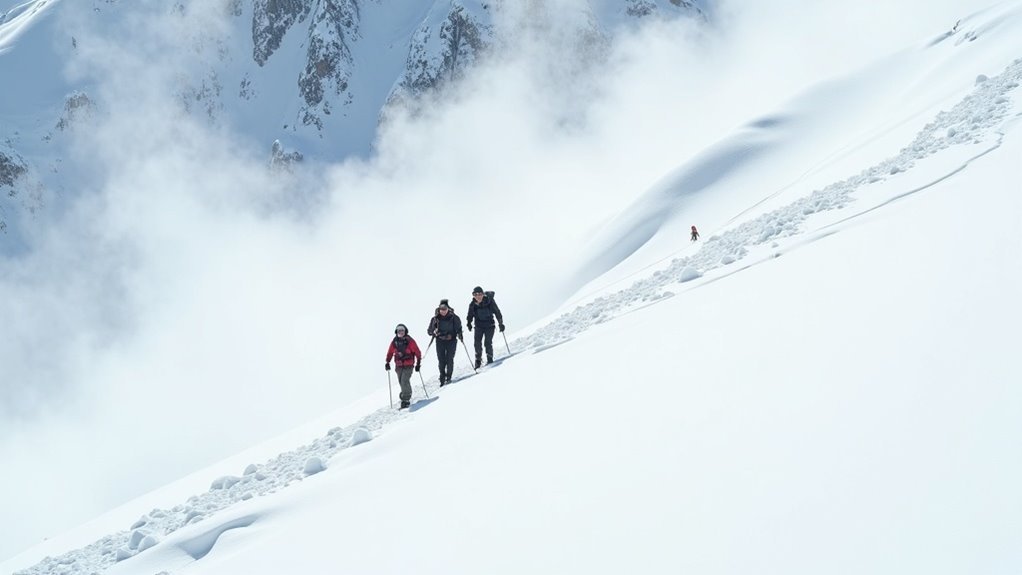
A false floor in snow hiking hazards refers to layers of snow that hide unstable cavities beneath. These layers can collapse under your weight, leading to potential falls or entrapment, especially around areas like tree wells or cliffs. Signs of false floors include cracks, uneven terrain, or sudden dips in the snow. It’s essential to remain aware of recent snowfall and assess snow stability before stepping. Discovering how to safely navigate these hazards can enhance your winter hiking adventures.
Key Takeaways
- False floors are layers of snow that can collapse unexpectedly, concealing deeper cavities or unstable surfaces beneath.
- They commonly form over weak areas like streambeds or thin ice, creating hazardous conditions for hikers.
- Signs of false floors include cracks, irregular patterns, and sudden dips in the snow surface.
- Recent heavy snowfall or warming trends increase the risk of false floors collapsing under weight.
- Precautions include assessing the terrain, using poles to test stability, and staying informed about local snow conditions.
Understanding False Floors
When hiking in snowy conditions, understanding false floors is essential for your safety. A false floor occurs when a thin layer of snow hides a deeper cavity, creating a deceptive surface that can collapse under your weight.
These hazards often lurk near tree wells, cliffs, or areas with recent snow accumulation, where the snowpack may be unstable. Be cautious of signs like uneven terrain or sudden dips in the snow surface, as they may indicate a false floor.
Staying informed about recent weather patterns can help you assess snow conditions and reduce the risk of encountering these dangerous areas.
Formation of False Floors
False floors form primarily when snow accumulates over weak or hollow areas, creating a deceptive surface that can give way unexpectedly.
To understand how these hazardous formations arise in deep snow, consider the following factors:
- Accumulation over unstable surfaces, like streambeds, leads to collapsible conditions.
- Wind-compacted snow can create a crust that appears solid but lacks support beneath.
- Indicators such as unusual indentations or sagging areas may signal potential false floors.
Identifying False Floors
When hiking in snowy conditions, it’s essential to understand what a false floor is: a layer of snow that hides an unstable void beneath.
To stay safe, you need to recognize key danger signs, like soft patches or unusual textures in the snow.
Define False Floors
Deceptive layers of snow, known as false floors, can pose serious risks to hikers. These hazards can appear solid but may collapse under your weight.
To better understand false floors, keep these points in mind:
- They often conceal hidden dangers like creeks or holes beneath the surface.
- Commonly found where snow accumulates over thin ice or unstable surfaces.
- Look for visual cues such as cracks, irregular patterns, or depressions that signal danger.
Staying vigilant and cautious while traversing snowy terrains can help you avoid these treacherous false floors, ensuring a safer hiking experience.
Recognizing Danger Signs
Understanding false floors is essential for your safety in snowy conditions. To avoid falling through, focus on recognizing danger signs.
Look for uneven snow surfaces or crusty layers that may conceal hollow spaces beneath. Be cautious near tree wells, where the surrounding snow can collapse easily, creating deceptive false floors.
Wind-sculpted snowdrifts can also hide weak spots that appear stable. Always test the snow with your poles or by placing a foot carefully before fully committing to walking across suspected areas.
Risks Associated With False Floors
While hiking in snowy conditions, you must remain vigilant about the risks associated with false floors. These deceptive surfaces can lead to dangerous situations.
Here are three key risks to keep in mind:
- Unexpected Collapse: The thin layer of snow may hide voids, causing you to fall unexpectedly.
- Entrapment: Snow around tree wells can create false floors that may trap you, leading to serious injury.
- Instability: Recent heavy snowfall or melting can compromise snowpack stability, increasing the danger.
Always stay alert and avoid stepping on seemingly solid snow to guarantee your safety in these conditions.
Precautions to Take
To guarantee your safety while hiking in snowy conditions, it’s essential to take specific precautions against the risks posed by false floors.
Always assess the ground beneath you before stepping, looking for signs of instability like cracks or unusual textures. Use snowshoes or ski poles to test the snow’s stability ahead of you.
Assess the ground beneath you for cracks or unusual textures, and use snowshoes or ski poles to test stability.
Avoid hiking in areas with recent heavy snowfall or warming trends, as these can increase false floor risks.
Stay informed about local conditions and warnings regarding snow stability, utilizing resources like avalanche forecasts and park ranger advisories to assure a safer hiking experience.
How to Safely Navigate Snowy Terrain
As you navigate snowy terrain, it’s crucial to stay vigilant and proactive in evaluating the ground beneath you. False floors can hide unstable ground, leading to falls or injuries.
Follow these steps for safety:
- Use a trekking pole to probe the snow ahead, checking for stability before placing your weight.
- Maintain a safe distance from hazards like tree wells and steep slopes where snow accumulates.
- Familiarize yourself with avalanche safety practices, as false floors increase avalanche risks on unstable slopes.
Emergency Response to False Floor Incidents
Recognizing the potential hazards of false floors in snowy environments is critical for your safety. If you fall through, stay calm and assess your injuries before attempting to escape.
Check the snow depth and surrounding terrain carefully. Signal for help, providing clear information about your location and condition to improve Search and Rescue efforts.
Carry a first aid kit to address any injuries, and verify you’re equipped with an avalanche beacon, training your group on its use. This preparation can greatly speed up rescue operations and increase your chances of a safe recovery in the event of an incident.
Conclusion on False Floors and Hiking Safety
Although hiking in snowy environments can be a rewarding experience, understanding the dangers of false floors is essential for your safety.
To minimize risks, consider these tips:
- Use hiking poles for balance and to test the snow’s stability before stepping.
- Keep a safe distance from trees to avoid hidden tree wells where false floors often occur.
- Equip yourself with snowshoes or crampons, enhancing traction and stability.
Regularly check local conditions and snowpack stability.
With the right gear to keep and awareness, you can enjoy winter hikes while staying safe from the hazards of false floors.