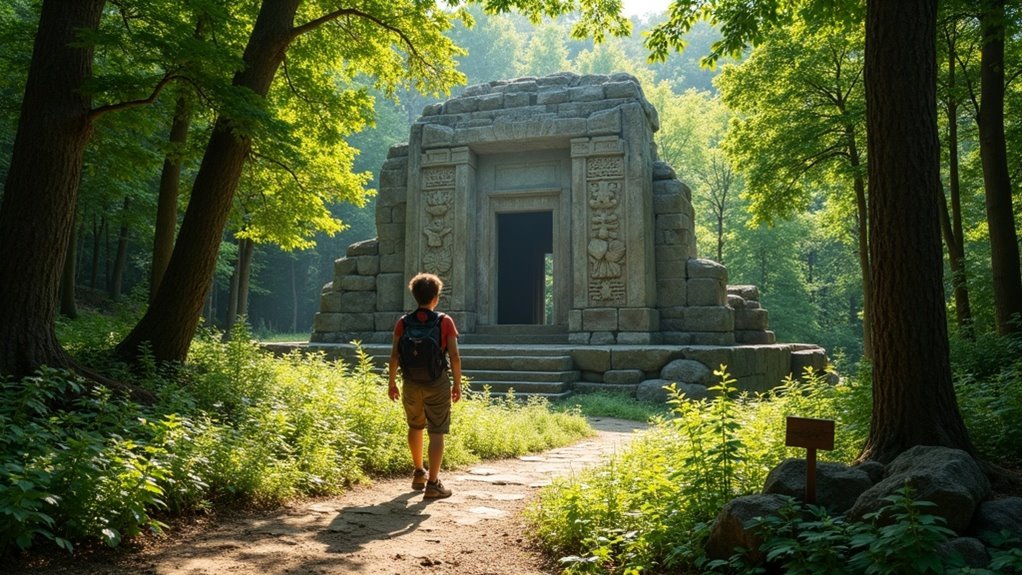
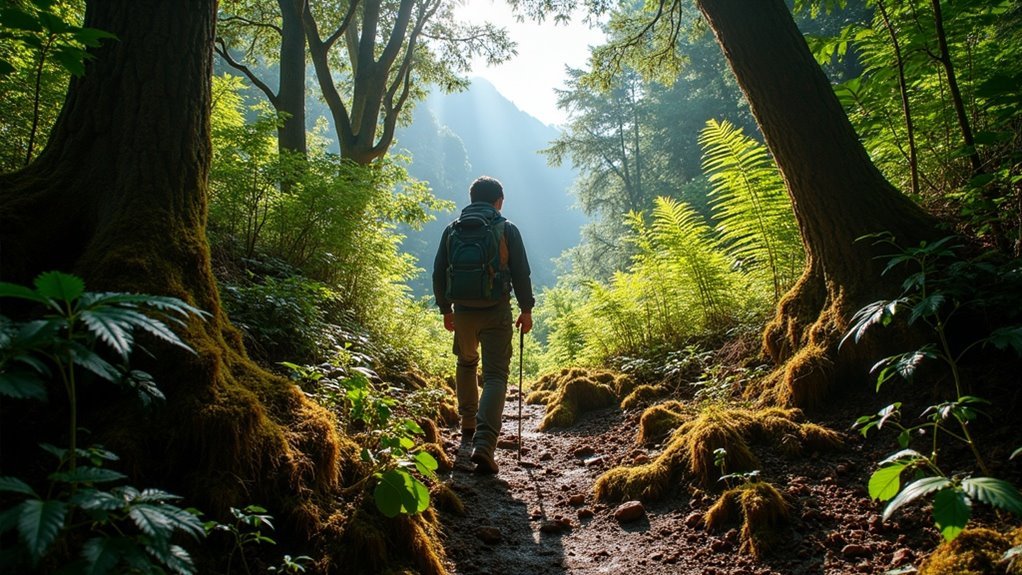
A bushwhack in off-trail hiking means maneuvering through thick vegetation and untouched terrain. It’s an adventurous way to explore nature, uncovering hidden beauties that most hikers miss. However, expect challenges like slow progress and potential hazards, so your navigation skills need to be sharp. You’ll rely on maps and compasses to guide your way. For those intrigued, there’s a whole world of techniques and tips to master this exciting hiking style waiting for you.
Key Takeaways
- Bushwhacking refers to off-trail hiking through dense vegetation, emphasizing exploration and connection with nature.
- It involves navigating unmarked paths, often leading to hidden natural gems.
- Strong navigation skills, including map and compass usage, are essential for safety.
- Challenges include dense vegetation, hidden hazards, and the need for flexible route changes.
- Following Leave No Trace principles is crucial to minimize environmental impact during bushwhacking.
Definition of Bushwhacking
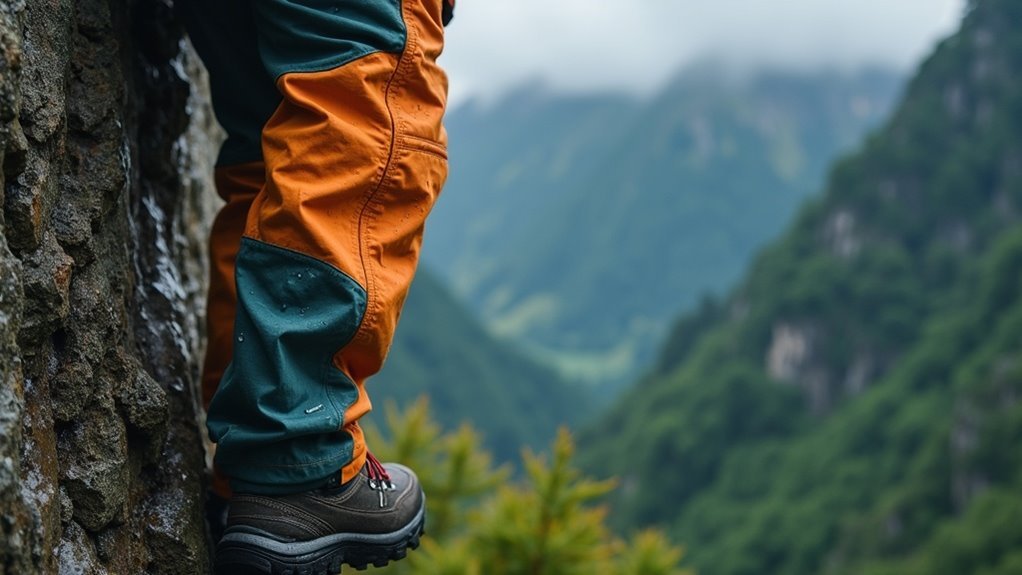
Bushwhacking is the thrill of venturing off the beaten path, immersing yourself in nature’s untamed beauty. It’s a form of off-trail hiking where you navigate around dense vegetation, tackling obstacles that marked trails don’t present.
This exhilarating adventure emphasizes exploration, rooted in the term’s origin—clearing bush to create pathways. In bushwhacking, you’ll rely on strong navigation skills, using topographical maps and compasses to avoid getting lost.
Each step leads to hidden gems of nature, untouched by human presence, offering a unique opportunity to serve the environment and yourself through deep connection and discovery. Embrace the wild!
The Challenges of Off-Trail Hiking
While the allure of off-trail hiking captivates many adventurers, it comes with its own set of formidable challenges. Bushwhacking is done through dense vegetation and uneven terrain, often slowing your progress. You must be aware of your surroundings to avoid hazards like thorny plants and mud, which can tear your clothing and gear. Steering through these obstacles requires sharp decision-making skills and a solid understanding of maps and compasses. Don’t forget to pack a first aid kit, as unpredictable routes can lead to injuries.
| Challenge | Impact | Solution |
|---|---|---|
| Dense vegetation | Slows progress | Choose routes wisely |
| Hidden hazards | Scratches and injuries | Use protective clothing |
| Navigational errors | Unmet objectives | Master map skills |
| Environmental damage | Sensitive vegetation harmed | Make conscientious choices |
| Unexpected obstacles | Route changes needed | Stay flexible |
Essential Navigation Skills
When you’re off-trail hiking, mastering map reading techniques is your first line of defense against getting lost.
Understanding contour lines and terrain features not only guides your path but also enhances your appreciation of the landscape around you.
Pair that with compass navigation basics, and you’ll confidently navigate through even the densest vegetation.
Map Reading Techniques
Maneuvering through uncharted terrain demands a solid grasp of map reading techniques, as they’ll be your lifeline in the wilderness.
Start by understanding topographic maps; they reveal elevation changes and contours, essential for traversing the terrain. Familiarize yourself with contour lines—close lines indicate steep areas, while wider ones suggest gentler slopes.
Practice using a map and compass together, orienting the map to your surroundings and taking bearings. Keep track of your starting direction to easily retrace steps in dense vegetation.
Finally, practice estimating distances with a map scale, considering terrain difficulty to manage your hiking expectations effectively.
Compass Navigation Basics
A reliable compass is your best ally in the wilderness, guiding you through uncharted territory with confidence.
Mastering compass navigation is essential for successful bushwhacking and off-trail adventures. Here are key skills to enhance your navigation:
- Align the compass needle with the north marking.
- Familiarize yourself with topographic maps for terrain features.
- Periodically check your compass to adjust your course.
- Practice compass skills in familiar areas to build confidence.
- Observe landmarks to verify your position.
With these basics, you’ll navigate the wild with assurance, making every bushwhack a safe and rewarding experience.
Embrace the journey ahead!
Must-Have Gear for Bushwhacking
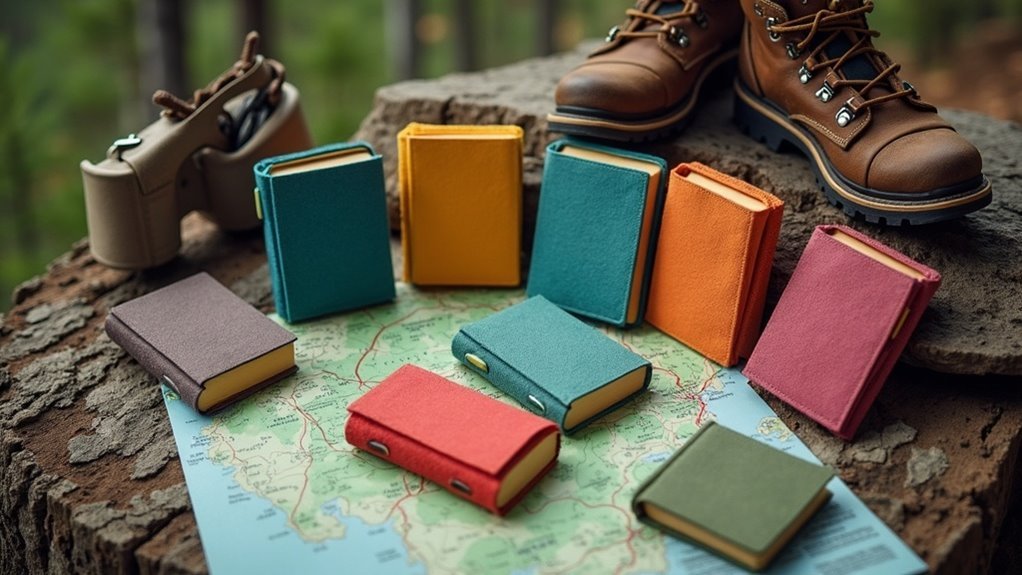
While exploring off-trail terrain can be exhilarating, having the right gear is vital to guarantee your safety and comfort. A reliable map and compass should always accompany you, as GPS devices can fail in remote areas.
Invest in sturdy, water-resistant boots to protect your feet against rough terrain and dense vegetation. Don’t forget a basic first aid kit stocked with items for common injuries.
Make sure you carry enough food, water, and snacks for at least 72 hours in case of unforeseen circumstances. Finally, a Personal Locator Beacon (PLB) is essential for signaling help in emergencies, providing peace of mind on your adventure.
Safety Considerations and Precautions
When venturing off the beaten path, prioritizing safety is essential to fully enjoy your bushwhacking experience. If it’s your first time, keep these safety considerations in mind:
- Always carry a basic first aid kit with familiar items.
- Inform someone of your hiking plan and route.
- Stay aware of your surroundings to avoid hazards.
- Use a whistle to signal for help if needed.
- Record your starting direction with a compass for navigation.
These precautions not only help guarantee your safety but also align with the Leave No Trace principles.
We highly recommend taking these steps to enhance your adventure!
Environmental Awareness and Ethics
Understanding the impact of your actions on the environment is essential for anyone venturing into off-trail hiking.
Bushwhacking can disturb delicate ecosystems, so stick to game trails whenever possible to minimize environmental impact. Embrace Leave No Trace principles: pack out all trash and avoid disturbing sensitive habitats.
Keep your group size small to lessen your footprint and enhance your experience in nature. Additionally, clean your shoes and gear before entering natural areas to prevent the spread of invasive species.
Community Engagement and Shared Experiences
Engaging with fellow outdoor enthusiasts can transform your bushwhacking adventures into something truly memorable.
The community you build fosters shared experiences that deepen your love for nature. Here are some highlights of community engagement:
- Share tips and stories about traversing tough terrain.
- Celebrate the rewards of overcoming bushwhacking challenges together.
- Collaborate on responsible practices to protect the environment.
- Strengthen bonds through teamwork during off-trail explorations.
- Create lasting memories that inspire future adventures.