A blowout in hiking boots is a sudden failure, often happening at seams or where the sole detaches from the upper. This catastrophic failure can render your boots unusable and disrupt your hiking adventures. Causes include excessive wear, moisture damage, and improper fit. You’ll notice signs like visible separations, cracks, or loss of cushioning, indicating that you’re at risk. Understanding these factors can help you choose better boots and maintain them effectively. There’s more to learn about preventing and managing these issues.
Key Takeaways
- A blowout in hiking boots refers to sudden failures, often at seams or sole detachments, rendering them unusable.
- Causes include excessive wear, poor manufacturing quality, and moisture damage, particularly affecting polyurethane midsoles.
- Signs of impending blowouts include visible separation between the sole and upper, and deep creasing in the midsole.
- Preventative measures include regular inspections, proper storage, and using waterproof treatments to maintain boot integrity.
- Repairing boots is usually more cost-effective than replacing them, extending their lifespan and supporting environmental sustainability.
Understanding Blowouts in Hiking Boots
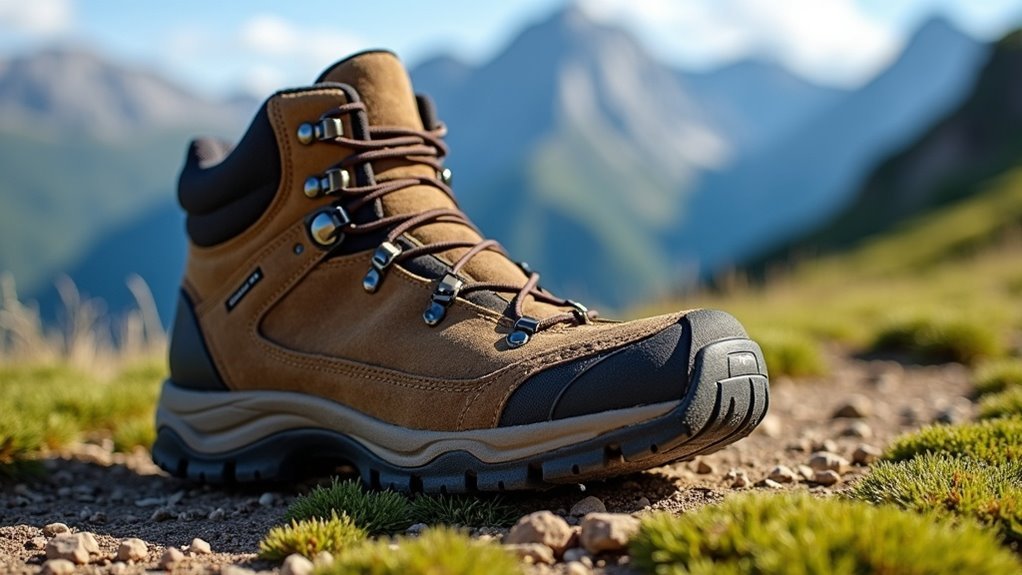
When you’re out on the trails, understanding blowouts in hiking boots is vital for your safety and comfort. A blowout refers to a sudden failure, typically occurring at the seams or where the sole detaches from the upper part of the boot. This catastrophic failure renders your boots unusable, jeopardizing your hiking experience.
Factors contributing to blowouts include excessive wear, poor manufacturing quality, and inadequate maintenance, particularly in moisture-sensitive materials. The likelihood of a blowout increases with age, especially when boots aren’t stored properly.
Regular inspections and timely repairs are essential for preventing blowouts and ensuring your hiking boots’ longevity.
Causes of Hiking Boot Blowouts
Hiking boot blowouts often stem from a combination of factors that compromise the materials and construction of the boots. Excessive wear and tear occurs in high-friction areas, weakening adhesive bonds between the sole and upper.
If you’re hiking on the east coast, moisture can accelerate hydrolysis of the polyurethane midsole, which diminishes structural integrity. An improper fit leads to uneven pressure, increasing strain during your treks.
Environmental factors like extreme temperatures also play a role, as they weaken your boots over time. In the United States, understanding these causes helps you choose boots that endure your adventures.
Signs Your Boots Are at Risk of a Blowout
Recognizing the signs that your boots are at risk of a blowout can prevent unexpected failures during your hikes.
Look for visible separation between the sole and upper, indicating impending failure. Cracking or deep creasing in the midsole material suggests weakened integrity, heightening blowout risk.
If you experience a noticeable loss of cushioning or support, it’s a warning that the midsole may be degrading.
Regularly inspect your boots after use, particularly following wet conditions, to identify early damage signs.
Being proactive about these indicators can help guarantee your footwear remains reliable and ready for your adventures.
Prevention Strategies for Hiking Boot Failures
To prevent hiking boot failures effectively, regular maintenance and care are essential.
Inspect your boots frequently for signs of wear, especially the soles and midsoles, to catch issues early.
Store them in a cool, dry place, away from sunlight, to avert hydrolysis of polyurethane midsoles.
Use waterproofing treatments like Nikwax to safeguard against water damage.
Guarantee your boots fit properly and are broken in before tackling long hikes, as this minimizes stress on materials.
Finally, schedule periodic professional repairs, such as resoling, to extend your boots’ lifespan and reduce the environmental impact of manufacturing new ones.
Repairing vs. Replacing Your Hiking Boots
When faced with a blowout in your hiking boots, deciding whether to repair or replace them can feel overwhelming.
Repairing is often more cost-effective, averaging around $144 compared to $375 for new boots. Resoling is a viable option, especially if hydrolysis has compromised the midsoles.
Regular use can mitigate hydrolysis, making repairs more practical and extending your boots’ lifespan. Additionally, maintaining and repairing your gear contributes to environmental sustainability, as 50% of greenhouse gas emissions stem from shoe production.
Weigh your options carefully to balance cost, functionality, and your commitment to reducing environmental impact.