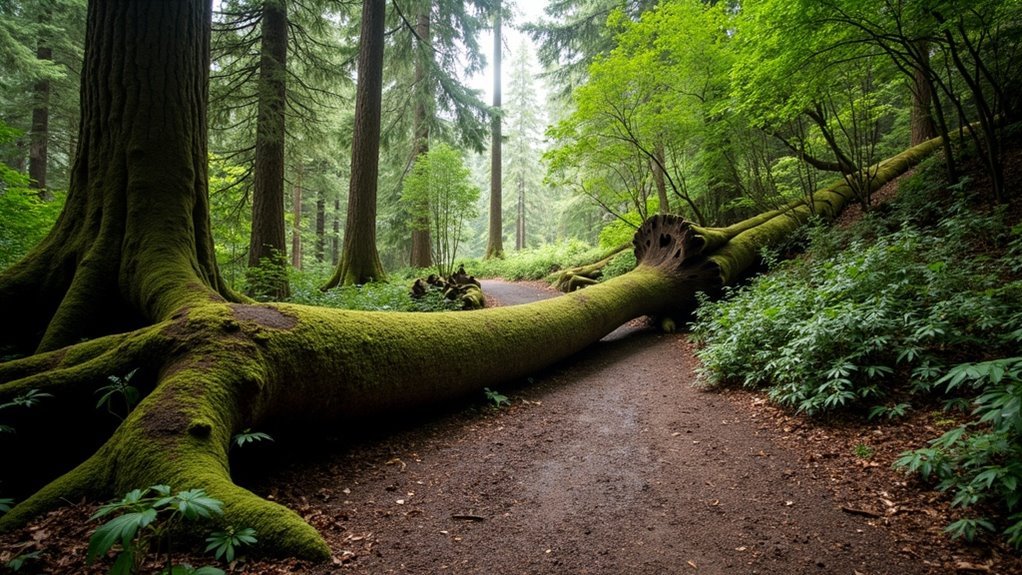
A blowdown on hiking trails is when trees or branches fall across the path, creating obstructions due to severe weather, soil erosion, or disease. These fallen sections can pose safety risks, making navigation challenging for hikers. A timely response is essential to clear such obstacles and maintain safe trail conditions. You’ll discover more about the impact of blowdowns, trail maintenance, and community efforts to manage these situations effectively.
Key Takeaways
- A blowdown is when trees or branches fall across hiking trails, creating obstructions for hikers.
- Causes of blowdowns include severe weather, soil erosion, aging trees, insect infestations, and natural decay.
- Blowdowns hinder trail navigation, increase injury risks, and may lead to temporary trail closures.
- Regular trail maintenance is essential for safety, preventing trail widening, and enhancing the hiking experience.
- Community engagement helps coordinate efforts to clear blowdowns while balancing trail safety with ecological benefits.
Definition of Blowdown
A blowdown is an obstruction on hiking trails, consisting of fallen trees or large branches that disrupt your path. These obstacles can arise from high winds, storms, or natural decay, ranging from single trees to extensive areas affected by severe weather.
When you encounter a blowdown, navigation can become challenging, often requiring you to climb over or maneuver around the debris. It’s essential to report blowdowns to trail maintainers, as they play a significant role in ensuring trails remain safe and accessible for all hikers.
Your proactive communication helps maintain the integrity of the hiking experience for everyone in the community.
Example of Blowdown in a Sentence
When you encounter a blowdown on the trail, you might find yourself maneuvering over or around a large fallen tree that blocks your path.
This challenge can slow your progress and highlight the necessity of regular trail maintenance to guarantee safe hiking conditions.
Understanding the impact of blowdowns not only prepares you for potential obstacles but also underscores the importance of maintaining clear trails for all hikers.
Hiking Challenges Encountered
While traversing the trails, you may encounter blowdowns—fallen trees or large branches that obstruct your path and greatly complicate your hike. Last year, people talking about their struggles often described sections as “blowdown hell.” You might need to navigate around or over these obstacles, which can transform a straightforward hike into a challenging adventure. Prepare to allocate extra time, as clearing or circumventing blowdowns can considerably slow your progress.
| Challenge | Description |
|---|---|
| Navigation | Finding paths around blowdowns |
| Time Management | Adjusting hiking schedule |
| Physical Strain | Climbing over or crawling under |
| Safety Risks | Increased injury potential |
| Trail Conditions | Impassable routes due to debris |
Importance of Trail Maintenance
Trail maintenance plays an essential role in ensuring that hiking experiences remain safe and enjoyable, as neglecting to address blowdowns can lead to serious hazards.
By prioritizing trail maintenance, you help:
- Remove obstacles to maintain clear paths.
- Prevent trail widening caused by hikers circumventing blowdowns.
- Enhance safety, reducing the risk of accidents.
- Preserve the natural environment by limiting new trail formation around obstructions.
Regular assessments and timely removal of blowdowns are crucial for volunteer maintainers.
Synonyms for Blowdown
Understanding the terminology surrounding trail obstructions is essential for effective communication among hikers and trail maintainers. A blowdown, often called a “downed tree,” emphasizes its fallen nature.
The term “deadfall” is used interchangeably, highlighting trees that have succumbed to decay. Additionally, “windthrow” refers to trees uprooted or snapped by strong winds.
Using varied terms like “blowdown,” “fallen tree,” and “deadfall” can effectively convey the obstruction’s nature and severity. Familiarity with these synonyms not only enhances your discussions but also aids in reporting trail conditions and safety issues, ensuring everyone remains informed and prepared while enjoying the outdoors.
Related Terms for Blowdown
When traversing hiking trails, it’s crucial to recognize terms related to blowdown, as they help you describe and communicate about trail conditions effectively.
Here are some related terms you should know:
- Downed Tree – A tree that has fallen across the trail, obstructing passage.
- Fallen Tree – Another term for trees that block the way, similar to downed trees.
- Deadfall – Refers to any fallen timber, creating obstacles on the trail.
- Windthrow – Specifically describes trees uprooted or broken by strong winds.
Familiarizing yourself with these terms enhances your ability to assist with trail maintenance and communicate conditions clearly.
Impact of Blowdowns on Hiking
Blowdowns can drastically affect your hiking experience, as fallen trees across trails obstruct your path and can slow your progress.
Maneuvering around or over these obstacles not only delays your journey but can also lead to confusion about trail routes. Extensive blowdowns may render trails impassable, forcing you to find detours or wait for maintenance.
Seasonal storms often increase blowdown occurrences, impacting accessibility. Keeping communication open with fellow hikers about current trail conditions is essential, as shared experiences can help everyone plan safer routes and enjoy the outdoors while minimizing risks associated with these natural barriers.
Trail Maintenance and Blowdowns
Fallen trees on hiking trails can quickly lead to accessibility issues, highlighting the importance of effective trail maintenance.
To guarantee safe passage and preserve the trails’ natural beauty, consider the following actions:
- Report blowdowns to local trail maintenance organizations.
- Allow authorized trail maintainers to address significant obstructions.
- Clear small debris yourself, but prioritize safety by using no tools.
- Volunteer with organizations like the Adirondack Mountain Club or BCHW to aid in maintenance efforts.
Community Engagement Regarding Blowdowns
When you hike, sharing your experiences with blowdowns on trail forums can greatly inform other outdoor enthusiasts about current conditions.
By actively discussing the severity and frequency of blowdowns, you contribute to a collective understanding that aids in identifying maintenance needs.
Additionally, your reports to trail maintenance organizations help coordinate efforts to clear obstacles and guarantee safe passage for all hikers.
Sharing Trail Experiences
As hikers traverse various trails, they often encounter blowdowns that can considerably alter their planned routes and experiences.
Sharing your trail experiences can greatly benefit the community. Here are four ways you can engage:
- Post real-time updates on forums about blowdown locations.
- Use social media to report obstacles, helping others find their way effectively.
- Join hiking groups that organize maintenance events to discuss solutions.
- Exchange tips on maneuvering or clearing smaller blowdowns, fostering collaboration.
Your shared knowledge not only prepares others but also strengthens the sense of community among outdoor enthusiasts, enhancing everyone’s hiking experiences.
Collaborating on Trail Maintenance
Effective collaboration on trail maintenance is essential for keeping hiking paths safe and enjoyable. Engaging with your community can greatly enhance trail conditions.
Share real-time updates about blowdowns via trail reports and forums, fostering communication among fellow hikers. Many organizations, like the Appalachian Trail Conservancy, rely on volunteers to tackle these issues.
Environmental Considerations of Blowdowns
While blowdowns can present challenges for hikers, they also play a critical role in shaping the local ecosystem. Understanding their benefits helps you appreciate their presence.
Here are four key environmental considerations:
- Habitat Creation: Decaying wood supports birds and insects.
- Soil Health: Fallen trees enhance moisture retention and nutrient cycling.
- Biodiversity: Frequent blowdowns encourage natural regeneration, boosting species variety.
- Light Penetration: Openings in the canopy allow sunlight, promoting understory growth.
Balancing trail safety with these ecological benefits is essential for effective trail management, ensuring that nature thrives alongside your hiking experience.