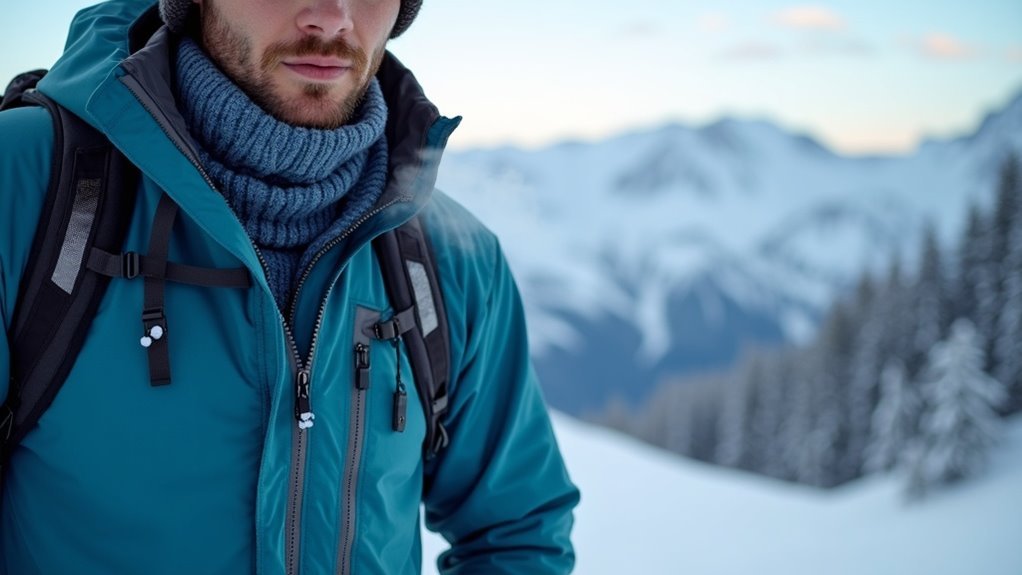
For winter hiking, you’ll want to focus on a layering system. Start with a moisture-wicking base layer made of merino wool or synthetic material. Next, add an insulating mid-layer like fleece or down, which traps heat while allowing moisture to escape. An outer layer, such as a waterproof and windproof shell, protects against the elements. Don’t forget insulated boots and moisture-wicking socks. Stick around to discover more about essential gear that enhances your winter hiking experience!
Key Takeaways
- Layering breathable fleece with down or synthetic jackets optimizes thermal regulation and warmth during winter hikes.
- Down insulation offers excellent warmth-to-weight ratio but loses effectiveness when wet, making it less suitable for damp conditions.
- Synthetic insulation retains warmth even when damp, providing a versatile option for unpredictable weather.
- Base layers made of merino wool or synthetic materials effectively manage moisture, keeping you dry and warm.
- Mid-layers like fleece, down, or synthetic materials should be chosen based on temperature and activity level for optimal insulation.
Understanding Insulation for Cold Weather Hiking
When you venture into cold weather hiking, understanding insulation is essential for staying warm and comfortable. Insulation layers trap body heat while allowing moisture to escape, vital for maintaining warmth.
You can choose between down and synthetic materials; down offers excellent warmth-to-weight ratio but loses effectiveness when wet, whereas synthetic insulation retains heat even when damp.
Layering is key—combine breathable fleece with down or synthetic jackets to optimize thermal regulation. Adjust thickness based on temperature, activity level, and personal preference.
Quality options like the Patagonia Nano Puff or Feathered Friends Helios Down Hoodie enhance your ability to keep warm in harsh conditions.
Importance of Base Layers in Winter
Base layers are essential for winter hiking as they manage moisture effectively, keeping you dry and warm.
Choosing the right fabric, like merino wool or synthetic materials, enhances moisture-wicking and odor control.
Also, ensuring a snug fit without restricting movement is key to maximizing comfort and performance in cold conditions.
Moisture Management Essentials
How do you stay warm and dry during winter hikes?
Base layers are essential for effective moisture management, sitting directly against your skin to wick moisture away. Opt for materials like merino wool or synthetic fabrics, which excel at this while avoiding cotton’s heat-retaining properties.
A proper base layer should be lightweight, breathable, and quick-drying, with a snug fit to prevent chafing. Choose thickness based on the cold weather and your heat generation.
Quality base layers greatly reduce hypothermia risk by keeping your skin dry during activity and preventing chills during breaks, ensuring you stay warm and comfortable throughout your winter hiking adventures.
Fabric Choices Explained
Choosing the right fabric for your base layers is essential for maintaining warmth and comfort during winter hikes. Here are key fabric choices:
- Wool: Merino wool excels in insulation and odor resistance, keeping you warm while wicking moisture away.
- Synthetic: Durable and quick-drying, synthetic fabrics efficiently manage moisture and maintain body temperature.
- Avoid Cotton: Cotton retains moisture, leading to heat loss and increasing your risk of hypothermia in cold air.
Selecting the appropriate base layer helps regulate your body temperature, ensuring you stay warm and comfortable throughout your winter adventure.
Prioritize quality to enhance your hiking experience.
Fit and Comfort Factors
What makes fit and comfort essential for your winter hiking base layers? A snug fit is vital for base layers made from moisture-wicking materials like merino wool or synthetic fabrics. This fit helps regulate body temperature and keeps your skin dry, preventing heat loss without feeling restrictive.
Merino wool offers an excellent warmth-to-weight ratio and natural odor resistance, ideal for extended wear. Synthetic options are durable and affordable, ensuring effective moisture management even after multiple washes.
When choosing thickness, consider personal preference and temperature; heavier layers work for colder days, while lighter variants suit milder conditions. Comfort is key for performance.
Selecting the Right Mid-Layer for Insulation
When selecting a mid-layer for winter hiking, consider the insulation material options available, such as fleece, down, or synthetic.
You’ll want to adjust the thickness based on the temperature and your activity level to guarantee ideal warmth.
Versatility is key; choose a mid-layer that performs well in varying weather conditions to keep you comfortable on the trail.
Insulation Material Options
As you prepare for winter hiking, selecting the right mid-layer insulation is crucial for maintaining warmth and comfort.
Consider these insulation materials:
- Fleece – Lightweight and breathable, ideal for moderate temperatures and high activity, offering insulation even when wet.
- Down – Provides excellent warmth-to-weight ratio but loses insulation when wet; best for dry conditions or layered with waterproof shells.
- Synthetic Options (e.g., Primaloft) – Mimics down’s warmth while retaining insulating properties when wet, making it versatile for unpredictable weather.
Choosing wisely guarantees ideal heat regulation during your winter hikes, so evaluate your needs carefully.
Thickness and Warmth
Selecting the right thickness for your mid-layer insulation directly impacts your warmth during winter hikes. Thicker mid-layers provide more warmth in colder conditions, while lightweight options enhance breathability for high-energy activities. Fleece is great for milder temperatures, but down and synthetic insulated jackets are better for extreme cold. Combining fleece with a lightweight down or synthetic jacket boosts insulation and adaptability. Consider packability for ease of adjustment in varying weather.
| Mid-Layer Type | Thickness | Ideal Conditions |
|---|---|---|
| Fleece | Thin | Mild |
| Down | Thick | Cold |
| Synthetic | Medium | Variable |
Versatility for Conditions
Choosing the right mid-layer insulation is essential for adapting to varying winter conditions and activity levels.
To guarantee versatility, consider these three options:
- Fleece: Offers breathability and moisture-wicking, ideal for high-intensity hikes.
- Down: Provides excellent warmth-to-weight ratio, perfect for colder temperatures when you’re less active.
- Synthetic: Retains insulation even when wet, making it reliable in unpredictable weather.
The Role of Outer Layers in Weather Protection
When winter hiking, the outer layer plays an essential role in weather protection by shielding you from wind, rain, and snow.
This shell layer is typically made from waterproof and windproof materials, like Gore-Tex, which also offer breathability to prevent moisture buildup from sweat.
A well-fitted outer layer enhances your insulation, featuring adjustable hoods and cuffs to combat harsh weather conditions.
Its effectiveness lies in withstanding elements while maintaining comfort through proper ventilation and flexibility.
Investing in a high-quality outer layer greatly improves your overall warmth and comfort, allowing you to focus on the adventure ahead.
Footwear Insulation: Keeping Your Feet Warm
To guarantee your feet stay warm during winter hikes, investing in insulated boots is essential. Here are key factors to take into account:
- Insulation: Look for boots with at least 400g of insulation to keep feet warm in low temperatures.
- Waterproof Materials: Verify your boots are made from waterproof materials to prevent moisture buildup from snow and slush.
- Moisture-Wicking Socks: Pair insulated boots with moisture-wicking socks to enhance thermal regulation and maintain warmth.
Adding gaiters provides extra protection against snow and moisture intrusion, keeping your feet comfortable during cold weather hiking.
Prioritize these elements for effective insulation layers.
Essential Accessories for Winter Hiking Comfort
While gearing up for winter hiking, incorporating essential accessories can greatly enhance your comfort and safety on the trail.
Start with moisture-wicking wool socks to keep your feet dry and warm. Insulated gloves or mittens are vital for hand warmth, with mittens offering better heat retention.
A polar buff neckwarmer shields your neck from cold winds, while fleece-lined beanies help retain heat in your extremities.
Don’t forget gaiters to keep snow and moisture out of your footwear.
Finally, wear sunglasses to protect your eyes from glare and UV rays reflected off the snow, ensuring visibility and comfort during your winter adventures.