Layering for hiking clothing means strategically combining three layers: the base layer for moisture management, the mid layer for insulation, and the outer layer for weather protection. Each layer plays an essential role in keeping you comfortable and safe while hiking. With the right materials and fit, you can easily adjust your clothing as conditions change. Understanding this layering system helps enhance your hiking experience, and there’s more to explore on how to optimize your gear choices.
Key Takeaways
- Layering involves using multiple clothing layers to manage moisture, provide insulation, and protect against weather during hikes.
- The base layer wicks moisture away from the skin, keeping hikers dry and comfortable.
- The mid layer retains body heat, offering insulation for warmth in cold conditions.
- The outer layer protects against wind, rain, and snow, ensuring weather resistance and breathability.
- Effective layering allows for adjustments based on activity level and changing weather conditions, enhancing the hiking experience.
Understanding Layering Clothing for Hiking
When you’re planning a hike, understanding how to layer your clothing is essential for maintaining comfort and safety.
Start with a snug-fitting base layer for moisture management, crafted from merino wool or synthetic fibers to wick sweat away.
Next, add a mid layer, like fleece or down, to provide an insulation layer that traps body heat.
Finally, top it off with an outer layer that offers weather protection, ensuring breathability and waterproofing.
This effective layering system allows you to adjust your clothing based on activity levels and weather changes, ultimately enhancing your hiking experience while serving the needs of those around you.
The Importance of Layering in Outdoor Activities
Layering is essential for outdoor activities because it helps you regulate your temperature effectively.
By strategically managing moisture and protecting yourself from the elements, you can enhance your comfort and performance while hiking.
Understanding how to use each layer to your advantage is key to a successful outdoor experience.
Temperature Regulation Strategies
Understanding temperature regulation is essential for a successful hiking experience, as improper clothing choices can lead to discomfort or even hypothermia.
Effective layering involves a base layer that wicks moisture away from your skin, keeping you dry and warm. The mid layers insulate your body, trapping heat, which is vital in cold weather.
Finally, the outer layer protects against wind, rain, and snow while allowing breathability to prevent overheating.
Moisture Management Techniques
Effective temperature regulation hinges on proper moisture management, which is essential during outdoor activities like hiking.
Start with a moisture-wicking base layer, made from materials like merino wool or synthetic fibers, to draw sweat away from your skin.
The mid layer adds insulation, retaining body heat while allowing moisture to escape.
Finally, choose a breathable outer layer that offers waterproof protection, ensuring sweat can ventilate without compromising your comfort.
Protection From Elements
When you head out for a hike, the right clothing can make all the difference in your comfort and safety against the elements.
Utilizing a three-layer system—base layers, mid layers, and an outer layer—ensures effective protection from wind and other harsh weather conditions.
Your base layers wick moisture away from your skin, keeping you dry and reducing the risk of irritation. The outer layer shields you from rain and snow while remaining breathable, helping maintain core temperature.
This strategic layering not only keeps you warm but also enhances your ability to adapt to changing conditions throughout your hike.
The Three Main Layers of Hiking Clothing
Understanding the three main layers of hiking clothing is essential for your comfort and performance on the trail.
You’ll start with a base layer that wicks moisture away, followed by a mid layer that provides insulation, and finally, an outer layer that shields you from the elements.
Each layer plays an important role in regulating your body temperature and keeping you protected during your hike.
Base Layer Essentials
A solid hiking experience starts with the right base layer, which sits directly against your skin and plays an essential role in moisture management.
Look for moisture-wicking materials like polyester, nylon, or merino wool, which offers warmth and odor resistance. Confirm your base layer fits snugly to wick moisture away without restricting movement.
In hot weather, opt for lightweight and breathable options, while in cold conditions, choose thicker thermal options for insulation.
Avoid cotton, as it retains moisture and increases the risk of discomfort and hypothermia.
Prioritize your base layer for effective performance during every hike.
Mid Layer Insulation
After establishing a solid base layer, your next priority is the mid layer, which plays a pivotal role in insulating your body heat during hikes.
This layer, often made of polyester fleece or synthetic materials, is essential for retaining warmth and providing moisture resistance in fluctuating weather conditions. Fleece is particularly effective, as it retains warmth when damp and dries quickly.
While down offers a high warmth-to-weight ratio, it loses effectiveness when wet. Choose your mid layer based on the expected weather conditions and duration of your outing, opting for thicker options in colder climates to guarantee adequate insulation.
Outer Layer Protection
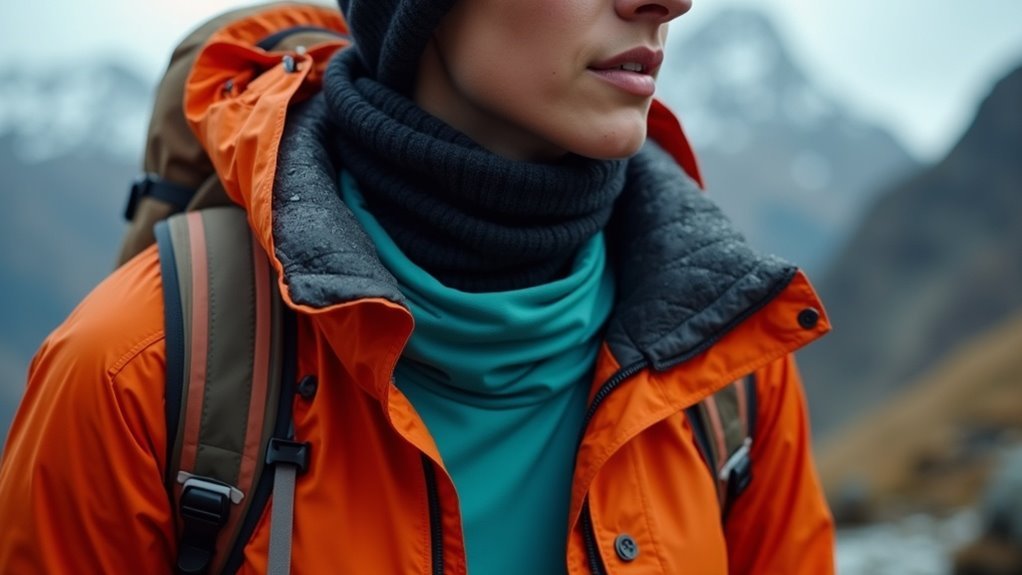
While you enjoy the great outdoors, the outer layer of your hiking clothing is essential for shielding you from wind, rain, and snow. This layer protects your inner layers, keeping them dry and insulated.
Look for a waterproof jacket made from breathable, windproof materials that allow moisture to escape while blocking precipitation. Essential features include adjustable hoods, high collars, and adjustable hems for a secure fit.
Lightweight and packable designs guarantee you can carry this layer without adding bulk to your gear. Consider options like the Patagonia Torrentshell for effective protection and flexibility during your outdoor adventures.
Base Layer: Moisture Management Essentials
Choosing the right base layer is essential for keeping you dry and comfortable on the trails, as it directly impacts moisture management during your hike. Base layers fit snugly against your skin and wick moisture away, preventing discomfort. You can choose between synthetic fibers like polyester and nylon or natural options such as merino wool. Avoid cotton, as it retains moisture, especially in cold conditions. Additionally, look for UPF-rated fabrics for sun protection. Here’s a quick comparison to help you decide:
| Material | Properties |
|---|---|
| Synthetic | Wicks moisture, lightweight |
| Merino Wool | Warmth, odor-resistant |
| Cotton | Retains moisture (not ideal) |
| UPF-rated | Provides sun protection |
Mid Layer: Insulation for Warmth
The mid layer is your key to staying warm on chilly hikes, acting as an insulating barrier that traps body heat.
Common materials include fleece, which is lightweight, quick-drying, and retains warmth even when damp. Alternatively, down insulation offers excellent warmth-to-weight ratio but falters in wet conditions.
For unpredictable weather, synthetic insulation is ideal since it maintains warmth even when damp.
Prioritize moisture management in your mid layer to guarantee you stay comfortable and dry.
Outer Layer: Protection From the Elements
A solid outer layer is essential for protecting you from environmental elements like wind, rain, and snow. This outer layer, often called the shell, acts as your first line of defense, ensuring moisture stays out while regulating body temperature.
Quality options are made from breathable, waterproof, and windproof materials, enhancing their protective function. Features such as adjustable hoods and hems improve fit and coverage, further safeguarding against harsh conditions.
Popular choices like the Patagonia Torrentshell and Marmot Minimalist provide effective weather resistance while remaining lightweight. A well-chosen outer layer greatly enhances your comfort during outdoor activities.
Layering Strategies for Different Weather Conditions
When planning your hike, understanding layering strategies for different weather conditions is essential to maintaining comfort and performance.
- Cold Weather: Use a moisture-wicking base layer, insulating mid layer, and waterproof outer layer.
- Rainy Conditions: Opt for lightweight polyester long underwear, a fleece jacket, and a breathable waterproof jacket.
- Hot Weather: Wear breathable polyester briefs, a short-sleeve synthetic tee, convertible nylon hiking pants, and a lightweight wind jacket.
- Adaptability: Layering enables you to add or remove clothing based on exertion and temperature.
- Purpose: Each layer serves a unique role in regulating moisture, insulation, and protection against the elements.
Ethical Considerations in Outdoor Clothing Choices
While enjoying the great outdoors, making ethical choices in your clothing can greatly impact the environment and society.
Prioritize ethical outdoor clothing choices by selecting brands that embrace sustainable production practices and utilize recycled materials. Opt for non-fleece and non-synthetic options like silk or merino wool to reduce microplastic pollution.
Researching companies’ manufacturing processes helps you understand their social and environmental impact. Focus on durable items designed for longevity, encouraging responsible consumption and minimizing waste.