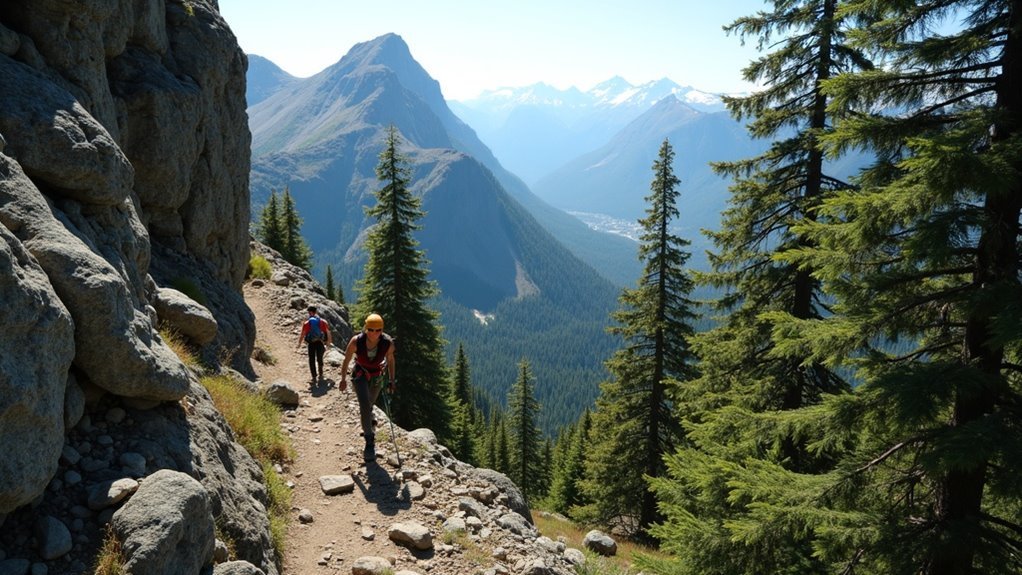
Class 3 in hiking difficulty means you’ll encounter scrambling, requiring the use of your hands to navigate steep, often exposed terrain. You’ll need to be confident in your balance and coordination while using natural handholds to ascend. This level of hiking can lead to stunning summits but comes with increased risks, including potential falls. Helmets are recommended for safety, and using ropes in tricky spots can enhance security. Want to know more about what to expect on Class 3 hikes?
Key Takeaways
- Class 3 hiking involves scrambling, requiring the use of hands and feet for upward movement on steep, rocky terrain.
- Natural handholds are typically available, but falls can be fatal, necessitating caution and skill.
- Safety gear, such as helmets and ropes, is recommended in high-exposure sections to enhance protection.
- Strong balance, coordination, and route-finding skills are essential for navigating poorly marked trails.
- Class 3 hikes often lead to stunning summits, but they demand increased confidence and physical ability compared to Class 2 hikes.
Understanding Class 3 Hiking Difficulty
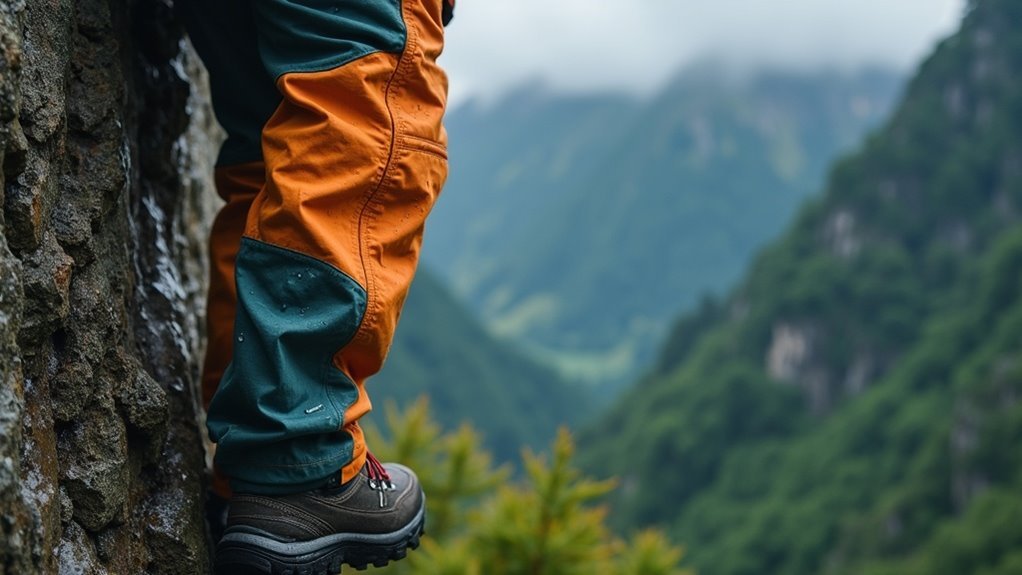
When you venture into Class 3 hiking, you’re stepping into a domain where scrambling becomes part of the journey. This class of hiking requires you to use your hands for upward movement, traversing varying terrain that often leads to breathtaking peaks.
While natural handholds are typically available, be aware that falls can be fatal. Assess your skills and comfort level before tackling these routes. Beginners might want to use ropes in exposed areas, and wearing a helmet is highly recommended.
Popular Class 3 hikes include Del Campo Peak and Vesper Peak, emphasizing the importance of confident maneuvering and route-finding skills.
Key Characteristics of Class 3 Trails
Class 3 trails are characterized by their requirement for both physical agility and mental acuity, as hikers must utilize their hands for scrambling up rocky terrain.
Here are some key characteristics:
- Involves natural handholds and footholds
- Requires confidence on steep, exposed paths
- Often leads to breathtaking peak summits
- Demands good route-finding skills
- May include elements of rock climbing
While they differ from class 2 trails, class 3 hikes offer an exhilarating challenge.
Ropes aren’t mandatory, but they can provide peace of mind for beginners maneuvering tricky sections, ensuring a safer and more enjoyable experience.
Safety Considerations for Class 3 Hiking
As you commence a Class 3 hike, it’s crucial to prioritize safety due to the inherent risks associated with scrambling and rocky terrain.
Always wear a helmet to protect against falls, which can be fatal. Familiarize yourself with route-finding skills, as trails aren’t always clearly marked.
Always prioritize safety by wearing a helmet and honing your route-finding skills, as trails can be poorly marked.
While ropes aren’t mandatory, using them in high-exposure sections can provide added security, especially for beginners. Make sure you’re confident in your physical abilities and experience on rugged terrain.
Equip yourself with appropriate technical gear to navigate safely, ensuring you’re prepared for the challenges that Class 3 hikes present. Your safety depends on it!
Skills Required for Class 3 Trails
When tackling Class 3 trails, you’ll need strong balance and coordination to navigate the rocky terrain effectively.
Route-finding skills are essential too, as these paths often lack clear markers and require you to trust your instincts in rugged environments.
Sharpening these abilities won’t only enhance your safety but also make your hiking experience much more enjoyable.
Balance and Coordination
Maneuvering Class 3 trails demands a high level of balance and coordination, particularly because you’ll often need to use your hands for support and stability.
As you face rugged terrain, it’s essential to master the following skills:
- Adept foot placement on steep slopes
- Engaging with natural handholds for support
- Steering around obstacles with agility
- Scrambling techniques for upward movement
- Building confidence to avoid falls
Prior experience with less technical trails can help develop the coordination and balance necessary for these challenges.
Embrace the adventure, and remember that each step builds your skills for future hikes!
Route-Finding Skills
While exploring Class 3 trails, mastering route-finding skills is essential, since these paths often lack clear markings and demand careful navigation through challenging terrain.
You’ll need to read topographic maps and understand trail markers to stay on course. Familiarizing yourself with natural landmarks helps you recognize key features of the landscape, aiding your navigation.
On these trails, evaluating multiple options for the safest path through rocky or steep sections is vital. Be prepared to adapt your route as conditions change or obstacles arise, as flexibility in your approach can make all the difference in a successful hike.
Examples of Class 3 Hikes
If you’re seeking adventure on the trails, Class 3 hikes offer a thrilling combination of challenge and reward. These routes require you to use your hands and navigate rugged terrain, pushing your limits while providing stunning views.
Here are some examples of Class 3 hikes in Washington:
- Del Campo Peak
- Vesper Peak
- Asgaard Pass
- Mount St. Helens (Monitor Ridge)
- Mount Olympus (Blue Glacier)
While these hikes have natural handholds, remember that falls can be fatal. For added safety, consider ropes and helmets, especially if you’re new to this difficulty rating.
Enjoy the journey and the breathtaking rewards!
Transitioning From Class 2 to Class 3
Moving from Class 2 to Class 3 hiking means you’ll face increased exposure levels that require more caution and skill.
You’ll need to pay close attention to your handholds and foot placement as you navigate rugged terrain, which can be steep and challenging.
It’s also wise to think about using safety gear, like ropes, especially in areas where the drop-offs are significant.
Increased Exposure Levels
As you move from Class 2 to Class 3 hiking, you’ll encounter markedly increased exposure levels that can elevate the thrill and challenge of your adventure.
On Class 3 trails, you’ll find yourself traversing rugged terrain where using your hands is essential for climbing.
Be mindful of the following:
- Increased risk of falls due to steepness
- Natural handholds and footholds on rocky surfaces
- Need for confidence in climbing abilities
- Importance of route-finding skills for successful navigation
- Option to use ropes for added safety in high-exposure areas
Stay aware of your surroundings and embrace the excitement that comes with these challenges!
Handholds and Foot Placement
Class 3 hiking demands a shift in your approach to handholds and foot placement compared to Class 2. In this terrain, your hands aren’t just for balance; they’re essential for climbing.
You’ll encounter natural handholds and footholds, but precise foot placement becomes significant to navigate the rugged landscape safely. As exposure increases, you must carefully evaluate each move, ensuring you’re stable before proceeding.
Route-finding skills are fundamental, allowing you to choose the best path among the available features. Embrace the challenge and stay focused—thoughtful handholds and foot placement will guide you to your summit safely.
Safety Gear Considerations
When you step into Class 3 hiking, the stakes get higher, making it vital to take into account your safety gear carefully.
Here are some important items to keep in mind for your adventure on Class 3 terrain:
- Helmet: Protects against falling rocks and slips.
- Ropes and Harness: Recommended in high exposure areas.
- Proper Footwear: Guarantee good grip for uneven surfaces.
- Gloves: Enhance grip and protect your hands.
- Basic Climbing Knowledge: Boosts confidence and safety on steep trails.
Preparing for Class 3 Adventures
Before you commence a Class 3 adventure, it’s essential to prepare both physically and mentally for the challenges that lie ahead.
Get comfortable with scrambling, as you’ll need to use your hands for upward movement. Invest in proper footwear with a good grip to tackle loose rocks and steep slopes safely.
Familiarize yourself with route-finding skills, since paths can be unclear and obstacles frequent. For added safety, especially in high-exposure areas, consider carrying a rope.