Ultralight hiking is all about keeping your base pack weight under 4.5 kg (10 lbs). This means using lightweight gear that enhances your mobility and endurance. Focus on minimizing your pack weight by selecting non-freestanding shelters, lightweight sleeping systems, and minimalist backpacks. Aim for multi-purpose items and repack your food efficiently. By streamlining your gear, you can elevate your hiking experience and tackle longer distances with ease. There’s more to explore on how to optimize your setup.
Key Takeaways
- Ultralight hiking targets a base weight under 4.5 kg (10 lbs), excluding food and water.
- Gear should prioritize lightweight options like non-freestanding tents and frameless backpacks.
- Utilizing multi-purpose gear and repackaging food can significantly reduce overall pack weight.
- The “Big Three” essentials include a lightweight shelter, sleeping system, and minimalistic backpack.
- Weight limits vary by hiker weight, with traditional backpacking packs ideally under 30% of body weight.
Understanding Ultralight Backpacking
When you commence on an ultralight backpacking journey, you’re not just shedding weight; you’re embracing a philosophy that enhances your mobility and endurance on the trail.
The essence of ultralight backpacking involves maintaining a base weight under 4.5 kg (10 lb), excluding food and water. To achieve this, you’ll weigh every item, seeking lighter alternatives like non-freestanding tents and frameless backpacks.
Your sleeping system plays an essential role, as comfort shouldn’t be sacrificed for weight. By prioritizing calorie-dense foods and frequent resupply, you’ll find joy in the journey, serving both yourself and others with every step you take.
Defining Pack Weight Limits
Achieving an ultralight hiking experience means not just choosing lighter gear but also understanding the weight limits that work for you. Generally, ultralight backpackers target a base weight under 4.5 kg (10 lbs). In contrast, traditional backpackers should keep their loaded pack under 30% of their body weight. For day hikes, aim for a maximum of 10%. Consider factors like trip duration and weather conditions when defining your pack weight limits.
| Hiker Weight | Backpacking Limit | Day Hiking Limit |
|---|---|---|
| 150 lbs | 30 lbs | 15 lbs |
| 180 lbs | 36 lbs | 18 lbs |
| 200 lbs | 40 lbs | 20 lbs |
| 220 lbs | 44 lbs | 22 lbs |
The Importance of Base Weight
Understanding base weight is essential for any hiker aiming to embrace the ultralight philosophy. Your base weight, which excludes consumables, is a critical factor in achieving ultralight backpacking status—ideally under 4.5 kg (10 lbs).
By focusing on this weight, you naturally gravitate towards lighter gear, reducing unnecessary items that can hinder your mobility and endurance. A lower base weight not only minimizes physical strain but also enhances your overall experience on the trail, allowing you to cover greater distances with ease.
Strategies for Reducing Pack Weight
Reducing your pack weight is a game-changer for any ultralight hiker, and there are effective strategies to help you achieve this goal.
Start by weighing your gear to identify heavy items, especially in the shelter and sleeping categories. Aim for a base weight under 4.5 kg (10 lbs).
Opt for multi-purpose gear and repackage food into lightweight containers to reduce the weight. Share gear like tents with hiking partners to lighten individual loads.
Essential Gear for Ultralight Hiking
When you set out on an ultralight hiking adventure, having the right gear is essential for both comfort and efficiency.
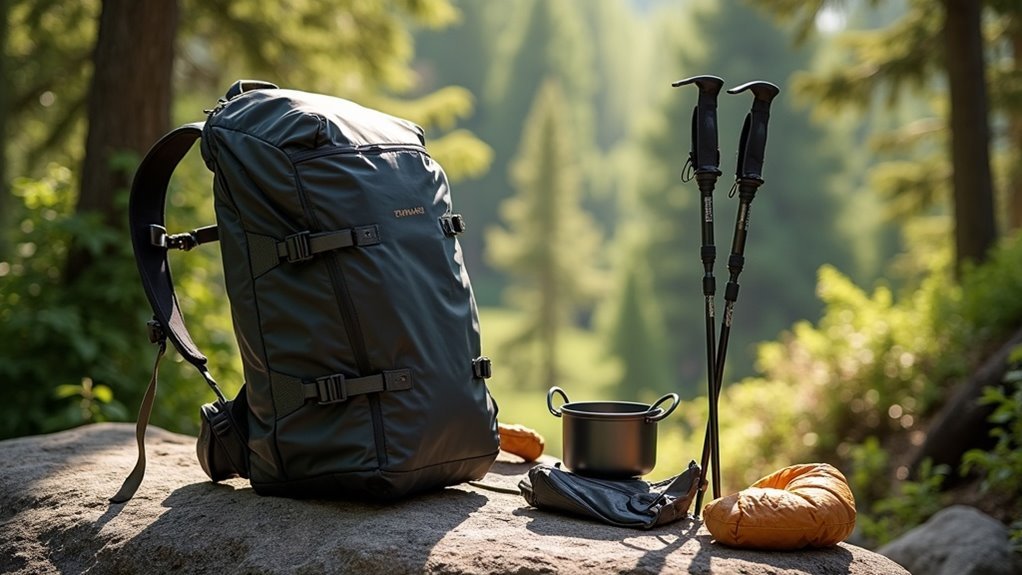
Focus on the “Big Three”: a non-freestanding shelter, a lightweight sleeping system, and a minimalistic backpack. Choose tarps or bivy sacks, utilizing trekking poles to save weight.
For the sleeping system, narrow mummy-style quilts and foam pads made from down offer great insulation without bulk. Your backpack should weigh between 200 to 400g, crafted from ripstop nylon or in a frameless design.
Streamline further by selecting multi-purpose gear, like a single cook pot and spoon, to optimize your setup.