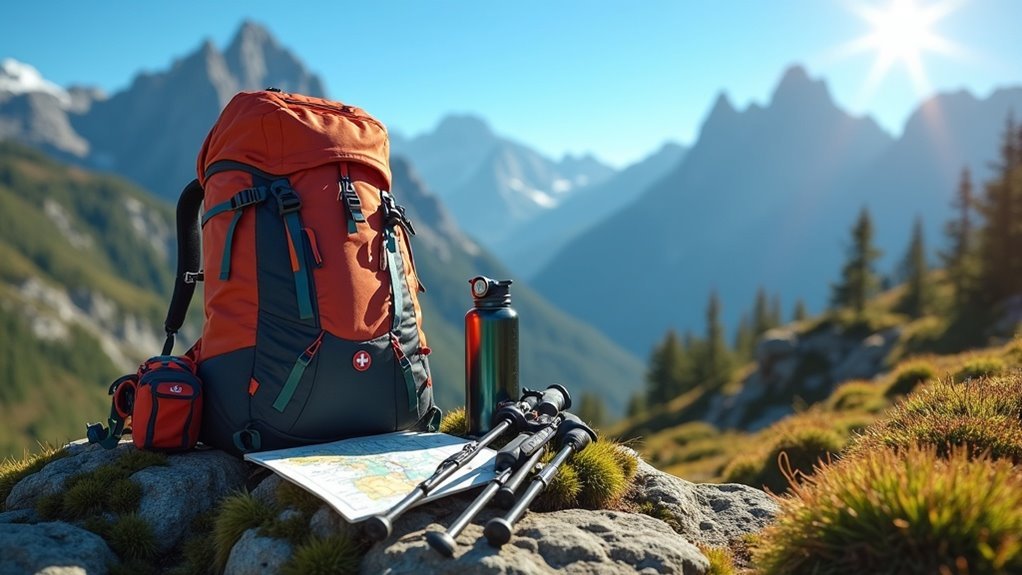
When heading out for a hike, don’t forget your ten essentials: navigation tools like a map and compass, a reliable headlamp for visibility, sun protection including sunscreen and sunglasses, and a well-stocked first aid kit. Bring a versatile knife or multi-tool for various tasks, along with shelter and emergency supplies. Make certain to pack extra food and ample water, plus additional clothes for unpredictable weather. Each of these items guarantees a safer, more enjoyable hike, and there’s more to explore!
Key Takeaways
- Carry navigation tools like a detailed map, compass, and GPS device for safe route finding.
- Pack sufficient food, hydration supplies, and a water purification method for nourishment and safety.
- Include a reliable headlamp or flashlight with extra batteries for visibility during low-light conditions.
- Assemble a first aid kit with essential supplies to address injuries and health concerns on the trail.
- Wear appropriate clothing and sun protection, including sunscreen, sunglasses, and a wide-brimmed hat.
Navigation
When you hit the trails, having reliable navigation tools can make all the difference in ensuring a safe and enjoyable hike. Always carry a detailed, waterproof map alongside a reliable compass, especially in remote areas where your GPS device might fail.
Familiarize yourself with both before your hike to track your location accurately. Consider rugged GPS devices as a supplementary tool, but keep an eye on their battery life. Protect your maps from weather damage by storing them in a plastic bag, and download digital maps via apps like Avenza for a reliable backup.
Understanding magnetic to true North is essential, too!
Headlamp
When you’re hiking in low light, a headlamp is your best friend, providing hands-free illumination for tasks like cooking or finding your way on trails.
To guarantee you’re always prepared, choose a lightweight model with adequate brightness and keep extra batteries on hand.
Familiarizing yourself with its features before your trip will help you make the most of this essential piece of gear.
Importance of Hands-Free Lighting
As darkness falls on your hiking adventure, having a headlamp can make all the difference in your safety and enjoyment. A headlamp provides a reliable light source, allowing you to navigate while keeping your hands free for tasks like cooking or using your trekking poles. Lightweight and compact, it’s easy to pack, and adjustable brightness settings help conserve battery life.
| Benefits | Tips |
|---|---|
| Hands-free lighting | Always carry extra batteries |
| Enhances safety | Don’t forget your first-aid kit |
| Easy to pack | Carry enough water |
Always verify you’re prepared for unexpected delays!
Battery Maintenance Tips
A reliable headlamp is only as good as its battery, so keeping up with battery maintenance is essential for a successful hike. Regularly check the battery life before you head out and opt for high-quality, rechargeable batteries to maximize performance.
- Store extra batteries in a waterproof container to protect them from moisture.
- Clean your headlamp to guarantee battery contacts are debris-free, enhancing overall performance.
- When not in use, remove batteries to prevent leakage and corrosion, safeguarding your gear.
Selecting the Right Headlamp
Selecting the right headlamp is essential for any hiking enthusiast, especially since good visibility can make or break your outdoor experience. Aim for a headlamp with at least 100 lumens for nighttime navigation.
Look for adjustable brightness settings and a red light mode to protect your night vision and extend battery life. Choose a lightweight, comfortable model with adjustable straps for a secure fit.
Confirm your headlamp is waterproof, ideally with an IPX rating of 4 or higher, to withstand splashes.
Finally, always pack extra batteries, preferably rechargeable, to keep your headlamp functioning throughout your hike.
Sun Protection
Sun protection is essential for any hiker looking to enjoy the great outdoors without risking skin damage.
To guarantee you’re well-protected from harmful UV rays, consider these essentials:
- Apply broad-spectrum sunscreen with at least SPF 30, reapplying every two hours.
- Wear sunglasses that block 100% UVA and UVB rays for eye protection.
- Opt for extra clothing with a UPF rating and a wide-brimmed hat for added shade.
First Aid
When you’re out on the trails, having a well-stocked first-aid kit can make all the difference in ensuring a safe and enjoyable hiking experience.
Include essentials like adhesive bandages, gauze pads, and disinfecting ointment tailored to your hike. Don’t forget nitrile gloves to maintain hygiene while treating injuries.
Familiarize yourself with basic first aid techniques, such as CPR and how to handle sprains or blisters. Regularly check your kit, replenishing supplies and ensuring everything’s in good condition.
Customize your first-aid kit to address your personal medical needs and the specific risks of your hiking environment. Stay prepared to help others!
Knife and Tools
When you hit the trails, having a versatile knife or multi-tool can make all the difference.
It’s lightweight and compact, ensuring you can carry it without hassle while tackling gear repairs on the go.
Make sure your tools are easily accessible so you can address any issues that pop up during your hike.
Versatile Tool Selection
A versatile knife or multi-tool is a must-have for any hiker, as it equips you to tackle a range of tasks on the trail.
Every group member should carry one to guarantee tools are always available for emergencies.
Consider these essentials:
- Multi-tool: Features like screwdrivers and can openers enhance utility.
- Repair Kit: Include duct tape and cordage to fix gear malfunctions.
- Lightweight Knife: A basic knife helps with food prep and first aid.
Being prepared with the right tools means you can enjoy your adventure while guaranteeing safety and functionality, especially when dealing with water or gear issues.
Lightweight and Compact
Carrying a lightweight and compact knife or multi-tool can greatly enhance your hiking experience, allowing you to address various tasks without the burden of excess weight.
Look for a lightweight knife that’s easy to carry, ensuring it fits seamlessly into your pack. It’s also wise to include a repair kit with essentials like duct tape, cordage, and a sewing kit to tackle potential gear issues on the trail.
Encourage everyone in your hiking group to carry a knife; it boosts safety and preparedness. Always check your knife’s functionality before each hike, so you’re ready for any situation that arises.
Essential Gear Repairs
While you’re out on the trail, having the right tools at your disposal can make all the difference in handling unexpected gear issues.
A reliable knife or multi-tool is essential for quick fixes, food prep, and first aid. Don’t forget to pack a small repair kit; it can save the day when gear malfunctions arise.
Ascertain every group member carries a knife for safety and convenience. Here’s what to take into account:
- Knife or multi-tool for versatility
- Duct tape for quick fixes
- Repair kit with cordage and sewing supplies
Familiarize yourself with your tools before heading out to maximize their effectiveness!
Fire
When planning your hike, guaranteeing you have the means to start a fire is essential for warmth, cooking, and safety. Pack waterproof matches or a reliable butane lighter in a waterproof container to keep them functional in wet conditions.
Don’t forget firestarter materials like dry tinder, candles, or heat nuggets to help ignite flames, especially when it’s damp. Before your trip, practice your fire-building skills to enhance your ability to create warmth and prepare meals in emergencies.
Always follow local regulations regarding campfires and stay aware of fire hazards to guarantee a safe and enjoyable outdoor experience.
Shelter and Emergency Shelter
A sturdy shelter can be your lifeline during unpredictable weather on a hike. Always pack a lightweight emergency shelter to protect yourself from the elements.
Here are some effective options:
- Space blanket: Compact and reflective, it retains body heat.
- Plastic trash bag: Versatile and waterproof, it can be fashioned into a makeshift shelter.
- Bivy sack: Easy to set up, providing quick protection during sudden storms.
Familiarize yourself with the setup procedures before your hike, and consider the expected weather conditions.
This preparation will guarantee you’re ready for any emergency and can help others in need.
Extra Food
Packing extra food is essential for any hiking adventure. Aim for at least one extra day’s worth to handle unexpected delays and increased energy needs. High-energy snacks like trail mix, energy bars, and jerky are perfect since they’re lightweight and non-perishable.
When planning meals, think about your trip duration and group size to guarantee everyone gets adequate nutrition. Opt for foods that don’t require cooking and have a long shelf life, making them easy to carry.
Also, consider dietary restrictions and preferences, offering a variety to keep the group fueled and satisfied throughout your trek. Happy hiking!
Extra Water
When you’re hiking, staying hydrated is essential, so it’s smart to assess your hydration needs based on your activity level and the weather.
Always pack extra water to cover unexpected situations, and know how to purify any natural water sources you might encounter.
This preparation will help you maintain your energy and avoid serious health risks on the trail.
Hydration Needs Assessment
While you may have a set amount of water planned for your hike, it’s important to take into account carrying extra to prepare for the unexpected. Aim to pack at least one day’s worth of water beyond your initial supply.
Factors like temperature, altitude, and exertion can quickly increase your hydration needs, so stay alert to your consumption levels.
- A sturdy water bottle for easy transport
- An extra water filter for purifying natural sources
- A reliable method for evaluating conditions
Water Purification Methods
Having extra water on hand is only part of the equation; knowing how to purify water can make a significant difference when you find yourself in need.
Effective water purification methods include boiling for at least one minute, or three at higher altitudes. Chemical treatments like iodine tablets take about 30 minutes to work.
Portable filters should have a pore size of 0.2 microns or smaller to filter bacteria. If you use UV purifiers, remember they require batteries.
Always pre-filter turbid water through cloth to enhance purification. Don’t forget your personal locator and protection: sunglasses for safe hiking!
Extra Clothes
Packing extra clothes is essential for any hike, as you never know when the weather might take a turn. By preparing for unexpected changes, you’ll guarantee comfort and safety throughout your trip.
Packing extra clothes ensures you’re ready for unexpected weather changes, keeping your hike comfortable and safe.
Focus on layering your clothing, which allows for easy adjustments to temperature fluctuations. Include the following items in your pack:
- Moisture-wicking base layers
- Extra socks
- Insulating layers (like a hat or balaclava)
These lightweight and packable essentials will keep you dry and warm, especially for your extremities.
Being prepared means you can enjoy your hike and help others feel comfortable, too.