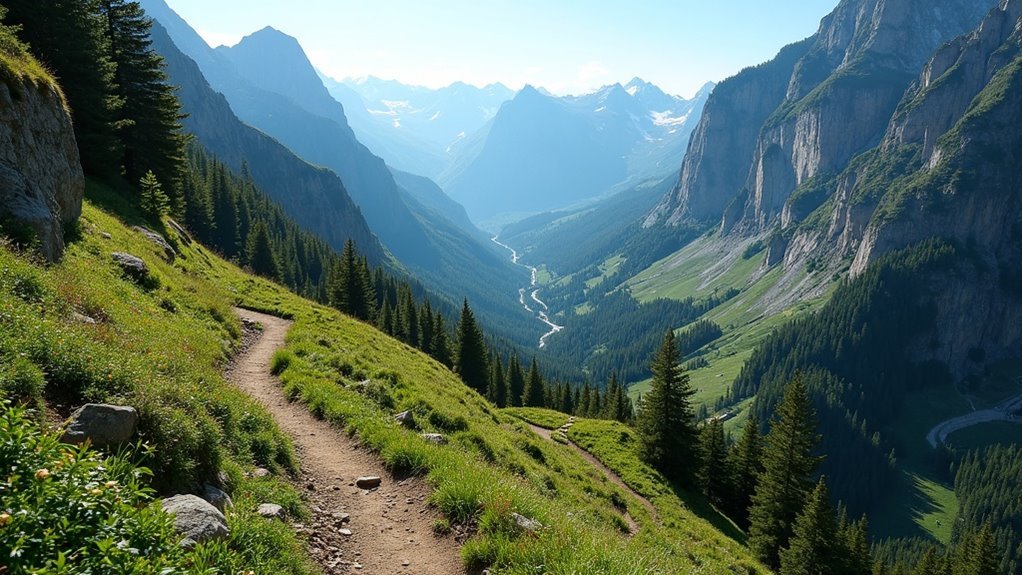
Switchbacks are zigzag features on hiking trails designed to help you navigate steep terrain with ease. By gradually changing elevation, they reduce energy expenditure and make your hike more enjoyable. They also protect the trail from erosion and shield local vegetation from damage. While they can feel tedious at times, adjusting your pace can enhance your experience. Want to uncover more about their benefits and famous trails? Keep exploring to find out!
Key Takeaways
- Switchbacks are zigzagging features on hiking trails designed to manage steep terrain and facilitate gradual elevation changes.
- They help reduce energy expenditure, making hikes more enjoyable and accessible for diverse skill levels.
- Switchbacks prevent soil erosion and protect local vegetation by discouraging shortcuts and maintaining trail integrity.
- While beneficial, they can feel tedious and draining for hikers prioritizing speed over the scenic experience.
- Famous switchback trails include those in the Colorado Rocky Mountains, Zion National Park, and Machu Picchu, offering stunning views and unforgettable adventures.
What Is A Switchback?
Switchbacks are ingenious features of hiking trails that help you tackle steep terrain with ease.
These segments, crafted by dedicated trail builders, zigzag sharply, allowing you to manage elevation changes without overexerting yourself. By creating a gentler grade, switchbacks reduce energy expenditure, making your hike more enjoyable and less strenuous on your joints.
Switchbacks cleverly zigzag to ease elevation changes, reducing energy use and making hikes more enjoyable on your joints.
Often found in mountainous areas, they prevent shortcuts that can lead to erosion, preserving the trail’s integrity. Their clever design folds the path back on itself, guiding you upward while minimizing environmental impact.
Embrace switchbacks, and you’ll navigate those steep slopes like a pro!
Purpose and Benefits of Switchback Trails
Traversing steep trails can be an intimidating challenge, but the ingenious design of switchback trails transforms that experience into one of ease and enjoyment.
By creating a more gradual ascent on steep inclines, these trails make hiking easier on joints, allowing you to appreciate the journey. As you zig-zag up the hillside, you’ll find safety in preventing slips on loose soil and local vegetation.
Switchback trails also reduce soil erosion, preserving the environment for future hikers. So, while you take in breathtaking views, you contribute to maintaining trail integrity, ensuring these beautiful outdoor spaces remain accessible for everyone.
Downsides to Hiking Switchbacks
While the benefits of switchback trails are clear, they do come with some notable downsides that can affect your hiking experience.
Switchbacks can feel tedious and time-consuming, making your progress seem slower compared to a straight trail. The numerous climbing turns can drain your mental and physical energy, especially if you’re used to more direct routes.
Though they’re designed to be less steep, the zig-zag pattern can become monotonous, leading to frustration when you prioritize speed and efficiency.
Embracing the hard work involved in switchbacks can enhance your journey, but it’s essential to recognize their challenges.
Tips For Navigating Switchbacks
As you approach those winding turns on a switchback trail, keeping a steady pace becomes essential for an enjoyable hike. Switchbacks are a trail feature designed to make it easier to hike steep terrain. Use trekking poles for added stability and balance, especially on uneven paths. Remember to stay on the designated path to prevent erosion. Focus on the next turn instead of the summit; this helps maintain your mental focus and reduces distance perception. Here’s a quick guide:
| Tip | Purpose |
|---|---|
| Maintain steady pace | Avoid exhaustion |
| Use trekking poles | Enhance stability and balance |
| Follow trail markers | Navigate turns effectively |
| Stay on the path | Protect the environment |
| Focus on next turn | Improve mental focus |
Famous Switchback Trails
When you think of breathtaking hiking experiences, famous switchback trails often come to mind, offering both challenge and beauty.
The Colorado Rocky Mountains boast stunning switchbacks that navigate steep, uneven terrain, while Zion National Park reveals hairpin turns that reward you with magnificent views.
Experience the stunning switchbacks of the Colorado Rockies and the breathtaking hairpin turns of Zion National Park, where every step reveals awe-inspiring views.
In New England, you’ll find picturesque trails winding through vibrant landscapes.
Don’t forget the ancient Inca road system used at Machu Picchu, where well-preserved switchbacks showcase incredible engineering.
Each of these trails not only tests your skills but also connects you to nature’s grandeur, making them unforgettable hiking experiences.