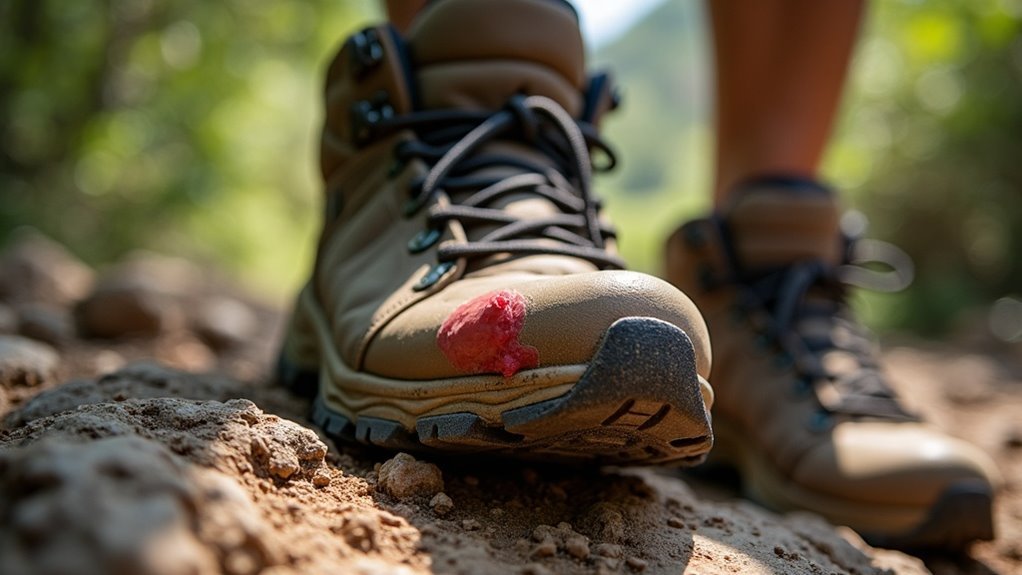
Hot spots in hiking foot care are early signs of blister formation. They manifest as warm, tender areas with noticeable redness, often due to friction or pressure. You might experience discomfort that worsens with activity, accompanied by stinging sensations. To prevent blisters, you should stop immediately, remove your footwear, and air out your feet. Applying lubricant can help reduce friction. Understanding hot spots will aid in maintaining foot health on your hikes, leading to more effective care strategies.
Key Takeaways
- Hot spots are warm, sore areas on the feet indicating early blister formation due to friction or pressure.
- Symptoms include localized warmth, tenderness, redness, and increased discomfort during prolonged activity.
- Immediate action, such as removing shoes and applying lubricant, is essential to prevent blister development.
- Regularly check your feet during hikes to catch hot spots early and avoid painful injuries.
- Properly fitting footwear and keeping feet dry can significantly reduce the risk of developing hot spots.
Definition of Hot Spots
A hot spot is a concerning signal on your foot, indicating the early stages of blister formation. It typically presents as an area that feels warm and sore, often caused by friction or pressure from your shoes or socks.
You may notice redness and irritation on the skin, serving as a vital warning that immediate action is necessary to prevent further injury. If you ignore a hot spot, it can develop into a painful blister.
To effectively prevent blister formation, hikers should address hot spots promptly by stopping, evaluating their feet, and applying protective measures like lubricant or blister patches.
Symptoms and Indicators
When you notice localized warmth and tenderness on your skin, it’s crucial to recognize these symptoms as potential hot spots.
Recognizing localized warmth and tenderness on your skin is essential to identifying potential hot spots.
These indicators often point to the hotspot stage, requiring immediate attention.
Pay close attention to:
- Redness or discoloration compared to surrounding skin.
- Discomfort or pain that intensifies after prolonged activity.
- Sensations of stinging or burning, signaling imminent blister formation.
- Increased friction in the affected area, exacerbating the issue.
Quick recognition of these symptoms can prevent painful blisters that may necessitate medical attention.
Addressing hot spots promptly is vital for maintaining healthy, comfortable feet while hiking.
Preventive Measures
Recognizing hot spots is just the first step; taking preventive measures is essential for maintaining foot health during hikes.
Upon feeling a hot spot, immediately stop and remove your shoes and socks to assess the area. Air out your feet to alleviate discomfort and reduce friction.
For blister prevention, apply a lubricant like Vaseline to minimize friction and protect your skin.
During breaks, elevate your legs against a wall or tree to improve circulation, soothing hot spots before they escalate.
Keeping your feet dry is vital for effective prevention and treatment, ensuring peak foot care throughout your hike.
Connection to Blisters
As you hike, being aware of hot spots is essential because they signal friction-related issues that can lead to blisters. Recognizing hot spots early can prevent painful blister formation.
Being aware of hot spots while hiking is crucial to prevent painful blisters from friction-related issues.
Follow these steps for effective blister prevention:
- Monitor for localized warmth and tenderness on your skin.
- Stop activity immediately if you notice a hot spot.
- Apply protective measures like blister lube or patches.
- Verify your hiking boots fit properly to reduce friction.
Ignoring these early signs increases the risk of developing fluid-filled blisters, which may require medical attention.
Prioritize foot care to keep your hiking experience enjoyable.
Experience and Insights From Others
While many hikers underestimate the significance of hot spots, shared experiences emphasize their critical role in preventing blisters and other foot injuries. Identifying hot spots early can save you from discomfort and prolonged recovery.
Many seasoned hikers admit to initially ignoring these signs, only to face blisters that hinder their hikes. Proactive foot care, including regular checks with your hiking partners, allows for early detection of hot spots.