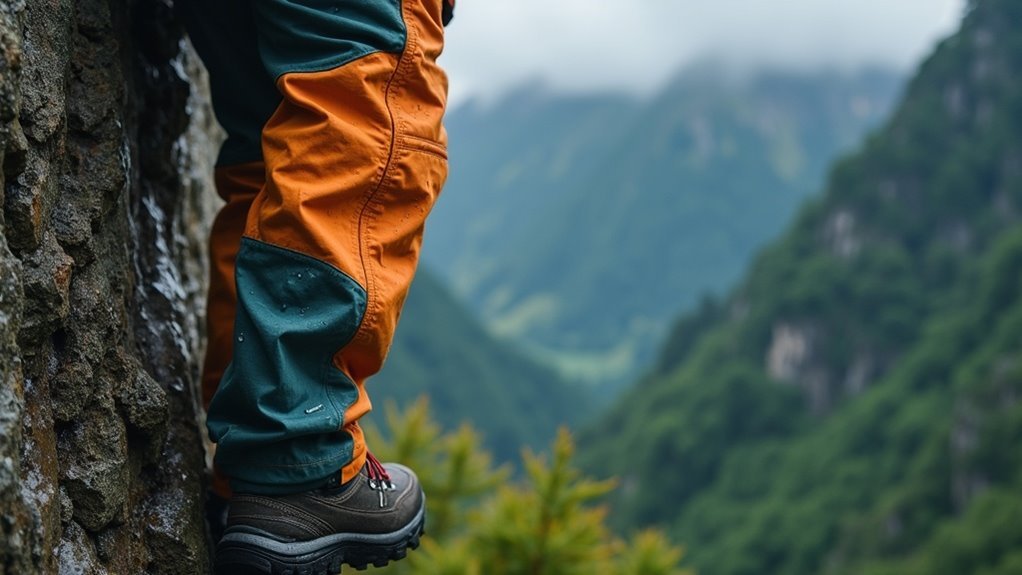
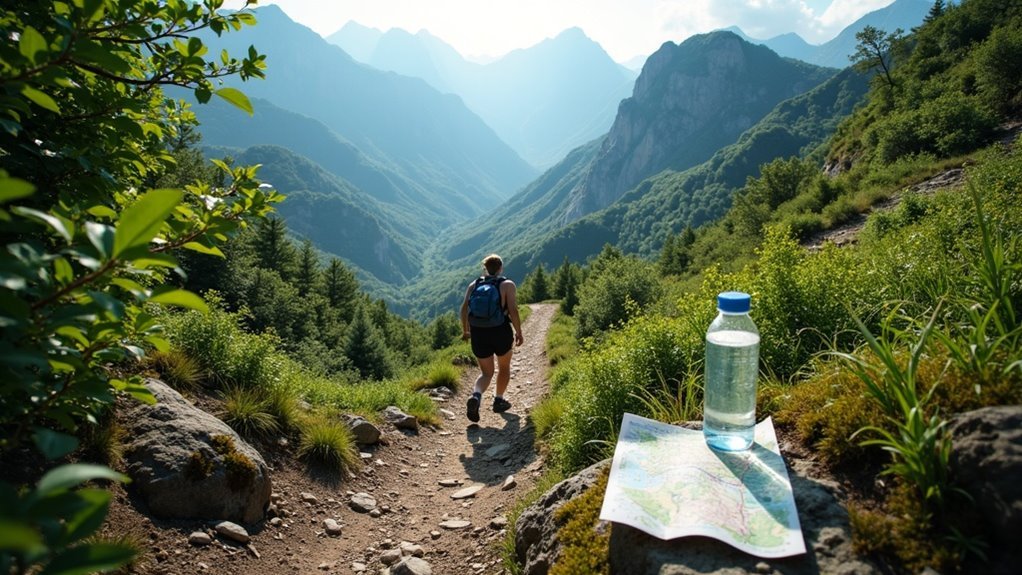
To train for hiking steep switchbacks, focus on building leg strength with lunges and squats while incorporating balance drills to enhance stability on uneven terrain. Practice walking uphill and downhill regularly to mimic trail conditions, and use hiking poles for added support. Don’t forget to prioritize recovery with stretching and foam rolling. With the right training regimen, you’ll tackle those steeper trails with confidence and ease—let’s explore more effective techniques to elevate your hiking game!
Key Takeaways
- Incorporate hill workouts and stair-stepping to simulate the incline challenges of steep switchbacks.
- Focus on lunges and Bulgarian split squats to strengthen quads and hamstrings for better uphill performance.
- Practice single-leg exercises to enhance balance and stability on uneven terrain typical of switchbacks.
- Utilize hiking poles for added support and balance, adjusting their length based on the incline.
- Prioritize recovery with dynamic stretches before hikes and foam rolling post-hike to prevent soreness.
Build Leg Strength Through Targeted Exercises
When you prepare for hiking, building leg strength through targeted exercises is essential, especially if you want to tackle steep switchbacks with confidence.
Focus on lunges and squats to strengthen your quads and hips, vital for maneuvering uphill and downhill challenges. Bulgarian split squats enhance quad strength while distributing the load to your hamstrings.
Strengthen your quads and hips with lunges and squats for confident uphill and downhill hiking.
Don’t forget calf raises and ankle exercises; they’ll help prevent soreness on uneven terrain.
Finally, incorporate walking drills that mimic the incline and descent of switchbacks, gradually increasing distance and elevation for peak conditioning.
Strong legs will make each hike more enjoyable and rewarding.
Incorporate Balance and Stability Training
To tackle those tricky trails, you need to incorporate balance and stability training into your routine.
Single-leg exercises, stability ball workouts, and core strengthening drills won’t only enhance your coordination but also boost your overall strength.
With these elements in your training, you’ll feel more confident maneuvering steep switchbacks and uneven terrain.
Single Leg Exercises
Single leg exercises are a game-changer for enhancing your hiking performance, as they boost balance and stability, essential for traversing uneven terrain.
Incorporate moves like single leg deadlifts and Bulgarian split squats to engage your core and improve coordination during steep switchbacks.
Balance drills, such as single leg stands and lateral lunges, reduce the risk of falls while training your body’s proprioception.
By performing unilateral movements, you strengthen your knees and hips, easing strain during downhill hiking.
Gradually increase difficulty with weights or unstable surfaces to prepare for the challenges that lie ahead on those steep, winding trails.
Stability Ball Workouts
Stability ball workouts serve as a dynamic tool for hikers looking to enhance their balance and core strength. By incorporating exercises like stability ball squats and planks into your training program, you’ll improve proprioception, helping you navigate uneven terrain with confidence.
Engaging in single-leg stability ball exercises strengthens the muscles around your knees and ankles, reducing injury risk on challenging trails. Dynamic movements, such as rollouts and wall squats, promote coordination essential for going downhill.
With consistent practice, you’ll build the necessary endurance and strength in your lower body, making long stretches of switchback trails feel more manageable and enjoyable.
Core Strengthening Drills
Building on the benefits of stability ball workouts, incorporating core strengthening drills with a focus on balance and stability can elevate your hiking preparation even further. Exercises like single-leg deadlifts and planks enhance your core stability, essential for maintaining proper posture on steep inclines. Basic balance drills prevent falls on uneven terrain, while slow squats prepare your muscles for the downhill strain of switchbacks. Regular practice reduces injury risks, making your hiking experience safer and more enjoyable.
| Exercise | Benefits |
|---|---|
| Single-Leg Deadlifts | Improves stability and strength |
| Balance Board | Enhances coordination |
| Planks | Builds core stability |
| Slow Squats | Prepares for downhill strain |
Practice on Varied Inclines
As you prepare for your hiking adventures, practicing on varied inclines is essential for developing the strength and endurance needed to tackle challenging terrains.
Incorporate hill workouts or stair-stepping to simulate the steep trail challenges you’ll face on switchbacks. Gradually increase both the steepness and duration of your training hikes to gain familiarity with the terrain and minimize injury risk.
Focus on exercises targeting eccentric muscle contractions, like downhill walking and Bulgarian split squats, to strengthen your legs for those demanding descents.
Don’t forget to contemplate using hiking poles during your training for added stability and support on those inclines.
Utilize Hiking Poles Effectively
Using hiking poles effectively can transform your outdoor experience by providing much-needed stability and support.
By coordinating your arm movements with each step, you’ll not only enhance your balance but also reduce the strain on your legs.
Mastering proper pole technique can turn challenging inclines into manageable trails, making every hike more enjoyable.
Proper Pole Technique
Mastering proper pole technique can transform your hiking experience, making trails feel less intimidating and more enjoyable. Here’s how to use your trekking poles effectively:
- Adjust your pole length based on the terrain to enhance balance during both ascents and descents.
- Use a single pole for steep downhill sections, providing stability and effective braking on tight turns.
- Keep one pole behind you to push off with each step, ensuring even weight distribution and reducing leg strain.
Arm Coordination Benefits
Harnessing the power of your trekking poles goes beyond just proper technique; it also involves coordinating your arm movements to maximize efficiency on the trail.
By swinging your arms in sync with each step, you enhance forward momentum and reduce fatigue in your lower body, especially on steep gradients. Engage at least one pole with each step, propelling yourself while maintaining stability.
Adjust the pole length based on the terrain—shorter for steep inclines, longer for flatter sections. This arm coordination not only boosts your balance but also minimizes the risk of slips and falls, ensuring a safer hiking experience for everyone.
Gradually Increase Intensity and Duration
As you commence your hiking journey, gradually increasing the intensity and duration of your training is essential for building the endurance and strength needed to tackle challenging trails.
Gradually intensifying your training is crucial for developing the endurance and strength required for challenging hikes.
Focus on these key strategies:
- Increase your hiking distance by 10-20% weekly, enhancing your stamina and adapting to elevation gain.
- Incorporate hikes with varying elevation gains and switchbacks, simulating real climbing conditions.
- Use a weighted backpack during training for strength training, preparing your muscles for the extra load.
Prioritize Recovery and Flexibility
While pushing your limits on the trails is important, prioritizing recovery and flexibility is equally essential for long-term success in hiking.
Incorporate dynamic stretching before hikes to boost blood flow and enhance mobility, reducing injury risks during steep switchbacks.
Post-hike, engage in static stretching to aid recovery, especially for your quads and calves. Foam rolling can help release tightness in hips and lower legs, promoting flexibility.
Don’t forget to schedule recovery days to allow your body to repair and strengthen.
Finally, consider yoga or Pilates to improve core strength, crucial for maintaining stability on challenging terrains.