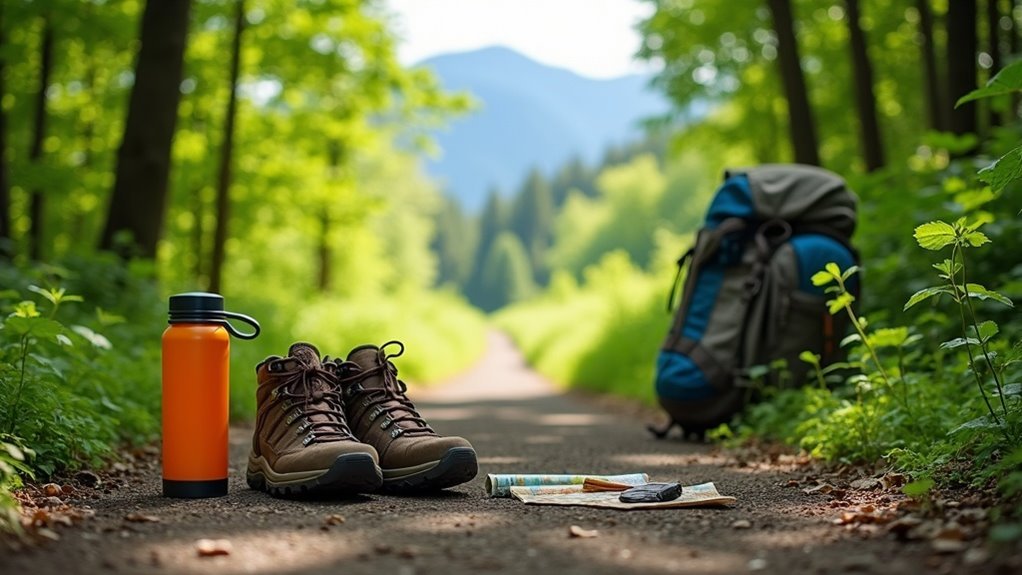
To start hiking safely as a beginner, choose trails under 5 miles with minimal elevation gain. Wear moisture-wicking clothing and well-fitted hiking boots for comfort. Familiarize yourself with navigation tools like GPS and offline maps. Always inform someone about your plans and pack plenty of water. Keep an eye on weather conditions and respect the environment by following Leave No Trace principles. With these basics in mind, you’ll be well on your way to enjoying the great outdoors!
Key Takeaways
- Choose beginner-friendly trails under 5 miles with minimal elevation gain to build confidence and fitness gradually.
- Inform someone about your hiking plans, including trail name and expected return time for safety.
- Wear moisture-wicking clothing, properly fitted hiking boots, and layer your attire for varying weather conditions.
- Carry a physical map and familiarize yourself with GPS devices to prevent getting lost during hikes.
- Stay hydrated, carry a first aid kit, and trust your instincts to turn back if the trail feels too challenging.
Choose Beginner-Friendly Trails
When you’re starting out, picking the right trail can make all the difference in your hiking experience. To guarantee a manageable experience, choose beginner-friendly trails under 5 miles with minimal elevation gain.
Utilize resources like AllTrails to find well-maintained hiking trails rated for easy difficulty levels. Familiarize yourself with the trail details, including terrain type and any obstacles, to ensure it matches your fitness level.
Starting with popular trails can help you avoid overgrown paths. As you build confidence and fitness, gradually increase the difficulty by selecting slightly longer or more challenging hikes.
Enjoy your journey!
Essential Hiking Gear for Beginners
When you’re starting out on your hiking journey, having the right clothing and gear is vital for a safe and enjoyable experience.
Choose moisture-wicking fabrics that keep you dry and comfortable while layering to adapt to changing weather.
Plus, packing a checklist of essential items will help guarantee you’re prepared for anything the trail throws your way.
Recommended Clothing Materials
Choosing the right clothing materials is essential for a comfortable and safe hiking experience. Start with moisture-wicking materials like polyester or Merino wool to keep dry. Remember to avoid cotton, as it retains moisture.
Layer your clothing to adapt to changing conditions:
- Base layer: moisture-wicking
- Insulating layer for warmth
- Waterproof outer shell for protection
Don’t forget leg protection with long pants or tights, and invest in properly fitting hiking boots for support and traction.
This combination not only enhances comfort but also reduces the risk of injuries on your adventures. Happy hiking!
Essential Packing Checklist
An essential packing checklist can make all the difference for beginners hitting the trails. Here’s what you need for a safe and enjoyable hike:
| Hiking Essentials | Description |
|---|---|
| First Aid Kit | Essential for emergencies |
| Sturdy Footwear | Hiking shoes or boots for comfort |
| Hydration Packs | Keep you hydrated on the go |
| Navigation Tools | Map, compass, or GPS for guidance |
Don’t forget trail food, sunscreen, breathable clothing, extra layers, and a multi-tool. Packing wisely guarantees you’re prepared, allowing you to focus on enjoying nature and serving others on the trail!
Understand Navigation and Mapping
Charting the great outdoors can feel intimidating, but with the right tools and preparation, it becomes manageable and even enjoyable. Familiarize yourself with both GPS devices and traditional paper maps for effective navigation on your hiking route.
Navigating the outdoors may seem daunting, but with proper tools and preparation, it can be a rewarding adventure.
Always download offline maps and trail guides since cell service can be unreliable.
- Carry a physical map as a backup.
- Identify key landmarks and trail junctions to stay oriented.
- Use GPS apps to track progress and prevent getting lost.
Plan Your Hike Timing
When planning your hike, timing can make all the difference.
Start early to beat the crowds and maximize your daylight hours, ensuring you return safely.
Don’t forget to check the weather and consider peak times to enhance your overall hiking experience.
Choose Optimal Start Time
How can you guarantee a safe and enjoyable hiking experience? Choosing the ideal start time is key.
Begin your hikes early in the morning to avoid crowds and guarantee cooler temperatures. Always check the sunset time to plan your hike duration and guarantee you return before dark. Aim to start at least two to three hours prior to sunset to allow ample time to complete your trail.
- Monitor weather conditions for any changes
- Consider less busy days for your outings
- Plan to hike during cooler months for enhanced comfort
With these tips, you’re set for a great hiking adventure!
Weather Check Essential
To guarantee a safe hiking experience, checking the weather is non-negotiable. Always check the weather forecast for your destination, as conditions can change rapidly. Be mindful of the temperature range and precipitation predictions to dress appropriately. Start your hike early to avoid extreme heat, which can lead to dehydration. Monitor weather alerts for potential thunderstorms or other warnings that may impact your safety. Remember, weather conditions can differ between your starting point and higher elevations.
| Weather Aspect | Action Required |
|---|---|
| Temperature Range | Dress appropriately |
| Precipitation Predictions | Plan your hike accordingly |
| Weather Alerts | Monitor for safety updates |
Avoid Peak Crowds
If you want a more enjoyable hiking experience, planning your hike timing is essential for avoiding peak crowds. Many hikers hit the trails mid-morning to early afternoon, so consider these strategies:
- Start your hike early in the morning or later in the afternoon.
- Research your chosen trail’s popularity to find less crowded times.
- Opt for weekday hikes when foot traffic is lower.
Arriving at the trailhead at least 30 minutes before sunrise helps you secure parking and enjoy a quieter hike before crowds arrive.
This way, you can fully appreciate nature’s beauty without distractions. Happy hiking!
Stay Hydrated and Nourished
Staying hydrated and nourished during your hike is essential for both your safety and enjoyment. Carry at least half a liter of water for every hour of hiking, increasing this in hot weather or on challenging trails to avoid dehydration.
Always bring water from home, as relying on trailhead sources can be risky. Pack lightweight, nutrient-dense snacks like nuts, energy bars, or dried fruit to maintain energy levels.
Plan regular hydration breaks, drinking before you feel thirsty. Watch for signs of dehydration such as dizziness, dry mouth, or fatigue, and take action immediately to guarantee safe hiking.
Prioritize Safety and Awareness
While exploring the great outdoors, prioritizing safety and awareness can make the difference between a memorable adventure and a dangerous situation.
If you’re hiking alone, always let someone know your plans, including the trail and expected return time. Stay safe by checking the park website for trail conditions and weather updates. Carry a first aid kit and familiarize yourself with basic first aid procedures.
Stay vigilant—avoid distractions like music or headphones, and trust your instincts. If the trail feels too challenging or you’re fatigued, don’t hesitate to turn around.
- Check cell phone signal before heading out
- Stay on the trail
- Regularly assess your surroundings
Practice Leave No Trace Principles
As you venture into nature, practicing Leave No Trace principles not only protects the environment but also enhances your hiking experience.
Stick to designated trails to minimize your environmental impact and preserve ecosystems. Always pack out waste, including food scraps, to keep the area clean for future hikers.
Respect wildlife by maintaining a safe distance and never feeding them; this helps maintain their natural behavior. Avoid picking plants or taking natural objects to preserve the beauty of the trail.
Respect wildlife by keeping your distance and refraining from feeding them to ensure their natural habits remain undisturbed.
Finally, educate fellow hikers about these practices, fostering a community committed to responsible outdoor enjoyment and environmental stewardship.
Communicate Your Plans to Others
Before you hit the trail, it’s essential to communicate your plans to someone you trust. Tell a friend or family member your specific hiking plans, including the trail name and expected return time. This keeps them informed of your whereabouts and enhances safety.
- Share your vehicle information for safety and identification.
- Establish a check-in system; agree on specific times to update them during your hike.
- Send your GPS coordinates and leave a detailed map of your route, highlighting landmarks and trail junctions.