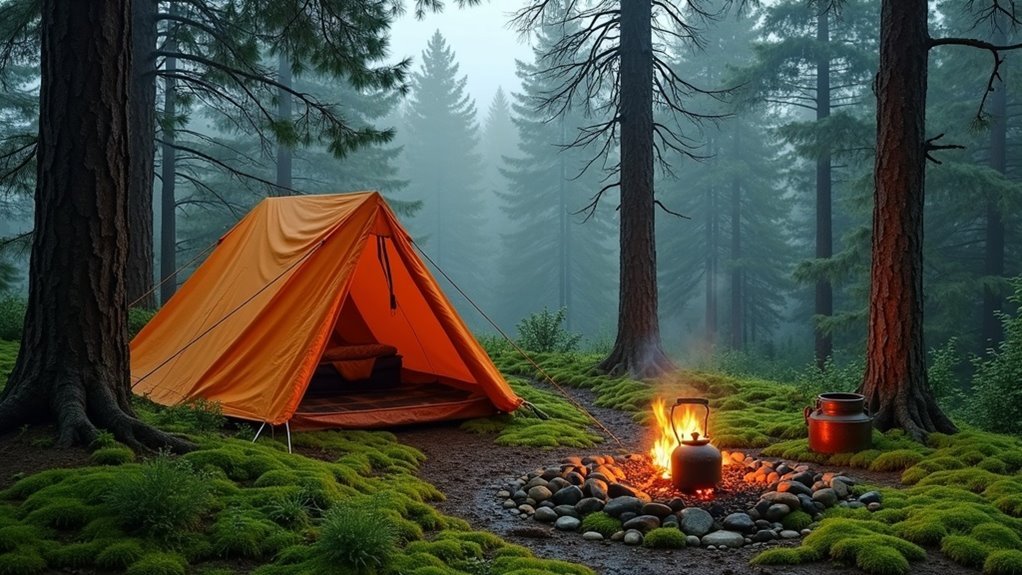
To set up a safe hiking camp in bad weather, check forecasts and pack waterproof gear. Position your tent on elevated ground to avoid flooding, and create drainage channels. Use a tarp for extra protection, and secure your tent well. Keep a first aid kit handy and monitor weather updates constantly. Engage kids with adaptable activities to keep spirits high. These strategies help guarantee comfort and safety; there’s more valuable information to follow.
Key Takeaways
- Choose an elevated campsite location to reduce the risk of flooding and avoid low-lying areas during bad weather.
- Securely pitch your tent using upgraded stakes and check seams for proper sealing against rain.
- Use a tarp over the tent and cooking areas for added protection from rain and create drainage channels to redirect water.
- Regularly monitor weather conditions and have an evacuation plan ready if severe weather warnings arise.
- Store gear and clothing in waterproof bags to keep them dry and create a designated dry area inside the tent.
Importance of Preparation for Bad Weather Camping
When you head out for a hiking camp, preparation for bad weather can make all the difference between an enjoyable experience and a challenging ordeal.
Start by checking weather forecasts to anticipate any changes. Pack waterproof tents and quick-dry clothing to stay comfortable and safe.
Checking weather forecasts and packing waterproof gear ensures a comfortable and safe camping experience, even in unpredictable conditions.
Familiarize yourself with the campsite layout, placing your tent in elevated areas to avoid flooding. Set realistic expectations for activities during rain, and always have an evacuation plan in place.
Carry a first aid kit to guarantee safety in case of emergencies. With proper preparation, you’ll enhance your camping experience, even in adverse conditions.
Essential Gear for Staying Dry
To stay dry while hiking, you need reliable gear that handles wet conditions effectively. A waterproof tent, quality rain gear, and durable footwear are essential to keep moisture at bay.
Let’s explore what you should pack to guarantee a dry and comfortable camping experience.
Waterproof Clothing Essentials
Staying dry is essential for a comfortable hiking experience, and investing in waterproof clothing is your first line of defense against the elements.
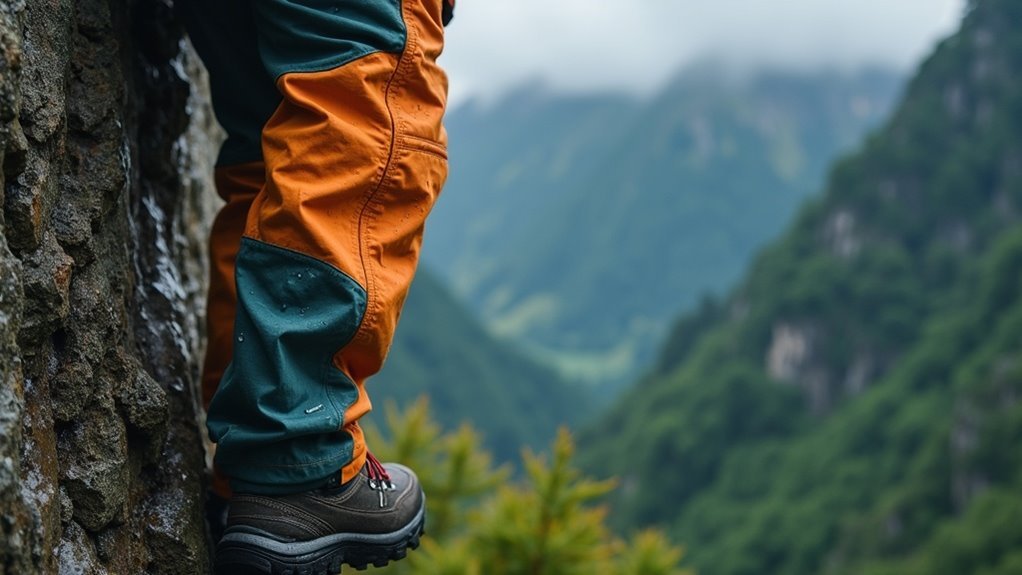
Choose waterproof jackets and pants made from breathable materials to protect against rain while preventing overheating. Layering with moisture-wicking base layers and insulating mid-layers enhances temperature regulation.
Quick-dry clothing, like synthetic fabrics or merino wool, wicks moisture away, keeping you comfortable even when wet. Don’t forget waterproof footwear—rubber or specialized hiking boots will safeguard your feet and reduce blister risk.
Accessories like waterproof gloves and hats can further shield sensitive areas, ensuring you stay dry and warm.
Reliable Tent Selection
Choosing the right tent is key for staying dry and comfortable during your hiking trip. Prioritize tents made from waterproof materials with sealed seams to prevent leaks. A good rainfly enhances protection and ventilation. Opt for a tent with a waterproof rating of 2000 mm or higher for heavy rain. Make certain it has a sturdy frame and guy lines to withstand strong winds. Additionally, choose a spacious tent to avoid condensation buildup.
| Feature | Importance | Recommendation |
|---|---|---|
| Waterproof materials | Prevents leaks | Look for sealed seams |
| Rainfly | Adds protection & ventilation | Essential for wet weather |
| Sturdy frame | Withstands strong winds | Prioritize durability |
Footwear for Wet Conditions
Having the right footwear is essential for keeping your feet dry and comfortable during wet hiking conditions.
Choose waterproof footwear made from breathable materials, like Gore-Tex, to keep water out while allowing moisture to escape. Pair these boots with quick-drying socks made from merino wool or synthetic blends, which wick moisture and provide insulation even when wet.
It’s also important to select shoes with good traction to minimize slips on slippery surfaces. For added stability and protection against water ingress, consider footwear that offers higher ankle support, especially when traversing puddles or streams.
Your feet will thank you!
Tips for Effective Campsite Setup
When setting up your campsite, consider the placement of your tent carefully to avoid flooding and wind exposure.
Create drainage channels to direct water away from your shelter, and keep your gear elevated to stay dry and comfortable.
These strategies will help guarantee a safe and enjoyable camping experience.
Tent Placement Strategies
To set up your tent effectively, focus on selecting elevated ground that minimizes the risk of flooding during heavy rain. Proper tent placement is essential for a safe camping experience.
Consider these strategies:
- Position the tent entrance away from prevailing winds.
- Utilize natural slopes to create drainage channels around your tent.
- Use a tarp for additional rain protection over the tent and cooking areas.
- Securely pitch the tent with upgraded stakes to withstand wind gusts.
- Regularly check seams and flaps for proper sealing against rain.
These tips will help guarantee a comfortable and safe camping environment for everyone involved.
Drainage Channel Creation
Creating effective drainage channels around your tent is essential for preventing flooding during heavy rain. To do this, dig shallow trenches at least 6 inches deep and 12 inches wide, directing water diversion away from your tent.
Position these drainage channels on a downward slope, ideally leading to a natural drainage area, ensuring efficient water flow. Reinforce the edges with rocks or logs to maintain their shape during downpours.
Regularly check and clear your channels of debris to keep them functional. Integrate these channels into your campsite layout, choosing an elevated area where water naturally flows away for maximum protection.
Gear Elevation Techniques
After establishing effective drainage channels, focusing on gear elevation is essential for a comfortable camping experience.
Utilizing gear elevation techniques will help keep you dry inside the tent. Here are some practical tips:
- Choose elevated ground for your tent location.
- Dig shallow trenches around the tent for drainage.
- Position the tent entrance away from prevailing winds.
- Use a tarp over the cooking area and tent for extra waterproofing.
- Keep gear elevated on camping cots or tables to avoid moisture.
Maintaining Comfort in Wet Conditions
When you’re out hiking in wet conditions, staying comfortable can make a significant difference in your overall experience.
Bring extra blankets or sleeping bags for warmth, especially for children or those sensitive to cold. Use a sleeping pad to insulate yourself from the damp ground.
Pack extra blankets and sleeping bags for warmth, particularly for children or those who feel the chill easily.
Store clothing and gear in waterproof bags, ensuring you can quickly change into dry clothes. Create a designated dry area inside your tent to keep moisture at bay.
Finally, stay active throughout the day to generate body heat and uplift your mood. This new account of comfort strategies can enhance your enjoyment despite the weather.
Safety Considerations During Stormy Weather
As stormy weather can quickly turn a pleasant hike into a dangerous situation, it’s crucial to prioritize safety when setting up your camp.
Consider the following precautions:
- Monitor weather conditions regularly and evacuate if severe warnings are issued.
- Avoid low-lying areas and camping near rivers or streams prone to flooding.
- Choose a tent location sheltered from strong winds and away from tall trees.
- Keep a first aid kit accessible and make sure everyone knows emergency procedures.
- Use a battery-powered NOAA radio for updates and have a plan for moving to nearby shelter if conditions worsen.
Engaging Activities for Kids in Rainy Conditions
While rain can dampen the mood, it doesn’t have to ruin your camping experience, especially for kids enthusiastic to explore. Encourage them to splash in puddles or create muddy art, turning the rain into a canvas.
Organize scavenger hunts using waterproof bags to keep clues safe and dry. Plan indoor activities like storytelling, card games, or crafts under a tarp or in the tent.
Introduce nature-themed games, like “nature bingo,” where kids find items like wet leaves or snails. Equip them with waterproof gear and quick-dry clothing, ensuring they stay comfortable while making the most of their rainy adventure.