To prepare your knees for the strain of downhill hiking, focus on strengthening your quadriceps through eccentric exercises like Poliquin Step Downs and forward lunges. Enhance hip flexor mobility with dynamic stretches before hikes and static stretches afterward. Use proper footwear, consider hiking poles for support, and practice balance training with single-leg exercises to improve stability. Gradually increase the intensity of your training and regularly assess your strength to prevent injuries and promote long-term knee health. Discover more effective techniques to enhance your hiking experience.
Key Takeaways
- Strengthen your quadriceps with eccentric exercises like Poliquin Step Downs and forward lunges to improve knee stability during descents.
- Incorporate dynamic stretching of hip flexors before hikes and static stretching post-hike to enhance mobility and reduce knee strain.
- Use proper footwear with cushioning and traction to support your knees and prevent slips while hiking downhill.
- Include balance training, such as single-leg exercises, to improve stability and coordination, reducing the risk of falls and injuries.
- Follow a gradual training program that progressively increases intensity and volume, assessing knee strength regularly and consulting a professional for guidance.
Understanding the Mechanics of Downhill Hiking
Downhill hiking places unique demands on your knees, primarily due to the eccentric loading that occurs as your quadriceps engage to control your descent.
This action increases stress on the patellofemoral joint, making it essential to understand these mechanics to prevent knee pain. Strong quadriceps and efficient movement patterns are critical in managing the forces on your knees.
Understanding the mechanics of downhill hiking is crucial for preventing knee pain and managing patellofemoral joint stress.
If your strength is inadequate or your mechanics are inefficient, you risk conditions like patellar tendonitis.
Preparing your body with targeted eccentric training and mobility work enhances resilience, markedly reducing the likelihood of knee pain during downhill hiking.
The Importance of Eccentric Exercises
Eccentric exercises play a pivotal role in preparing your knees for the challenges of downhill hiking, as they specifically target the muscle actions required to control descent. By strengthening your quadriceps through exercises like the Poliquin Step Down and forward lunges, you can reduce knee pain and enhance stability. Incorporating a six-week training program focusing on eccentric exercises helps your knees adapt to the unique stresses of downhill hiking, minimizing the risk of injuries like patellar tendonitis.
| Eccentric Exercise | Benefit |
|---|---|
| Poliquin Step Down | Improves knee control |
| Forward Lunges | Strengthens quadriceps |
| Single-leg Deadlift | Enhances balance |
| Step-ups | Builds stability |
| Slow Squats | Increases resilience |
Key Strengthening Exercises for Knee Resilience
To guarantee your knees are resilient during hiking, incorporating key strengthening exercises is essential.
The Poliquin Step Down mimics downhill angles, enhancing stability and control. Forward lunges, performed slowly, emphasize eccentric contraction for downhill stability and can progress to deficit lunges for added challenge.
Supine leg lifts with ankle weights target knee-supporting muscles, improving strength and flexibility to absorb impact. Engaging in strength training exercises like squats and lunges 2-3 times weekly builds vital muscle groups—quads, hamstrings, and glutes—minimizing knee pain and fortifying resilience against injuries like patellar tendonitis during downhill activities.
Enhancing Mobility in Hip Flexors and Quadriceps
To enhance your performance during downhill hiking, improving hip flexibility and strengthening your quadriceps is essential.
Incorporating specific exercises and a mobility routine can greatly increase your range of motion and stability.
Focus on targeted strengthening and flexibility techniques to prepare your body for the demands of the trail.
Importance of Hip Flexibility
While you prepare for downhill hiking, enhancing hip flexibility can greatly improve your mobility in the hip flexors and quadriceps. This improvement helps mitigate knee pain by reducing strain during descents.
Consider incorporating these strategies:
- Dynamic Stretching: Perform lunges and leg swings before hikes.
- Static Stretching: Focus on hip flexor and quadriceps stretches post-hike.
- Regular Mobility Work: Engage in hip mobility exercises to maintain flexibility.
- Mindful Movements: Be aware of your form to prevent compensatory movements that lead to injuries.
Prioritizing hip flexibility guarantees healthier knees and enhances your hiking experience.
Quadriceps Strengthening Exercises
Strengthening your quadriceps is essential for maintaining knee stability during the eccentric loading encountered in downhill hiking. Engaging in quadriceps strengthening exercises, such as squats and lunges, enhances your strength and mobility in both the quadriceps and hip flexors, ensuring proper alignment during descents.
Using heel-elevated positions can further boost engagement and strength, preparing your body for downhill forces. Additionally, incorporating dynamic stretches for the hip flexors and quadriceps improves flexibility and range of motion, contributing to better overall performance.
Regularly performing eccentric-focused exercises will build resilience in your quadriceps, reducing the likelihood of knee pain while descending.
Mobility Routine Recommendations
Building on the importance of quadriceps strengthening, enhancing mobility in the hip flexors and quadriceps plays an essential role in preparing your knees for the demands of downhill hiking.
To improve mobility and promote injury prevention, consider the following routine:
- Dynamic Stretches: Incorporate leg swings and walking lunges before hikes.
- Heel-Elevated Squats: Focus on quadriceps engagement to control movement.
- Post-Hike Static Stretches: Target hip flexors and quadriceps to maintain flexibility.
- Consistent Mobility Work: Include foam rolling and stretching 3-4 times weekly for ideal knee function.
These practices enhance mobility, ensuring your knees withstand the strain of downhill hiking.
Techniques for Safe Descent
To guarantee a safe descent while hiking downhill, focus on strengthening the knee muscles through targeted exercises.
Proper footwear selection is also vital, as it provides the necessary support and grip on uneven terrain.
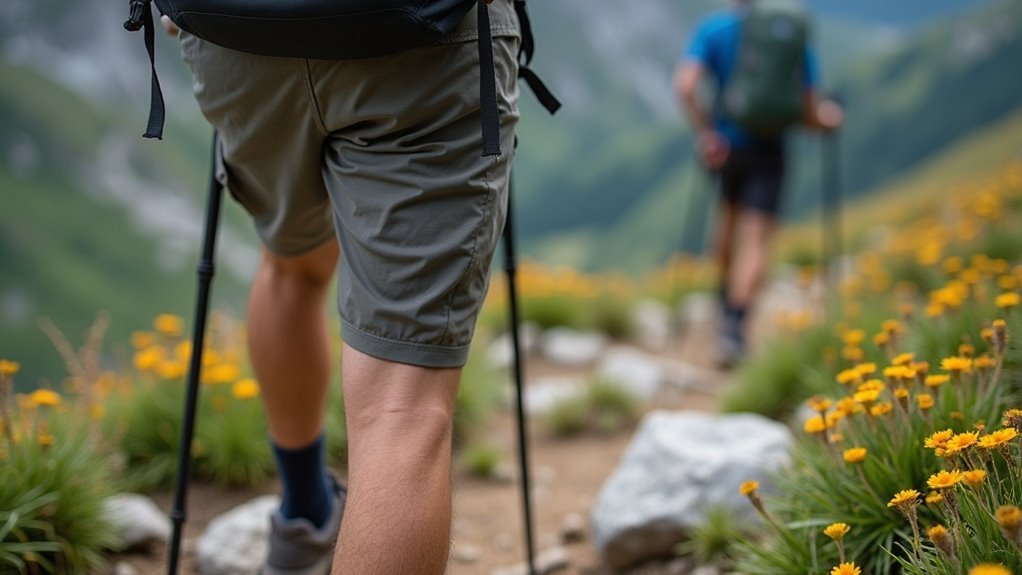
Additionally, utilizing hiking poles can help distribute weight and enhance stability, reducing the risk of injury.
Strengthening Knee Muscles
Enhancing knee muscle strength is essential for safely traversing downhill hikes. Strengthening knee muscles can greatly reduce knee pain while hiking.
Consider incorporating these exercises into your training routine:
- Poliquin Step Down – Focus on eccentric movements for better control.
- Forward Lunges – Mimic descent angles to boost quadriceps strength.
- Deficit Lunges – Enhance flexibility and stability around the knee.
- Supine Leg Lifts with Ankle Weights – Target supporting muscles for improved alignment.
Consistent training for quads, hamstrings, and glutes promotes knee resilience, ensuring you can enjoy your hikes without discomfort.
Proper Footwear Selection
Proper footwear selection plays a pivotal role in guaranteeing safe descents during downhill hiking. Choosing shoes with adequate cushioning and support absorbs impact, reducing knee pain. Look for sturdy soles with good traction to prevent slips and enhance stability. A wide toe box prevents bruised toes while allowing natural movement. Ankle support improves alignment, essential for minimizing strain on the knees. Confirm your footwear fits properly to avoid discomfort and injuries.
| Feature | Importance |
|---|---|
| Cushioning | Absorbs impact, reduces strain |
| Traction | Prevents slips, enhances stability |
| Toe Box Width | Prevents bruised toes |
Utilizing Hiking Poles
While traversing downhill terrain, utilizing hiking poles greatly aids in reducing stress on your knee joints.
Here’s how you can effectively use them:
- Distribute Weight: Poles help evenly distribute your weight, minimizing impact on knees.
- Maintain Alignment: They assist in keeping your knees aligned with your hips and ankles, promoting proper posture.
- Control Speed: Use your arms to control descent speed, enhancing stability and reducing knee strain.
- Engage Muscles: A controlled pace encourages better muscle engagement, reducing the risk of injury or pain.
Consult a physical therapist for personalized techniques to enhance your hiking downhill experience safely.
Incorporating a Comprehensive Training Program
To effectively prepare your knees for downhill hiking, it’s crucial to incorporate a thorough training program that targets strength, mobility, and endurance.
Focus on exercises like the Poliquin Step Down and forward lunges to enhance leg stability and mimic the demands placed on the knee joint during descents.
Incorporate Poliquin Step Downs and forward lunges to boost knee stability for downhill hiking.
Include balance training and single-leg exercises to improve overall control.
Gradually increase training volume and intensity, allowing your knees and surrounding muscles to adapt.
Regularly assess your knee strength and flexibility, and consult with a physical therapist to tailor your program and address any specific concerns or discomfort effectively.