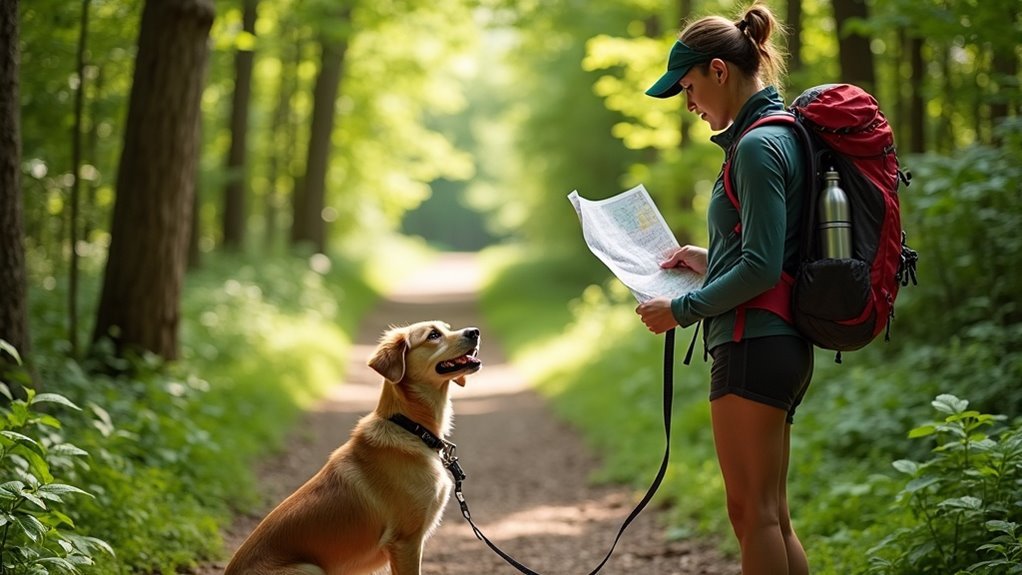
To prepare for hiking with your dog on a leash, assess both your fitness levels and your dog’s capabilities first. Use a sturdy 6-foot leash and a well-fitted harness for control and comfort. Pack essentials like water, a collapsible bowl, and poop bags. Familiarize your dog with various terrains and practice obedience commands. Don’t forget to check local park regulations regarding dogs. Keep an eye on your dog’s energy levels and take breaks as needed for a fun adventure. There’s more to learn about ensuring a smooth hike!
Key Takeaways
- Assess your dog’s fitness level by gradually increasing walk distance and intensity before hiking.
- Equip your dog with a well-fitted harness and a sturdy 6-foot leash for control.
- Pack essentials like water, a collapsible bowl, poop bags, and safety gear like a bear bell.
- Familiarize your dog with different terrains and practice obedience commands for better control.
- Check local park regulations for leash requirements and dog access before heading out.
Assessing Fitness Levels for You and Your Dog
Before you hit the trails with your dog, it’s essential to assess both your fitness levels to guarantee a safe and enjoyable hiking experience.
Start by evaluating your dog’s ability during daily walks, gradually increasing their distance and intensity. For dogs new to hiking, opt for shorter, flat trails, working up to 3-5 miles as they build endurance.
Evaluate your dog’s fitness during walks, gradually increasing distance and intensity to prepare them for hiking adventures.
Keep an eye on their reactions—excessive panting or lagging might mean it’s time for a break.
Don’t forget to take into account your own fitness; choose hikes that match your capability, and consult a veterinarian if your dog has health concerns.
Essential Gear for Hiking With Your Dog
Having the right gear is essential for a successful hiking trip with your dog. Start with a sturdy 6-foot leash made of durable materials, ensuring you have reliable control while allowing your dog some freedom.
A well-fitted harness, like the Ruffwear Hi & Light, helps prevent strain and choking, making your hike more enjoyable.
Don’t forget a collapsible water bowl to keep your furry friend hydrated, along with enough water for both of you.
Finally, pack essentials like poop bags to maintain clean trails and, if hiking in wildlife areas, consider bringing a bear bell for safety.
Choosing the Right Leash and Harness
When choosing a leash and harness for your hike, focus on length, material, and fit.
A standard 6-foot nylon leash gives you the control you need, while a well-fitted harness guarantees your dog stays comfortable and secure.
Leash Length and Material
Choosing the right leash and harness is essential for a safe and enjoyable hiking experience with your dog. A standard 6-foot nylon leash is recommended for hiking, offering reliable control while allowing your dog the freedom to explore.
Consider braided leather leashes for durability and comfort, especially on longer hikes. Avoid retractable leashes, as they can lead to inconsistent control in unpredictable environments.
Verify the leash length and material suit your dog’s size and strength, contributing to effective dog training. A well-fitted harness, like the Ruffwear Hi & Light, complements your leash choice for a seamless hiking adventure.
Harness Fit and Design
A well-fitted harness is just as important as the right leash for your hiking adventures. Look for harness designs like the Ruffwear Hi & Light, which provide freedom of movement and comfort during long hikes.
Guarantee proper harness fit by measuring your dog’s girth and neck; a snug fit prevents escape and discomfort. For leash walking, consider a 6-foot braided leather leash with a non-slip grip for better control.
If your dog tends to pull, opt for a harness designed to reduce tugging. This not only enhances your hiking experience but also supports effective dog training and safety.
Safety Features to Consider
Guaranteeing your dog’s safety during hikes hinges on the right leash and harness combination. Opt for a standard 6-foot nylon leash for reliable control while allowing freedom of movement. Choose a harness like the Ruffwear Hi & Light that reduces pulling and fits securely. Look for durable materials that withstand outdoor wear and tear. Also, consider harnesses with reflective features for added visibility in low-light conditions.
Here’s a quick comparison:
| Feature | Importance |
|---|---|
| Leash Training | Guarantees reliable control |
| Durable Materials | Withstands outdoor conditions |
| Reflective Features | Enhances visibility |
| Comfort & Fit | Prevents injury |
| Adjustable Straps | Accommodates different shapes |
Local Park Rules and Regulations
Before you hit the trails with your dog, make certain to check the local park regulations.
Many parks require dogs to be leashed at all times, while others may have designated off-leash areas with specific rules.
Understanding these guidelines not only keeps you safe but also guarantees a great experience for everyone.
Check Local Regulations
How can you guarantee a smooth hiking experience with your dog? Start by checking local regulations.
Each park has specific rules regarding dog access, and these can vary widely. For instance, many state parks require dogs to be on a leash at all times, while some national parks, like Mount Rainier, don’t allow dogs on trails at all.
Additionally, Wilderness Areas may have leash requirements, such as in the Alpine Lakes Wilderness. Always verify these regulations before your trip, as they may change with seasons or conservation efforts.
Being informed assures a safe and enjoyable hike for you and your furry friend!
Leash Requirements
When heading out for a hike with your dog, understanding leash requirements is essential for a smooth experience.
To guarantee safety and compliance in local parks, keep these points in mind:
- Leash Length: Many parks require a maximum leash length of 6 feet.
- Dog Training: Proper training helps manage leash reactivity, keeping your dog calm around others.
- Trail Regulations: Some trails may prohibit dogs entirely, while others allow only leashed access.
Always check with local ranger stations or park websites for the most current leash requirements to avoid fines and guarantee a happy outing for you and your dog.
Designated Dog Areas
While exploring local parks with your dog, it’s important to know the specific regulations regarding designated dog areas. Many parks require dogs to be leashed at all times, while others feature designated areas where your furry friend can roam free.
Before heading out, research the rules for each park, as they can vary greatly. National Forests may allow dogs on trails, but some trails prohibit them to protect fragile ecosystems.
Preparing Your Dog for the Trail
Before hitting the trails with your furry companion, it’s important to confirm they’re fully prepared for the adventure ahead.
Here are three essential steps to get your dog trail-ready:
Three key steps will ensure your dog is ready for a safe and enjoyable trail adventure.
- Vaccinations: Make sure your dog is up-to-date on vaccinations like Distemper and Rabies for their safety.
- Training: Incorporate obedience training. Commands like “come,” “sit,” and “stay” are essential for keeping your dog secure on the trail.
- Leash Practice: Regularly practice walking on a leash in various environments to reduce reactivity and guarantee a smooth hike.
Safety Gear and First Aid Kit Essentials
Safety gear and a well-stocked first aid kit are essential for any hiking adventure with your dog. Always carry bear spray in bear-prone areas to protect against wildlife encounters.
Your first aid kit should include gauze, antiseptic ointment, tweezers for ticks, and a muzzle for safety in case of injury. A doggy carrier is crucial for transporting an injured dog off the trail, especially in remote areas.
Don’t forget a collapsible water bowl to keep your dog hydrated on longer treks. Familiarize yourself with local hazards to tailor your safety gear and first aid kit for a smooth hiking experience.
Maintaining a Steady Pace and Taking Breaks
To guarantee a pleasant hiking experience for both you and your dog, maintaining a steady pace is essential. Here’s how to keep the adventure enjoyable:
- Take regular breaks every 30-60 minutes to prevent fatigue.
- Monitor your dog’s behavior; if they lag or seem tired, adjust your pace or stop.
- Choose comfortable resting spots on flat or shaded terrain for effective recovery.
These strategies not only help your dog recharge but also reinforce positive behavior with treats, making your hike more rewarding.
Enjoying the Adventure Together
Maintaining a steady pace and taking breaks sets the stage for a memorable hiking experience with your dog.
To truly enjoy the adventure, make sure your dog stays engaged and focused on you. Use a loose leash to encourage freedom while maintaining control, especially in busy or wildlife-rich areas.
As you navigate the trails together, foster a sense of teamwork by rewarding good behavior and following commands. This shared journey not only builds confidence but also strengthens your bond, leading to increased happiness for both of you.
Embrace the moments, and let dog hiking become a joyful routine for you both.