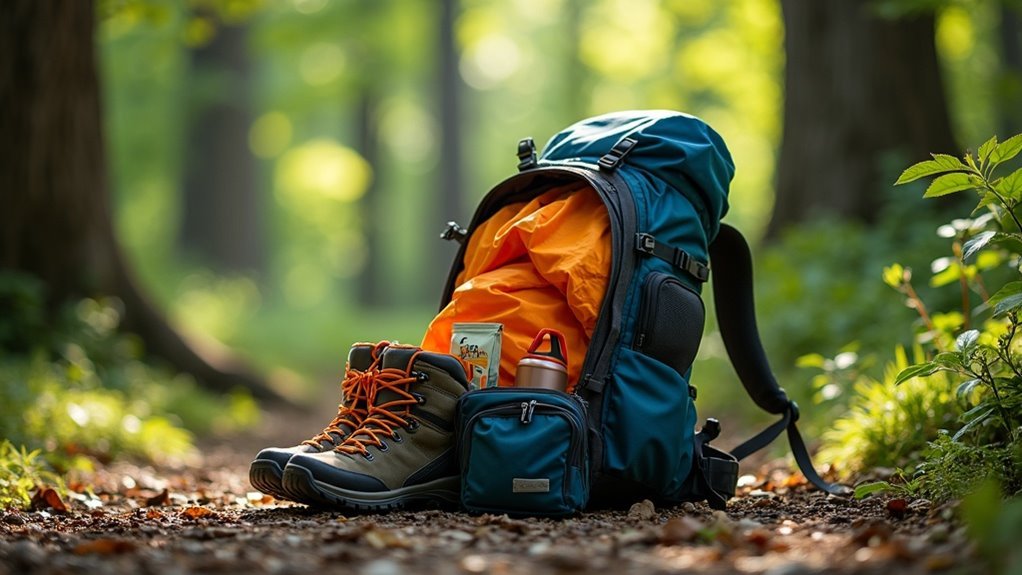
To pack your hiking backpack for ideal weight balance, start by placing heavy items close to your back. Organize your gear into three zones: light, bulky items in the bottom zone, heavy gear in the middle, and lighter essentials for quick access at the top. Use outer pockets for hydration and snacks, and adjust your hip belt and shoulder straps to minimize strain. Focus on stability and comfort, and you’ll discover even more tips to enhance your packing efficiency.
Key Takeaways
- Pack heavy items close to your back and against your body to improve weight distribution and balance.
- Place 70% of the pack weight in the Core Zone, with heavy gear in the middle zone.
- Use outer pockets for frequently accessed items like snacks and water to maintain stability.
- Ensure lighter, bulkier items are stored in the bottom zone to enhance comfort and balance.
- Adjust hip belts and shoulder straps to reduce strain and promote better weight management during hikes.
Why Does It Matter How I Pack My Backpack?
When you pack your hiking backpack properly, you not only enhance balance and stability but also greatly improve your comfort on long treks.
Proper packing guarantees ideal weight distribution, placing heavy items close to your back for better control and reduced strain on your back and shoulders.
A well-organized pack promotes accessibility, allowing you to reach frequently used backpacking gear without disrupting your load’s balance.
The One Rule of Packing
To guarantee an enjoyable hiking experience, remember this essential rule: always pack heavy items close to your back.
Position your heaviest items, like your tent or sleeping bag in a compression sack, right against your body. This arrangement helps distribute weight evenly, enhancing balance and stability on the trail.
Place lighter items, such as your rain jacket or extra layers, further from your back to optimize pack weight and center of gravity.
A well-packed backpack not only improves comfort but also allows you to stay warm and maneuver easily, reducing strain on your back and shoulders during long hikes.
Use the 3 Packing Zones
To maximize comfort and stability, you should utilize the three packing zones effectively.
Start by placing light, bulky items like sleeping bags in the Bottom Zone for support.
Then position heavier gear, such as food and cookware, in the Middle Zone close to your back.
Finally, keep lighter items that you need quick access to, like snacks and rain gear, in the Top Zone for convenience.
Bottom Zone Essentials
As you prepare your hiking backpack, the Bottom Zone is essential for packing light and bulky items that you’ll need primarily at camp.
Place your sleeping bag and sleeping pad at the bottom of your pack to maximize packing organization and provide cushioning for your back.
Include extra clothing here as well, ensuring heavy items stay out to maintain a stable center of gravity.
This setup allows you to access these essentials easily when you reach camp, promoting efficient unpacking.
Core Zone Placement
When organizing your hiking backpack, the Core Zone plays a pivotal role in maintaining balance and comfort during your trek. This zone should contain heavy items like food and cookware, positioned close to your back for ideal weight distribution and stability. Aim for 70% of your pack’s weight here, ensuring a stable center of gravity. Keep items organized and accessible, allowing for quick access to cooking gear without disrupting pack balance. Proper placement minimizes shifting, enhancing comfort and reducing fatigue.
| Core Zone Items | Placement Tips | Accessibility |
|---|---|---|
| Food | Close to back | Easy access |
| Cookware | Centered | Quick retrieval |
| Liquid Fuel | Upright | Separate from food |
Outer Pockets and Straps
When packing your hiking backpack, make the most of outer pockets and straps for efficiency.
Store small essentials like snacks or tools in hip belt pockets for easy access, while using side pockets to carry water bottles for balanced weight distribution.
Additionally, a front mesh pocket is perfect for stashing wet gear or a first aid kit, keeping vital items within reach without overloading the main compartment.
Hip Belt Pocket Essentials
Hip belt pockets are essential for any hiker looking to optimize their pack’s functionality. These pockets allow for proper organization of lightweight items, ensuring you have frequently accessed essentials at your fingertips. This enhances hiking efficiency by minimizing time spent rummaging through your main compartment. Filling these pockets with lighter gear helps distribute weight effectively, promoting a balanced load for greater comfort. Here’s a quick reference table for packing essentials:
| Item | Purpose |
|---|---|
| Snacks | Quick energy boost |
| Phone | Navigation & communication |
| First-aid kit | Immediate medical needs |
| Multi-tool | Quick repairs |
| Sunscreen | Skin protection |
Side Pocket Organization Tips
Effective organization of your hiking backpack’s outer pockets and straps can greatly enhance your hiking experience.
- Use side pockets for water bottles to guarantee balanced weight distribution.
- Store frequently accessed items like snacks or maps in outer pockets for quick retrieval.
- Utilize hip belt pockets for small essentials, allowing easy access without removing the pack.
- Consider a front mesh pocket for wet gear, keeping it reachable while preserving pack organization.
Straps can also help compress the pack, minimizing excess space and enhancing stability.
Proper side pocket organization not only improves convenience but also contributes to a more enjoyable hike.
How to Pack Your Backpack for Stability
Achieving stability in your hiking backpack is essential for a comfortable trek, as it directly impacts your balance and control.
Pack heavy items close to your back and centered for better weight balance. Use the three packing zones: place light, bulky items in the bottom, heavy items in the middle, and frequently used items on top. This arrangement enhances stability and accessibility.
Tighten compression straps after packing to prevent shifting and keep your center of gravity aligned. Adjust your hip belt and shoulder straps to guarantee about 70% of the weight rests on your hips, promoting comfort and stability throughout your hike.
Common Mistakes to Avoid
Packing your hiking backpack correctly is only part of the equation; avoiding common mistakes is just as important for a successful trek.
Keep your pack balanced and comfortable by steering clear of these pitfalls:
- Don’t pack heavy gear at the top, which can create top heaviness and instability.
- Verify frequently used items are accessible to maintain efficient weight distribution.
- Utilize external pockets for hydration and snacks, preventing imbalances.
- Avoid overpacking; keep your load to 20-25% of your body weight for comfort.
Lastly, adjust your hip belt and shoulder straps to minimize strain and enhance your hiking experience.