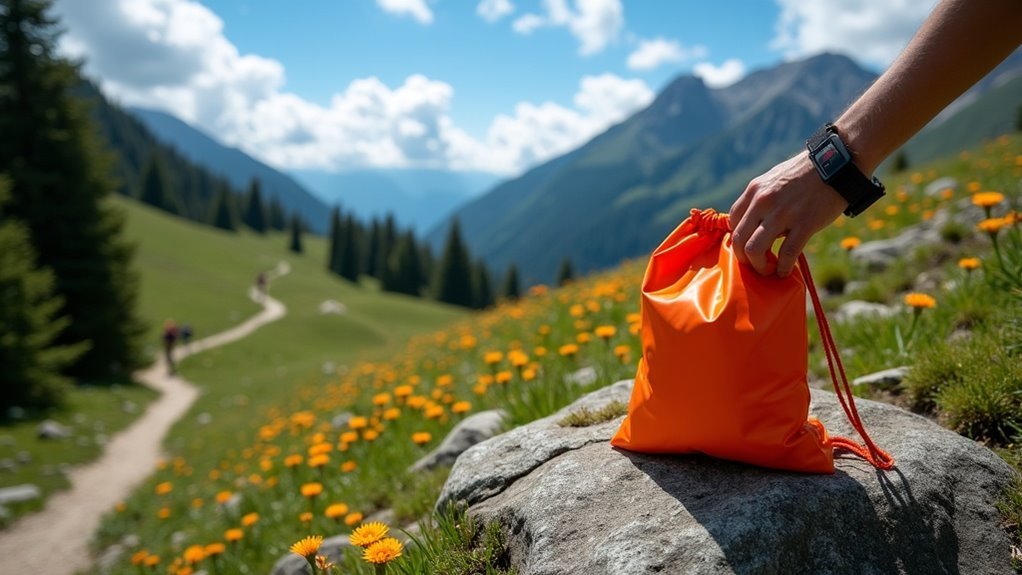
Using a WAG bag while hiking is essential for responsible waste management. Start by sprinkling gelling powder inside the inner bag before use, then seal it tightly after you’re done. Place it back in the outer bag and dispose of it in designated trash receptacles. To minimize odor, use the provided sanitizing towelette and keep the bag away from food. Want to learn more about proper usage and best practices? There’s plenty more to discover!
Key Takeaways
- Open the WAG bag and sprinkle gelling powder inside the inner bag before use to absorb liquids and minimize odors.
- Squat over the bag’s opening to ensure urine does not contaminate the waste.
- Seal the inner bag tightly after use and place it back into the outer bag for transport.
- Dispose of the outer bag in a designated trash receptacle; do not place it in pit toilets or compost bins.
- Use hand sanitizer after handling WAG bags and store used bags away from food to deter wildlife.
Why Using a WAG Bag Is Essential for Hiking
When you head out on a hike, especially in remote areas, using a WAG bag is crucial for protecting the environment and your health.
These Waste Alleviation and Gelling bags allow you to pack out human waste safely, preventing contamination of delicate ecosystems. In high-use areas, like alpine zones, WAG bags help mitigate health risks by containing pathogens that could harm wildlife and water sources.
Following Leave No Trace principles, packing out your waste guarantees a cleaner environment for future hikers. By adopting this responsible practice, you contribute to preserving these beautiful spaces for everyone to enjoy.
Understanding the WAG Bag: Features and Benefits
Although hiking offers a chance to connect with nature, understanding the features and benefits of a WAG bag can enhance your outdoor experience.
Hiking connects us with nature, but knowing how to use a WAG bag elevates the outdoor experience.
WAG bags, or Waste Alleviation and Gelling bags, are essential for responsible waste management. Here’s what makes them a great choice:
- Gelling powder absorbs liquids and minimizes odors
- Durable double layers prevent punctures
- Often provided for free at camping sites
- Includes toilet paper and hand sanitizer
- Supports Leave No Trace principles
How to Properly Use a WAG Bag
Using a WAG bag effectively starts with proper preparation and technique.
You’ll want to open the outer bag, remove the inner bag, and sprinkle in the gelling powder to manage liquids and odors.
After use, sealing the inner bag tightly for transportation is key, so you can pack it out responsibly.
Preparing the WAG Bag
To guarantee a smooth and hassle-free experience in the great outdoors, preparing your WAG bag correctly is essential.
Follow these steps for ideal use:
- Open the outer bag and remove the inner bag.
- Fold the top edges of the inner bag for easier access.
- Sprinkle gelling powder into the inner bag before use.
- After use, seal the inner bag and place it into the outer bag, pressing out air.
- Always pack out the sealed outer bag; don’t dispose of WAG bags in pit toilets.
Proper Usage Techniques
How can you guarantee a hassle-free experience while using a WAG bag? Follow these proper usage techniques:
| Step | Action |
|---|---|
| 1. Open the bag | Remove the inner bag, fold edges. |
| 2. Add powder | Sprinkle gelling powder inside. |
| 3. Use the bag | Squat over the opening, limit urine. |
| 4. Seal & transport | Tighten inner bag, place in outer bag. |
Safe Disposal Practices
After mastering the proper usage techniques for a WAG bag, it’s time to focus on safe disposal practices.
Follow these steps to guarantee hygiene and environmental responsibility:
- Seal the inner bag tightly, pressing out air to prevent leaks.
- Place the sealed inner bag into the outer bag.
- Dispose of the outer bag in a designated trash receptacle.
- Never place WAG bags in pit toilets or compost bins.
- Use the provided sanitizing towelette and hand sanitizer for hygiene after handling.
Step-by-Step Guide to Packing Out a WAG Bag
Packing out a WAG bag is essential for responsible hiking, and following these simple steps guarantees you do it right.
Start by removing the inner bag from the outer bag, folding the top edges for easy use. If needed, sprinkle the gelling powder inside to absorb liquids and control odors.
After doing your business, seal the inner bag tightly, then place it in the outer bag, pressing out air before sealing. Dispose of toilet paper directly inside the inner bag.
Finally, transport the sealed outer bag to a trash receptacle. Remember, proper disposal keeps the environment safe and helps you waste properly.
Tips for Reducing Odor When Using WAG Bags
When you’re out in the wilderness and need to use a WAG bag, keeping odors at bay can make the experience much more pleasant. Here are some tips to reduce smells:
When using a WAG bag in the wilderness, managing odors is key for a pleasant experience.
- Sprinkle the included gelling powder inside the WAG bag before use.
- Seal the inner bag tightly, pressing out excess air.
- Store used WAG bags in odor-proof containers or heavy-duty trash bags.
- Keep the used WAG bag in a designated compartment or on the exterior of your pack.
- Add baking soda or other odor-neutralizing agents to the storage bag.
These steps will help you manage waste responsibly and keep your hiking experience enjoyable.
Best Practices for Storing and Transporting WAG Bags
When it comes to storing and transporting WAG bags, you’ll want to prioritize odor control and secure options.
Use odor-proof loksak bags or roll-up dry bags to keep smells contained and protect against punctures.
For added safety, hang used bags off your pack or use a lidded container in your vehicle to keep your gear and the interior fresh.
Odor Control Techniques
Managing odors while hiking with used WAG bags is essential for an enjoyable outdoor experience. To effectively control smells during transport, consider these techniques:
- Use odor-proof loksak bags or roll-up dry bags to contain used WAG bags.
- Store them in a designated compartment of your backpack, ensuring easy access and protection from other gear.
- Add baking soda or odor-absorbing materials to the outer bag.
- Keep used WAG bags away from your main campsite to deter wildlife.
- Use a heavy-duty trash bag or a sealed container for extra odor protection while driving.
These practices help maintain a fresh environment for everyone.
Secure Storage Options
Proper storage and transport of used WAG bags are essential for a pleasant hiking experience.
To effectively contain smells, use odor-proof loksak bags or roll-up dry bags, and store the waste bags in a designated area of your backpack, like the top compartment or an outer pocket.
Avoid placing WAG bags in bear vaults or near food, as they can attract wildlife.
For transporting in your vehicle, consider a large, lidded container, such as a protein powder jar.
When camping overnight, hang used WAG bags off the back of your pack to keep them discreet and minimize animal attraction.
Transporting Used Bags
To guarantee a hassle-free hiking experience, it’s important to transport used WAG bags with care.
Follow these best practices to guarantee proper disposal while serving the environment:
- Store in odor-proof containers, like loksak bags.
- Keep used bags separate from food in your pack.
- Use a roll-up dry bag to prevent crushing.
- Hang from your pack or use a lidded bucket in your vehicle for wildlife safety.
- Check with land management agencies for local disposal guidelines.
Environmental Considerations for Waste Management
When hiking in the great outdoors, understanding the environmental implications of waste management is essential for preserving the beauty and health of our ecosystems.
Proper disposal of human poop is important; pathogens can contaminate water sources, endangering wildlife and public health. In high-use areas, WAG bags have become necessary for managing waste, as they gel waste for safe transport, minimizing environmental impact.
However, the use of plastic WAG bags raises sustainability concerns, prompting the search for eco-friendly alternatives.
Additional Resources for Responsible Hiking Practices
How can you enhance your hiking experience while ensuring you leave no trace?
By utilizing additional resources, you’ll master responsible waste disposal and promote sustainable hiking practices. Here are some valuable tools:
- Leave No Trace Center for Outdoor Ethics: Guidelines on waste management and WAG bags.
- National Park Service: Park-specific waste disposal regulations.
- Backpacking Light’s Guide: In-depth waste management strategies for various environments.
- Online Communities: Blogs and forums for sharing tips and experiences.
- Subaru/Leave No Trace Program: Free mobile education on responsible waste practices.
These resources empower you to hike responsibly and protect the great outdoors.