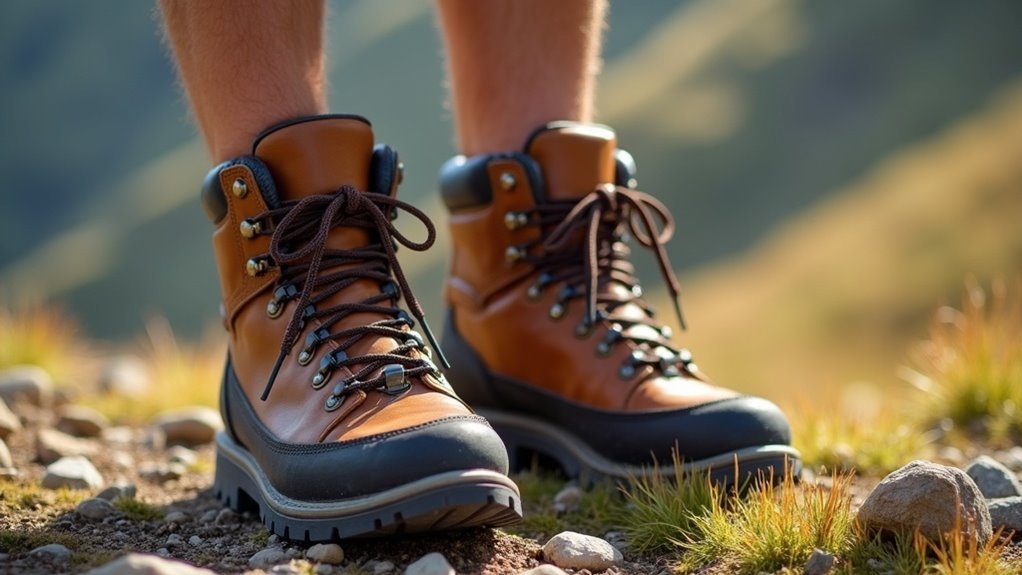
To lace your hiking boots for downhill comfort, start with the heel lock technique. Lace snugly around the instep, then create a lock by threading one lace under the opposite. Repeat with the other lace, pulling both upwards to secure your heel without excessive tightness. Tighten around your toes to prevent slippage and toenail jamming. Finish with a double knot for stability. Exploring additional lacing techniques can further enhance your hiking experience.
Key Takeaways
- Use the heel lock technique to secure your heel and prevent slippage during steep descents.
- Lace boots snugly over the instep to maintain proper blood flow and prevent discomfort.
- Tighten laces around the toe area to avoid toenail jamming and enhance stability.
- Experiment with different lacing techniques, like a surgeon’s knot, to alleviate pressure points.
- Wear thick socks to reduce foot movement and protect against toenail loss while hiking downhill.
Importance of Proper Boot Lacing for Downhill Hiking
When you’re heading downhill, proper boot lacing isn’t just a detail—it’s vital for your safety and comfort. Effective lacing techniques, like the heel lock, secure your heel, preventing foot slippage. This stability minimizes the risk of injuries and discomfort during steep descents.
With a backpack weighing around 35 lbs, improper lacing can exacerbate foot slide, making it important to tighten laces around the toe area to avoid toenail jamming.
Selecting the right lacing method impacts your overall hiking performance by providing necessary support and pressure relief, ensuring you can focus on serving others while traversing challenging terrains.
The Heel Lock Technique Explained
The Heel Lock technique is essential for preventing heel slippage and enhancing stability while hiking downhill.
By properly lacing your boots using this method, you can secure your heel in place, reducing the risk of discomfort and injury.
This guarantees that your feet stay protected and comfortable throughout your trek, especially on steep descents.
Preventing Heel Slippage
To prevent heel slippage during your hikes, mastering the Heel Lock technique is essential.
Start by lacing your hiking boots snugly to the second eyelet from the top. Feed the laces through the eyelet above to create a vertical lock, ensuring your heel stays secure without cutting off circulation. This method not only prevents slippage but also reduces painful toe collisions, protecting against bruised toenails.
Remember to lace tightly over the instep, allowing for proper blood flow. Adjusting the heel lock lower can enhance comfort and stability, making it effective for various hiking boot styles while ensuring peak performance.
Enhancing Hiking Stability
Although many overlook the importance of proper lacing techniques, enhancing hiking stability is essential for a comfortable and safe experience on the trails.
The Heel Lock technique is a practical solution to prevent heel slippage and bruised toenails during downhill hikes.
- Lace snugly over the instep.
- Thread each lace through the second eyelet from the top.
- Cross the laces and pull tight for a secure fit.
This method cleverly uses lace tension to lock your heel in place, ensuring stability without restricting circulation.
Adjust the tension to fit your foot shape for maximum comfort on any trail.
Steps to Achieve a Secure Heel Lock
Achieving a secure heel lock is critical for comfort and stability on the trails. Start by lacing your boots snugly over the instep, avoiding blood flow restriction. At the second eyelet from the top, thread one lace underneath the opposite lace to form a locking mechanism. Position the lace between adjacent hooks or eyelets, repeating with the other lace for balance. Pull both laces upwards to create tension, guaranteeing they work together without excessive tightness. If additional eyelets exist, continue criss-crossing and finish with a double knot to secure your fit.
| Step | Action | Purpose |
|---|---|---|
| 1. Initial Lacing | Lace snugly over the instep | Prevent blood flow issues |
| 2. Locking Mechanism | Thread one lace under the opposite | Create heel lock |
| 3. Balance | Repeat with the other lace | Guarantee stability |
| 4. Final Touch | Double knot at the top | Secure fit for downhill hikes |
Additional Lacing Techniques for Enhanced Comfort
To enhance your comfort while hiking, consider adjusting lacing tension using specialized techniques tailored to your needs.
Techniques like the Surgeon’s Knot and Window Lacing can greatly improve fit and reduce discomfort.
Adjusting Lacing Tension
When you adjust the lacing tension of your hiking boots, you can markedly enhance comfort and performance on the trail.
Proper lacing is essential for preventing foot-slide and toenail injuries during downhill hikes.
- Tighten laces around your toes for stability and minimal movement.
- Use a heel lock lacing technique to secure your heel and guarantee a snug fit.
- Experiment with lacing methods like the surgeon’s knot to alleviate pressure points.
Specialized Techniques Overview
Mastering specialized lacing techniques can greatly enhance your hiking experience by providing customized comfort and support. Here are some effective methods to lace your boots for ideal performance during downhill hikes:
| Technique | Purpose | Benefits |
|---|---|---|
| Heel Lock | Prevents heel slippage | Reduces toenail risk |
| Surgeon’s Knot | Minimizes forward foot movement | Secures heel in place |
| Window Lacing | Alleviates pressure on the foot | Enhances comfort on long descents |
| Military Style | Adds ankle support | Stabilizes foot during descents |
Incorporating these techniques will guarantee a secure, comfortable fit on your hiking adventures.
Recommendations for Footwear During Descents
How can you guarantee your footwear supports you during downhill hikes? Selecting the right footwear is essential to absorb impact and prevent injuries. Here are some recommendations:
- Wear thick socks to reduce foot-slide and protect against toenail jamming.
- Tighten laces around your toes to minimize toenail loss during steep descents.
- Use techniques like the heel lock for added stability.
Before hitting longer trails, test your footwear on shorter hikes. This allows you to assess comfort and make necessary adjustments for peak performance.
With the right lacing and footwear, you’ll navigate downhill trails with confidence and ease.
Community Insights and Personal Experiences
Many hikers share valuable insights on the importance of proper lacing techniques and footwear choices for downhill trails. Community members emphasize using heel lock lacing to prevent foot slippage, enhancing stability.
Personal experiences reveal that improper lacing often leads to toenail loss, so tighten your laces around the toes to avoid jamming during steep descents. Many recommend wearing thick socks to reduce foot-slide and improve comfort.
Testing your hiking boots and adjusting lacing methods based on past experiences can greatly improve your hiking comfort. Incorporating these practices guarantees a more enjoyable and safer downhill hiking experience for you and others.