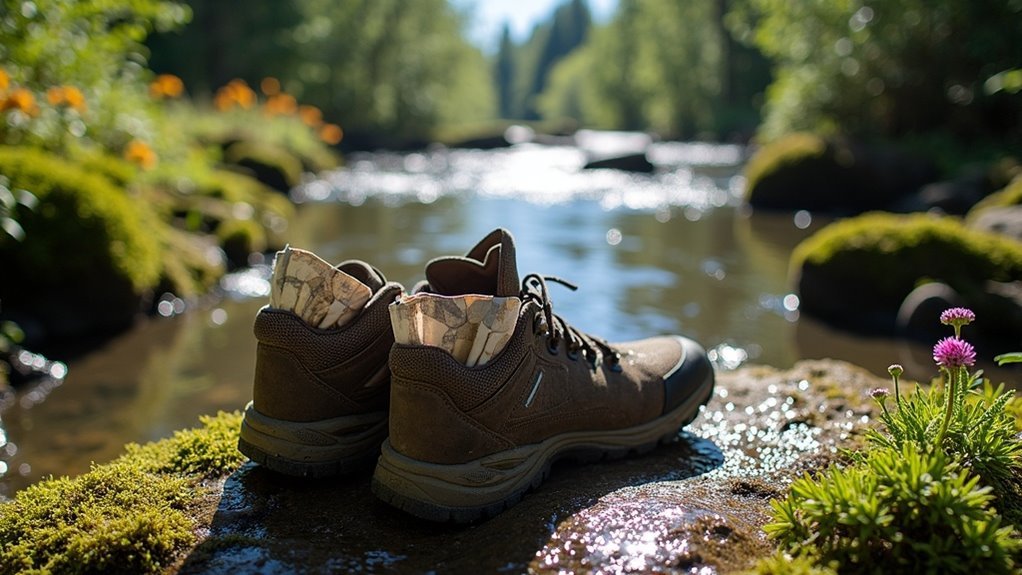
After a rainy hike, dry your hiking shoes quickly by removing the insoles and squeezing out excess water. Stuff your boots with newspapers or towels to absorb moisture, and place them in a well-ventilated area. If you’re short on time, a boot dryer works best. Avoid using direct sunlight or heat sources, especially for leather, as they can cause damage. Keep your boots fresh for future use, and find out more effective drying methods next!
Key Takeaways
- Remove insoles to allow for quicker drying and to promote airflow inside the shoes.
- Stuff shoes with absorbent materials like towels or newspapers to absorb excess moisture.
- Use a boot dryer with temperature control for the most efficient drying method.
- Air dry shoes in a well-ventilated area, avoiding direct sunlight to prevent damage.
- Monitor drying shoes to ensure they do not overheat or become discolored.
Prep First
Before you plunge into drying your hiking shoes, it’s important to prep them properly to avoid any long-term damage.
Start by addressing those wet shoes right away; remove the insoles to promote faster drying. Gently squeeze out excess water, but don’t wring them out.
Next, stuff your boots with absorbent materials like newspapers or towels to soak up moisture.
While air drying is a natural method, it can take ages. Consider using a boot dryer to speed things up without harming the materials.
With proper care, you’ll keep your boots in great shape for your next adventure!
The Best and Quickest Way to Dry Hiking Boots
If you’re looking to dry your hiking boots quickly, a boot dryer is your best bet—it speeds up the process while protecting your footwear from damage.
Alternatively, placing your boots in direct sunlight can work well for non-leather options, but be cautious to avoid wear.
Whichever method you choose, getting your boots dry efficiently means you’re ready for your next adventure in no time!
Boot Dryer Advantages
When you’re out on the trails and your hiking boots get soaked, nothing beats the efficiency of a boot dryer for getting them back in action quickly.
Boot dryers remove moisture much faster than traditional methods, ensuring your footwear is ready for the next adventure. Their portable design makes it easy to dry quickly, no matter where you are.
Plus, temperature-controlled settings protect your boots’ materials and maintain their waterproofing features. This not only keeps your boots in top shape but also promotes foot health, making boot dryers a practical gift for fellow hiking enthusiasts.
Don’t let wet boots hold you back!
Direct Sunlight Method
One of the quickest ways to dry your hiking boots is by using the Direct Sunlight Method, especially on warm, sunny days.
By placing your wet shoes in direct sunlight, you can take advantage of natural heat to evaporate moisture rapidly. This method works best for non-leather footwear, as excessive sun can damage leather materials.
Position your boots to allow maximum airflow, ensuring they dry efficiently. While this technique may not be available every day, it can help your footwear dry overnight when conditions are right.
Enjoy the benefits of free sunlight and get back on the trail faster!
Direct Sunlight Method: Second Best
The Direct Sunlight Method is a quick way to dry your hiking shoes when the sun’s shining.
Just remember, it works best for non-leather footwear, as leather can suffer from fading and damage.
Keep an eye on your shoes to guarantee they don’t overheat or get discolored from prolonged exposure.
Effective Sunlight Exposure
If you’re looking for a quick way to dry your hiking shoes, utilizing direct sunlight can be an effective method, especially when conditions are right. This technique works best for non-leather shoes made from synthetic materials, as they resist sun damage. To enhance moisture evaporation, place your shoes in a well-ventilated area and keep an eye on them. Rotate your shoes periodically for even drying and to avoid overheating.
| Tips for Effective Sunlight Exposure | Actions |
|---|---|
| Choose a sunny day | Set shoes out |
| Use a well-ventilated area | Maximize airflow |
| Rotate shoes regularly | Guarantee even drying |
| Monitor for overheating | Protect materials |
| Limit exposure time | Prevent damage |
Risks for Leather Boots
While direct sunlight can dry your hiking boots quickly, it’s important to be aware of the risks associated with leather materials. Prolonged direct sunlight can lead to excessive wear, causing your leather boots to become stiff and cracked.
The high temperatures strip natural oils, which diminishes their waterproofing capabilities. To maintain the integrity of your leather footwear, limit its exposure to direct sunlight and consider drying your shoes in shaded areas instead.
This way, you can effectively dry your boots without compromising their comfort and durability, ensuring they serve you well on future adventures.
Optimal Weather Conditions
When you’re looking to dry your hiking shoes quickly, perfect weather conditions play a crucial role, particularly when using the Direct Sunlight Method.
This method works best in sunny conditions, allowing your waterproof boots to dry considerably faster than air drying. Just remember, excessive sun exposure can damage leather, so it’s better for non-leather footwear.
To achieve ideal results, place your shoes in direct sunlight but avoid direct heat sources that can lead to material damage.
With this approach, you’ll keep your shoes dry and ready for your next adventure—no more wet feet or soggy dry socks!
Newspaper in Your Boots
One effective way to dry your hiking shoes involves stuffing them with newspapers, which can absorb moisture and help maintain their shape during the drying process.
Simply crumple the newspapers and fill your boots. To maximize moisture absorption, replace the wet newspapers with dry ones every few hours.
Keep in mind that this method works best in a well-ventilated area and when humidity levels are low. While it’s cost-effective, don’t expect overnight results, especially for extremely saturated boots.
Pair this technique with air drying for ideal results and enjoy your next hike in dry, comfy shoes!
Air Dry Your Hiking Boots
Air drying your hiking boots is a straightforward and effective method to help them regain their comfort after a wet adventure.
Start by removing the insoles and placing your boots in a well-ventilated area, allowing air circulation to facilitate moisture evaporation. This technique works best for boots that aren’t heavily soaked, as thoroughly wet boots can take time to dry completely.
Avoid direct sunlight or heat sources, since they can cause excessive wear and damage. For ideal results, consider using a fan to increase airflow around your boots, speeding up the drying process without risking your footwear’s integrity.
Can You Tumble Dry Hiking Boots?
After taking the time to air dry your hiking boots, you might be tempted to speed up the process by tossing them in the tumble dryer.
However, this isn’t recommended. High heat can damage materials, especially in waterproof and leather boots. It can weaken adhesives, causing the sole to separate from the boot, and warp their structure, affecting fit and performance.
Instead, consider using a boot dryer or simply air dry them in a well-ventilated area. If you absolutely must use a dryer, set it on low heat or air-dry, but be aware of the risks involved.
Protect your investment!
How Do You Dry Your Hiking Boots?
Wondering how to effectively dry your hiking boots without risking damage? The best option is a boot dryer, which dries them quickly and safely.
If you’re looking for a budget-friendly alternative, stuff your boots with newspaper to absorb moisture—this may take a couple of days.
Air drying in a well-ventilated area is another safe method, but it works best for lightly soaked boots.
Always remove insoles before drying to enhance moisture removal and prevent odors.
Remember, avoid direct sunlight to protect your boots, especially if they’re leather.
Consider wearing waterproof socks next time to keep your feet dry!