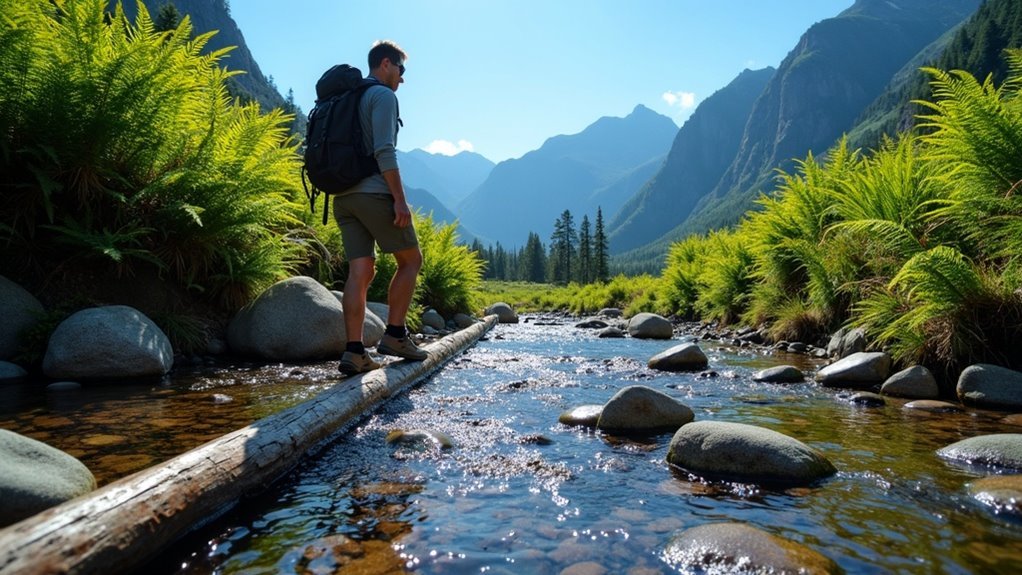
To cross streams safely during hiking, first assess water conditions—check depth and current speed. Wear footwear with good traction, like hiking shoes or quick-drying trail runners. Approach the crossing by facing upstream, walking diagonally to maintain balance. If with a group, lock arms for stability and designate a leader to coordinate movements. Always unbuckle pack straps for quick removal if you lose footing. There’s more to take into account to guarantee a safe and enjoyable experience.
Key Takeaways
- Monitor weather conditions and avoid crossing after heavy rain, as water levels may be dangerously high.
- Check water depth; do not cross if it’s deeper than mid-thigh to ensure safety.
- Face upstream and walk diagonally downstream to maintain balance against the current.
- Use trekking poles to test the water depth and provide stability while crossing.
- In groups, lock arms for stability and designate a leader to coordinate the crossing.
Assessing Water Conditions
When you’re preparing to cross a stream, it’s crucial to assess water conditions to guarantee your safety.
Start by monitoring the local weather to avoid high water levels after heavy rain. Next, check the depth of the water; if it’s deeper than mid-thigh, reconsider crossing.
Observe the bottom conditions—small ripples suggest a safer, rocky surface. To assess the speed of a river, toss a stick into the water; if it flows away quickly, there’s a strong current.
Always face upstream while crossing and use proper crossing techniques, walking diagonally downstream to maintain balance against the current’s force.
Choosing the Right Footwear
When crossing streams, choosing stable footwear is essential for maintaining traction and preventing slips on wet surfaces.
Lightweight trail running shoes or dedicated water shoes are ideal for their quick-drying properties and comfort.
Remember to keep your footwear on during substantial crossings to protect your feet and guarantee stability.
Footwear Stability Considerations
Choosing the right footwear is essential for safely crossing streams while hiking, as stable shoes help you maintain traction and prevent slips on wet surfaces.
Here are some key considerations:
- Opt for hiking shoes with a good tread for better traction on slippery rocks.
- Choose fast-drying shoes to avoid discomfort and risk during crossings.
- Wear wet wool socks for enhanced grip and warmth.
Always keep your hiking shoes on during significant river crossings to protect against sharp objects and guarantee stability on uncertain footing.
Prioritize stable footwear to navigate water safely and confidently.
Quick-Drying Material Benefits
While hiking, having quick-drying footwear can greatly enhance your comfort and safety during stream crossings.
Opt for lightweight trail running shoes that minimize water retention, allowing for faster drying times. Look for materials like synthetic mesh and nylon, which drain water quickly while remaining breathable.
Footwear with drainage ports enhances water flow, reducing weight and discomfort from soaked shoes. Good traction is vital on wet surfaces; soles made from rubber compounds provide a better grip.
Quick-drying shoes also help prevent blisters and skin issues from prolonged wet conditions, making them essential for enjoyable and safe stream crossings.
Techniques for Safe Crossing
To cross streams safely, you must employ effective techniques that enhance your stability and reduce the risk of being swept away.
Employing effective techniques enhances your stability and minimizes the risk of being swept away when crossing streams safely.
Here are key strategies to follow:
- Always face upstream to maintain balance and walk diagonally downstream against the current.
- Use trekking poles for three points of contact, and test the water depth before stepping fully in.
- Scout for safer crossing points, avoiding fast-moving water deeper than mid-thigh.
Remember to unbuckle all pack straps to allow for quick removal if you lose your footing.
Packing extra gear can also guarantee you’re prepared for any unexpected challenges during your crossings.
Group Crossing Strategies
When crossing a stream as a group, lock arms to provide stability and support against the current.
It’s essential to designate a leader who can coordinate the crossing and guarantee everyone is moving in sync.
This approach not only enhances safety but also helps maintain cohesion as you navigate the water.
Lock Arms for Support
Locking arms in a line or triangle formation can greatly enhance your group’s stability and safety when crossing streams. This technique not only provides support but also helps distribute the force of the current among group members.
- Clear communication is essential to coordinate movements.
- Maintaining a steady pace while locked together minimizes balance issues.
- Mutual support reduces the risk of being swept away.
Designate a Crossing Leader
Designating a crossing leader is crucial for ensuring your group’s safety during stream crossings, as this person can assess conditions and guide everyone effectively.
The crossing leader should evaluate water flows, depth, and any hazards before proceeding, ensuring all group members understand the crossing plan. Positioning themselves upstream helps block the current, providing extra stability.
Clear communication is imperative; the leader should coordinate movements and maintain a steady pace to minimize the risk of falls.
Remaining vigilant and adaptable, the leader can reassess strategies based on real-time conditions, making the crossing safe and enjoyable for everyone involved.
Safety Precautions
Before you attempt to cross a stream, it’s essential to assess the water conditions carefully. Avoid streams deeper than mid-thigh or with currents faster than your walking speed.
Follow these safety precautions:
- Unbuckle all pack straps for quick release in case you fall.
- Use trekking poles for stability and to check water depth and flow.
- In group crossings, position the strongest individuals upstream to break the current and communicate clearly.
If you get swept off your feet, ditch your pack and float on your back with your feet downstream to navigate hazards safely.
Environmental Considerations
When you cross streams, it’s essential to contemplate the environmental impact of your actions. Adhering to leave-no-trace principles helps preserve habitats, especially in sensitive areas. Be mindful of wildlife interactions near water sources; streams support diverse species. Plan your crossings based on seasonal water levels to avoid disrupting the ecosystem. Use environmentally friendly gear that won’t contribute to pollution.
| Considerations | Actions |
|---|---|
| Environmental Impact | Follow leave-no-trace principles |
| Wildlife Interactions | Stay aware of nearby species |
| Seasonal Water Levels | Plan crossings carefully |
| Sensitive Areas | Avoid disturbing wetlands |
| Gear Used During Crossings | Choose eco-friendly equipment |