Before winter hiking, check avalanche risk by evaluating recent snowfall, temperature fluctuations, and wind conditions. Use resources like the Colorado Avalanche Information Center and avalanche.org for forecasts. Familiarize yourself with signs of unstable snow, such as cracking and whumpfing sounds. Always carry essential gear like an avalanche beacon, probe pole, and shovel. Stay informed about local conditions and travel with others for safety. There’s more to learn about making your winter adventures safe and enjoyable.
Key Takeaways
- Check local avalanche forecasts from the Colorado Avalanche Information Center or Avalanche.org for updated hazard assessments before heading out.
- Monitor recent snowfall amounts and temperature changes to assess snow stability and potential avalanche risk.
- Observe wind patterns that can create dangerous snow slabs, enhancing the likelihood of avalanches on certain slopes.
- Look for signs of instability in the snowpack, such as cracking, whumpfing sounds, or settling before hiking.
- Always plan routes away from steep slopes (30° to 45°) and travel in groups for added safety during winter hikes.
Understanding Avalanche Risk Factors
When you venture into mountainous terrain during winter, understanding avalanche risk factors is essential for your safety.
Focus on slopes between 30° to 45°, as these angles are particularly hazardous. Recent heavy snowfall can create a weak snowpack, increasing avalanche risk.
Beware of slopes between 30° to 45°, where heavy snowfall can weaken the snowpack and heighten avalanche danger.
Regularly check avalanche forecasts for your area to stay informed about current conditions. Look for signs of instability, such as cracking or settling in the snowpack, which can indicate potential danger.
Always assess stability before hiking, and stay aware of recent avalanche activity to make informed decisions that protect not just yourself, but also those you’re with.
Key Resources for Avalanche Forecasts
To guarantee your safety in avalanche-prone areas, it’s crucial to access reliable resources for avalanche forecasts.
Here are three key sources to help you stay informed:
- Colorado Avalanche Information Center: Offers detailed avalanche forecasts, current conditions, and hazard assessments for Colorado.
- Avalanche.org: A thorough platform providing forecasts and resources to understand avalanche danger across various regions.
- Local Weather Services: Regularly check for weather updates, including snowfall and temperature changes, to assess the stability of the snowpack.
Using these resources will help you plan safer routes and enhance your winter hiking experience.
Stay informed and stay safe!
Evaluating Weather Conditions
To effectively evaluate avalanche risk, you need to assess recent snowfall impacts, temperature fluctuations, and wind patterns.
Heavy snowfall can create unstable conditions, while rising temperatures may trigger wet avalanches.
Additionally, strong winds can shift snow, forming dangerous slabs that elevate risk levels.
Recent Snowfall Impacts
As recent snowfall can dramatically elevate avalanche risk, it’s crucial to evaluate snow conditions before heading out.
Consider these factors to assess avalanche risk effectively:
- Snowpack Stability: A rapid accumulation of new snow increases susceptibility, especially on slopes over 30°.
- Signs of Instability: Look for cracking, whumpfing, or recent avalanche activity; these indicate heightened risk.
- Weather Monitoring: Keep an eye on forecasts for temperature fluctuations, as warming can destabilize fresh snow and create dangerous conditions.
Temperature Fluctuations Analysis
While you prepare for your outdoor adventure, understanding temperature fluctuations is vital for evaluating avalanche risk. Rapid changes in temperature can dramatically affect snow stability, especially when warm layers form over cold layers, creating unstable interfaces.
Monitoring temperature in the days leading up to your hike is imperative; a sudden warm spell can weaken the snowpack and increase avalanche conditions. Use reliable weather services to track temperature forecasts consistently, as even slight increases can alter avalanche risk levels.
Stay vigilant and adjust your plans accordingly to guarantee a safe and enjoyable winter hiking experience.
Wind Patterns Influence
Understanding wind patterns is essential for evaluating avalanche risk, since they play a significant role in snow distribution and stability.
Here are key points to reflect on:
- Wind Direction: Consistent winds from the same direction can load specific steep slopes, increasing avalanche danger.
- Speed Matters: Sustained winds over 30 mph can dramatically redistribute snow, turning stable areas unstable.
- Check Forecasts: Regularly consult avalanche forecasts to see how recent wind patterns have affected snow stability in your area.
Recognizing Signs of Avalanche Terrain
To recognize signs of avalanche terrain, start by evaluating the slope angle; slopes between 30° and 45° are particularly prone to avalanches.
Next, look for indicators of snowpack instability, such as recent snowfall on weak layers, which can heighten avalanche risk.
Slope Angle Assessment
Evaluating slope angles is essential for recognizing avalanche terrain, as slopes between 30° and 45° are the most prone to instability.
To guarantee safe travel in avalanche terrain, consider these steps during your slope angle assessment:
- Use a compass or inclinometer to measure slope angles accurately.
- Identify open terrain, which carries higher avalanche risk compared to wooded areas.
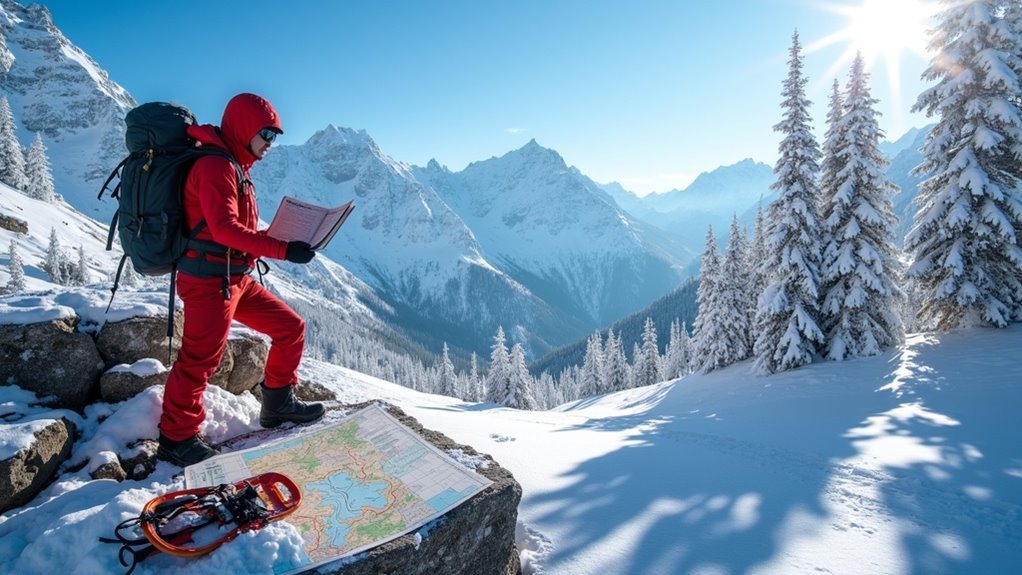
- Consult topographic maps and GPS tools for slope angle details along your route.
Snowpack Instability Indicators
As you navigate avalanche terrain, recognizing snowpack instability indicators is essential for your safety. Look for signs like whumpfing sounds or cracks in the snow, indicating stress and potential avalanche risk. Recent snowfall over weak layers can also lead to instability. Always be cautious if you spot recent avalanche activity, such as debris or a fresh crown. Additionally, monitor slope angles; those between 30° and 45° are particularly dangerous during unstable conditions.
| Indicator | Description |
|---|---|
| Whumpfing Sounds | Indicates snow collapsing under weight |
| Cracks in Snow Surface | Signals stress within the snowpack |
| Recent Avalanche Activity | Presence of debris or fresh crowns increases risk |
Essential Gear for Avalanche Safety
When heading into avalanche-prone areas, having the right gear can mean the difference between life and death.
Essential avalanche gear includes:
- Avalanche Beacon: This device helps locate buried individuals, significant for effective rescue efforts.
- Probe Pole: Necessary for accurately pinpointing the location of a buried person, speeding up recovery.
- Shovel: A lightweight, durable shovel is essential for quickly excavating snow to free trapped individuals.
Also, consider an avalanche airbag backpack to increase survivability by keeping you on the surface.
Don’t forget standard hiking essentials like extra layers, food, water, and a first aid kit for your safety.
Training and Education in Avalanche Awareness
Understanding avalanche risk is essential for anyone venturing into snowy terrain. Enrolling in certified avalanche safety courses, like those from the American Avalanche Association, equips you with the knowledge to assess avalanche awareness effectively.
Training emphasizes snowpack stability, recognizing terrain signs, and honing decision-making skills under pressure. You’ll get hands-on practice with equipment such as avalanche beacons and shovels, ensuring you’re prepared for emergencies.
Regular drills and scenario-based training build your confidence in avalanche-prone areas. Additionally, online resources can supplement your education, fostering a thorough understanding of avalanche safety protocols.
Prioritize training to protect yourself and others in the backcountry.
Planning for Safe Winter Hiking
Planning a safe winter hike requires careful consideration of various factors, especially avalanche risk.
To make informed decisions, follow these steps:
- Check avalanche forecasts from reliable sources like the National Avalanche Center to gauge current conditions.
- Utilize the USDA Snow Map to assess snow-covered trails, focusing on snowpack depth and stability.
- Consult local ranger stations for updates on trail conditions, including any avalanche warnings or closures.