To avoid hypothermia on rainy hiking days, dress in layers with moisture-wicking base layers, insulating midlayers, and waterproof outer shells. Keep your feet warm and dry with insulated footwear and waterproof socks. Stay hydrated with warm drinks and eat energy-dense snacks to maintain your energy levels. Regularly monitor for early symptoms of hypothermia, like shivering or confusion. If you’d like tips on seeking shelter and staying safe, there’s more to explore on this topic.
Key Takeaways
- Wear waterproof clothing, including shoes and rain gear, to keep moisture out and reduce heat loss.
- Layer your clothing with moisture-wicking base layers, insulating midlayers, and waterproof outer shells for optimal warmth and dryness.
- Stay hydrated with warm, high-calorie drinks and consume energy-dense snacks regularly to maintain energy levels.
- Monitor for early symptoms of hypothermia, such as shivering and confusion, to enable quick intervention.
- Plan your hikes carefully, avoiding exhaustion and taking breaks in sheltered areas to prevent temperature drop.
Understanding Hypothermia and Its Risks
Hypothermia can sneak up on you, especially during rainy hikes when temperatures seem mild. It occurs when your core body temperature drops to 95°F (35°C) or lower, a risk even above freezing.
The CDC notes around 1,300 hypothermia-related deaths annually, emphasizing the dangers of cold and wet environments. Wet clothing increases heat loss, making you more susceptible, particularly if you’re tired or underdressed.
Be vigilant for symptoms like shivering, slurred speech, or confusion, as they can develop gradually. Recognizing these signs early is vital for effective intervention and ensuring a safe hiking experience for yourself and others.
Essential Gear for Rainy Hiking
When you’re hiking in the rain, having the right gear is vital to staying warm and dry.
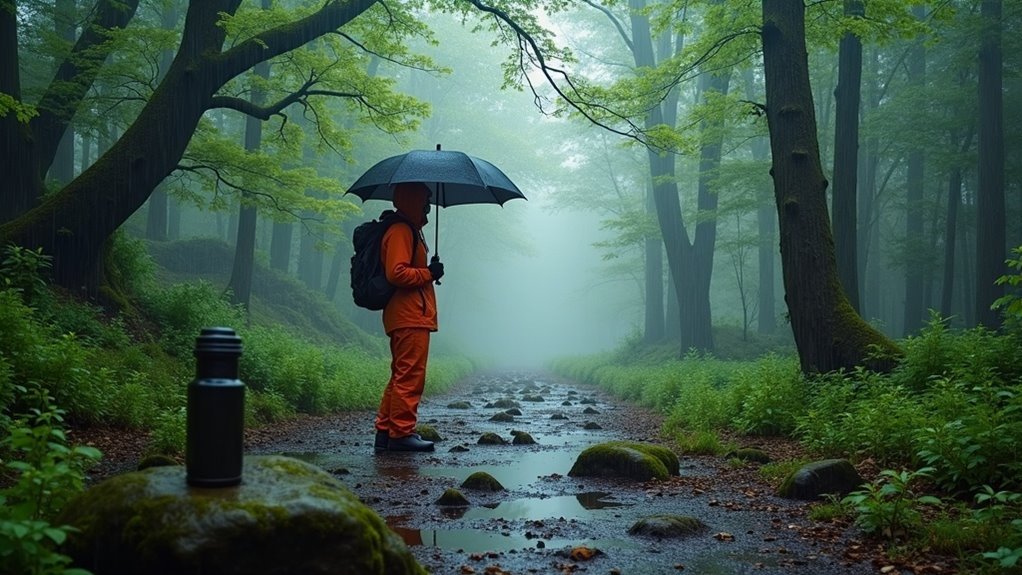
Waterproof clothing, like shoes and rain pants, is essential to keep moisture out and prevent heat loss.
Pair these with insulated footwear to guarantee your feet stay warm, even in wet conditions.
Waterproof Clothing Essentials
To stay comfortable and safe during rainy hikes, investing in high-quality waterproof clothing is vital.
Choose breathable waterproof jackets and pants to keep you dry and prevent moisture buildup, reducing hypothermia risk.
Layer your clothing wisely, starting with moisture-wicking base layers, followed by insulating layers, and finishing with waterproof outer shells.
Quick-drying materials like synthetic fabrics or merino wool are essential to minimize heat loss in unexpected rain.
Don’t forget accessories like waterproof gloves and gaiters to protect your extremities from cold weather.
This rain gear guarantees you stay warm and dry, allowing you to focus on your hiking adventure.
Insulated Footwear Recommendations
Even with high-quality waterproof clothing, your feet can still suffer during rainy hikes if you don’t choose the right footwear.
Opt for insulated footwear, like waterproof boots with thermal insulation, to keep your feet warm in temperatures below 50°F. Look for materials such as Gore-Tex that offer breathability while preventing moisture buildup.
Pair your boots with thick wool socks, which provide excellent insulation and moisture-wicking properties. A high ankle design offers better support and keeps water out, while gaiters add an extra barrier against rain and mud.
These choices guarantee your feet stay dry and comfortable on the trail.
Clothing Layers to Stay Dry and Warm
Staying dry and warm on rainy hiking days hinges on effective layering.
Start with a moisture-wicking base layer to pull sweat away from your skin. Next, add an insulating midlayer, like wool or synthetic materials, which retains warm air even when wet.
Finish with a waterproof outer shell to shield against rain and wind. Incorporate waterproof socks and gaiters to keep your feet dry and warm, preventing heat loss.
Ascertain your outer layer has ventilation options, like pit zips, to regulate temperature.
Don’t forget a warm hat and waterproof gloves to protect vulnerable extremities from chilling conditions.
Nutrition and Hydration Strategies
To maintain your body’s warmth and energy during a rainy hike, stay hydrated by sipping on warm, high-calorie drinks throughout the day.
Choose energy-dense snacks like nuts or energy bars, which will help keep your calorie intake high and generate heat.
Timing is key, so make sure to eat regularly to prevent fatigue and support thermoregulation.
Stay Hydrated Continuously
Hydration plays a critical role in keeping your body temperature regulated on rainy hiking days.
To stay hydrated continuously and prevent dehydration, follow these tips:
- Drink warm water or sugary drinks to maintain core temperature and boost energy.
- Carry insulated water bottles to guarantee your water doesn’t freeze, providing accessible hydration throughout your hike.
- Remember to sip regularly, even if you’re not thirsty; cold weather can mask your thirst.
High-Calorie Food Choices
When hiking in cold, rainy conditions, choosing high-calorie foods is essential for maintaining energy and body heat.
Opt for energy bars, nuts, and calorie-dense snacks like dried fruits and jerky, which are lightweight and easy to pack. These foods provide the carbohydrates, fats, and proteins necessary to sustain energy levels while you navigate wet environments.
Don’t forget warm, sugary drinks like hot chocolate or herbal teas with honey; they help you stay hydrated and boost caloric intake.
Timing of Nutritional Intake
Timing your nutritional intake is essential for maintaining energy and warmth during cold, rainy hikes.
To effectively support your body heat and combat hypothermia, consider these strategies:
- Eat a warm meal before hitting the trails; a meal rich in fats provides sustained energy and helps maintain core temperature.
- Stay hydrated with warm, sugary drinks during the hike, as they keep dehydration at bay and enhance your body heat.
- Snack regularly on high-calorie foods to counteract increased caloric expenditure and support your energy needs.
Recognizing Early Symptoms of Hypothermia
How can you tell if you or someone else is starting to experience hypothermia? Recognizing early symptoms is essential for prompt intervention. Watch for shivering, slurred speech, coordination problems, and unusual apathy towards feeling cold. As mild hypothermia progresses, symptoms can escalate quickly. Always monitor companions closely; confusion may lead to paradoxical undressing, where someone removes clothing despite being cold. The table below summarizes key symptoms to watch for:
| Temperature (°F) | Symptoms | Action Needed |
|---|---|---|
| Above 95 | Shivering | Keep warm |
| 95 – 90 | Slurred speech | Seek shelter |
| 90 – 88 | Stupor | Immediate assistance |
| Below 88 | Cessation of shivering | Emergency services needed |
Tips for Seeking Shelter and Staying Safe
Finding or creating shelter quickly is essential during rainy hikes to minimize heat loss and prevent hypothermia. Here are some tips to stay safe:
Finding shelter quickly during rainy hikes is crucial to reduce heat loss and avoid hypothermia. Stay safe with these tips!
- Seek natural shelters like dense trees or rock overhangs to block cold air and rain while you assess your situation.
- Always carry an emergency shelter, such as a space blanket or lightweight tarp, to shield against sudden downpours.
- Make certain your shelter has proper ventilation to avoid condensation, while still blocking drafts to maintain warmth.
Don’t forget your rain jacket; it’s another layer of protection that can help keep you dry and warm.