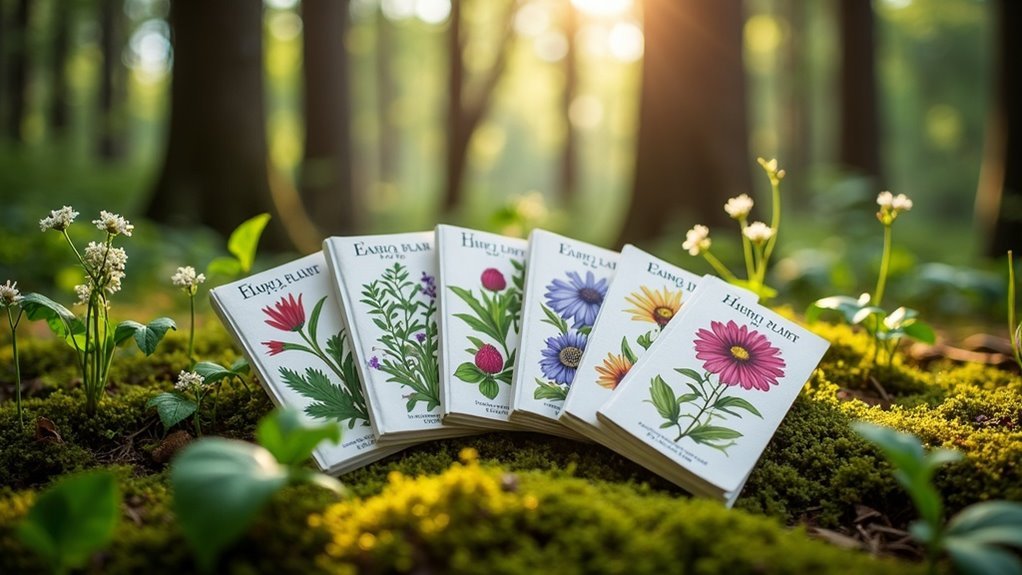
If you’re looking for the best hiking plant identification guides in 2025, consider the “Trees of New York Field Guide,” “Trees of Colorado Field Guide,” and “Trees of Michigan Field Guide.”
These guides are compact, user-friendly, and filled with high-quality images, making them perfect companions for your outdoor excursions.
Don’t forget to bring along the “Peterson Field Guide to Mushrooms” and “Edible Wild Plants” for those interested in foraging during their hikes!
Each guide offers unique features that can significantly enhance your hiking experience.
Discover which guides stand out even more and how they can enrich your adventures on the trails!
Trees of New York Field Guide (Tree Identification Guides)

If you’re a hiking enthusiast eager to explore New York’s diverse tree species, the “Trees of New York Field Guide” is your ideal companion. Its compact design fits easily in your pocket, making it perfect for your outdoor adventures. Organized by leaf shape, it’s user-friendly for beginners, featuring clear photos and straightforward descriptions that help you identify trees effortlessly while on the trail. The guide also includes details like winter silhouettes and autumn colors, enriching your hiking experience. Users praise its clarity, often finding it more effective than online searches. It’s an essential resource for anyone looking to deepen their connection with New York’s natural beauty while hiking.
Best For: Hikers and newcomers to New York State who want to explore and easily identify local tree species on their adventures.
Pros:
- Compact and portable design makes it convenient to carry during hikes.
- User-friendly organization by leaf shape, ideal for beginners with clear photos and descriptions.
- Comprehensive information on various tree characteristics, including winter silhouettes and autumn colors.
Cons:
- May not cover every tree species found in New York, which could limit its comprehensiveness for some.
- Some users might prefer a digital guide for easier access or additional features on the go.
- Beginners may require some practice to fully utilize the guide’s identification methods.
Trees of Colorado Field Guide (Tree Identification Guides)

The “Trees of Colorado Field Guide” is a must-have resource for hikers eager to identify the variety of tree species that grace Colorado’s trails. This handy guide is lightweight and compact, making it simple to bring along on your outdoor excursions. It features essential tree species with clear descriptions and stunning images that primarily focus on leaves. While some users have noted that not every variety is included, the well-organized format allows for quick identification on the go. Complementing this guide with wildflower books enriches your hiking experience, providing a broader understanding of Colorado’s diverse plant life.
Best For: Hikers looking for a convenient and user-friendly guide to identify tree species while exploring Colorado.
Pros:
- Compact design makes it easy to carry on hikes.
- High-quality leaf images facilitate rapid identification.
- User-friendly layout allows for quick reference while on the trail.
Cons:
- Does not provide exhaustive information, concentrating mainly on leaves instead of full-grown trees.
- Some users have mentioned missing hybrids or variations that aren’t covered in the guide.
- May not meet the needs of those looking for an in-depth reference on trees.
Peterson Field Guide to Mushrooms of North America, Second Edition

For anyone enthusiastic to explore the great outdoors, the “Peterson Field Guide to Mushrooms of North America, Second Edition” stands out as an essential companion for those who enjoy hiking. This guide simplifies mushroom foraging with clear instructions and an effective identification system, making it suitable for both novices and seasoned hikers. You’ll appreciate the vivid illustrations by Vera McKnight, enhancing your ability to identify mushrooms along your trails. The user-friendly layout, safety notes, and helpful tips make your outdoor adventures more enjoyable. While it doesn’t cover every species, pairing it with other resources can deepen your understanding of North America’s diverse fungi you may encounter while hiking.
Best For: The Peterson Field Guide to Mushrooms of North America, Second Edition is best for both beginners and experienced foragers looking to enhance their knowledge and skills in mushroom identification while enjoying their hiking experiences.
Pros:
- Clear instructions and effective identification system make it accessible for all skill levels.
- High-quality illustrations by Vera McKnight enhance usability and identification accuracy.
- User-friendly layout includes safety notes and practical tips for enjoyable outdoor adventures.
Cons:
- Does not cover every mushroom species in North America, limiting comprehensive understanding.
- Some users reported minor quality issues, such as pages sticking together in the spiral-bound version.
- Absence of scientific names alongside illustrations may hinder users preferring scientific nomenclature.
Trees of Michigan Field Guide (Tree Identification Guides)

Designed with hiking enthusiasts in mind, the “Trees of Michigan Field Guide” stands out for its detailed identifying features and stunning color photographs. You’ll appreciate the readable descriptions and great identifying details that make it easy to use while trekking through Michigan’s landscapes. The handy size (4.5 x 6) fits right into your back pocket, making it perfect for your hiking adventures. An alphabetized list in the back allows for quick tree references, ensuring you can identify trees swiftly as you explore. Whether you’re a middle school student or a family on a nature outing, this guide helps you confidently identify Michigan’s trees while avoiding confusion with species not found in the region.
Best For: The “Trees of Michigan Field Guide” is best for hiking enthusiasts, middle school students, and families looking to identify trees while enjoying Michigan’s beautiful trails.
Pros:
- Detailed identifying features and stunning color photographs enhance usability during hikes.
- Compact size (4.5 x 6) makes it convenient for travel and easy to carry on the trail.
- Alphabetized list for quick reference allows users to find information efficiently while on the go.
Cons:
- Some users wish for a larger book size for easier reading and navigation while hiking.
- May require a bag for those who prefer not to keep it in a pocket during their adventures.
- Overall rating of 4 stars reflects some dissatisfaction with the size preference among hikers.
Edible Wild Plants: A North American Field Guide to Over 200 Natural Foods

If you’re an outdoor enthusiast eager to learn about edible wild plants while hiking, “Edible Wild Plants: A North American Field Guide to Over 200 Natural Foods” is your essential resource. This comprehensive guide features over 200 edible species found throughout North America and organizes them by season, making it easy to identify what’s available during your hikes. With stunning color photographs and detailed descriptions, you’ll quickly recognize potential food sources along your trail. Hikers rave about its practicality for outdoor adventures and survival situations. This book is a must-have for anyone looking to deepen their understanding of wild plants and their uses while enjoying the great outdoors.
Best For: Hikers and outdoor enthusiasts looking to learn about and identify edible wild plants across North America.
Pros:
- Thorough coverage of over 200 edible species organized by season for easy identification on the trail.
- Stunning color photographs and detailed descriptions enhance recognition and understanding of wild plants.
- Highly recommended for survival situations and expanding knowledge about natural food sources while hiking.
Cons:
- Some images may be less clear or in black and white, making identification challenging for certain plants.
- A few users expressed disappointment over the exclusion of specific plants, such as wild carrot.
- While extensive, some may find the book lacks certain information or preparation methods for specific species.
Trees (Nature Observation North America)
Product not found or API error.
Nature enthusiasts eager to enhance their knowledge of North American trees will find the “Hiking Plant ID Guides for Nature Lovers” particularly beneficial. This lightweight, waterproof guide is designed for field identification and serves as an excellent artistic reference. With 11 pages dedicated to trees categorized by leaf type, it transforms learning into an enjoyable experience for families, especially during camping trips. The vibrant illustrations aid in effectively identifying tree species, while the plasticized pages ensure durability for the rigors of outdoor activities. Users praise its convenience and educational value, making it a perfect companion for hiking adventures. However, be cautious of delivery quality, as some customers have reported issues upon receipt. Happy hiking!
Best For: Nature enthusiasts, families, and educators seeking a lightweight and durable guide to identify North American trees while hiking.
Pros:
- Excellent for field identification with colorful illustrations categorized by leaf type.
- Waterproof, foldable, and easy to clean, making it ideal for hiking and outdoor use.
- Highly recommended for its educational value and convenience during camping and hiking excursions.
Cons:
- Some users encountered delivery issues, including damaged items.
- Mixed feedback regarding the depth of information compared to traditional field guides.
- A few users expressed a preference for actual photos over illustrations.
The Complete Guide to Edible Wild Plants
Product not found or API error.
For beginners eager to embark on hiking adventures, “The Complete Guide to Edible Wild Plants” serves as an essential companion. This guide helps you identify safe edible plants along your hiking trails while emphasizing easy identification. It includes nutritional details and cooking methods, making it engaging and practical for those looking to enhance their outdoor experiences. However, some readers note that the picture quality could be improved, and the alphabetical organization might complicate quick identification in the field. Despite these concerns, you’ll find it a valuable resource for learning about wild food foraging, inspiring you to explore nature’s bounty during your hikes.
Best For: Beginners interested in foraging and learning about safe edible wild plants while hiking in various ecosystems.
Pros:
- Provides easy identification techniques for novices, making it accessible for beginner hikers.
- Includes nutritional information and cooking methods, enhancing the practical use of the guide during outdoor excursions.
- Engaging content encourages readers to explore foraging as a rewarding aspect of their hiking hobby.
Cons:
- Picture quality is often described as blurry or low resolution, which can hinder plant identification while on the trail.
- The alphabetical organization may complicate quick identification in the field.
- Some readers desire a more comprehensive field guide specifically designed for practical foraging while hiking.
Factors to Consider When Choosing Hiking Plant ID Guides
When you’re selecting a hiking plant ID guide, consider factors like portability and size to ensure it’s easy to carry on your outdoor adventures. The visual quality and clarity of the images can enhance your ability to identify plants while on the trail, and a user-friendly organization will help you find information quickly when you need it. Finally, take into account the target audience of the guide to make sure it aligns with your level of expertise and interests as a hiker.
Portability and Size
Choosing the right hiking plant identification guide is essential for your outdoor adventures, and portability and size are key factors to consider. A compact design ensures that the guide is easy to carry, fitting comfortably in your hand while being lightweight. This enhances convenience, allowing you to quickly consult the guide without slowing down your hike. A smaller size is particularly advantageous for quick reference, enabling you to identify plants swiftly without having to unpack a bulky book. Additionally, consider the durability of the materials used; waterproof or plasticized pages are ideal for various weather conditions you may encounter on the trail. Finally, pay attention to how the guide is organized, whether alphabetically or by leaf shape, as this can significantly improve your efficiency in finding the information you need during your hiking excursions.
Visual Quality and Clarity
Visual quality and clarity are essential in hiking plant identification guides, as high-quality images enable you to accurately recognize the characteristics of various species you may encounter on your trails. Clear, sharp photographs or illustrations enhance your outdoor experience and boost your confidence in identifying plants while exploring nature. When choosing a guide, ensure it pairs vivid images with comprehensive descriptions that emphasize distinguishing features such as leaf shape, flower color, and growth patterns. This combination is crucial for accurate identification during your hikes. Look for guides that provide a diverse array of visual representations, including both photographs and illustrations, to suit your preferences. Additionally, consider how the visual content is organized; grouping similar plants can streamline your identification process, making it quicker and more efficient while you enjoy your hiking adventures.
User-Friendly Organization
A well-organized hiking plant identification guide can greatly enhance your outdoor experience, especially if you’re new to identifying plants while hiking. Look for guides that categorize plants by distinct features, such as leaf shape or color, which makes it easier to navigate. Clear photos paired with concise descriptions help you quickly recognize plants as you explore the trails. An alphabetical index or glossary is invaluable, offering quick reference points for specific plants or terms you might encounter. Additionally, guides that organize plants seasonally can enrich your foraging experience, allowing you to know what’s available at different times of the year. A logical layout with grouped similar species further aids in comparative identification, helping you differentiate between plants that may look alike along your hiking journey.
Comprehensive Information Coverage
When you’re out on the trails, having a hiking plant identification guide that covers extensive information can enhance your outdoor experience significantly. Look for guides that provide detailed descriptions of plant characteristics, such as leaves and flowers, to assist you in identifying species across different seasons. High-quality photographs or illustrations are essential visual aids that will bolster your recognition skills.
Additionally, guides that include information about plant habitats and geographic ranges are crucial, as certain plants thrive only in specific environments. If you’re interested in foraging, seek out guides that distinguish between edible and non-edible plants, complete with safety warnings and preparation methods. A seasonal organization within the guide helps you understand which species you’re likely to encounter during your hikes, making your outdoor adventures even more rewarding.
Target Audience Suitability
Choosing the right hiking plant identification guide depends on your experience level and specific needs while out on the trails. If you’re a beginner, look for guides that offer simple descriptions and clear visuals to help you grasp concepts easily as you hike. For kids or educational purposes, engaging illustrations and activities can spark interest in nature and make the hiking experience more enjoyable. Experienced foragers should seek out thorough guides that include scientific names and advanced identification techniques for deeper insights into the flora you encounter on your hikes. Additionally, consider how you plan to use the guide while hiking. Casual exploration might require a lighter, more portable option, while serious foraging enthusiasts may prefer a robust, detailed resource. Matching the guide’s physical size to your hiking habits will enhance your overall experience in the great outdoors.
Practical Use in Field
Selecting the right hiking plant ID guide is just the beginning; how you use it in the field can significantly enhance your hiking experience. Choose a compact and portable guide that won’t weigh you down on your trek. Look for user-friendly organization, such as grouping species by leaf shape or color, to help you find information quickly while on the trail. High-quality images and clear descriptions are essential for accurate identification, as they enable you to recognize plants visually during your hike. Guides that include seasonal information enhance your outdoor experience, increasing the likelihood of identifying plants throughout the year. Finally, ensure your guide provides practical tips, safety notes, and warnings about potentially dangerous plants to guarantee a safe and informative adventure in nature while you explore the great outdoors.