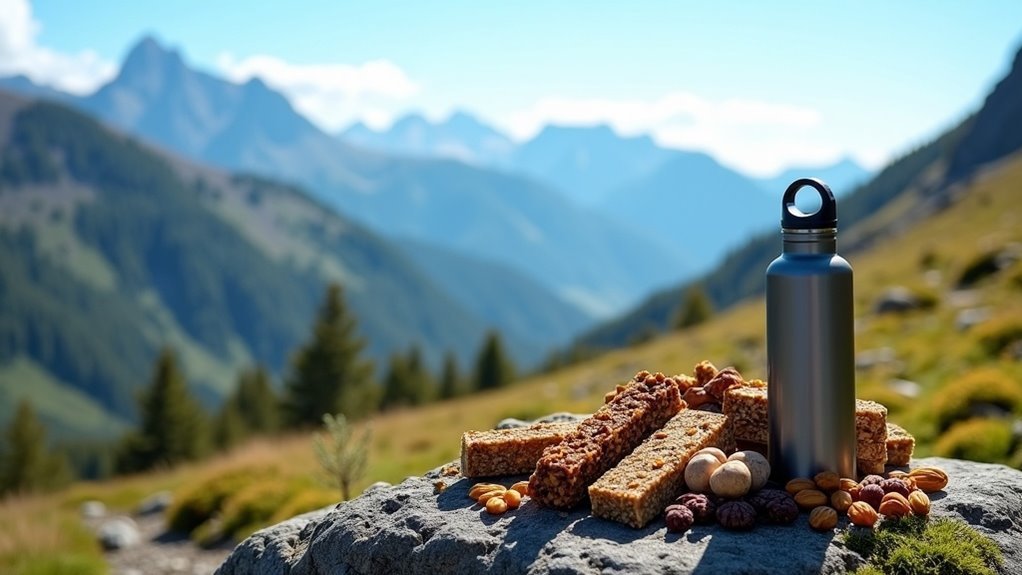
To budget calories for strenuous hiking days, calculate your daily caloric needs based on your weight and hike intensity. Pack nutrient-dense foods to cover 300-500 calories per hour, aiming for 2,400-4,000 calories in snacks alone during an 8-hour hike. Prioritize high-calorie options, like nuts and energy bars, to reduce pack weight. Stay hydrated and replenish electrolytes regularly. Adjust your intake based on terrain and signals from your body. There’s more to discover about balancing energy and nutrition on the trail.
Key Takeaways
- Calculate your daily caloric needs based on weight, hiking intensity, and elevation gain to determine total calories required for the hike.
- Plan to consume 300-500 calories every hour while hiking, aiming for a total of 2,400-4,000 calories in snacks during an 8-hour trek.
- Prioritize nutrient-dense, calorie-dense foods like nuts, seeds, and dried fruits to minimize pack weight while maximizing energy.
- Stay hydrated by drinking about 3 liters of water daily, adjusting intake based on temperature and exertion levels.
- Monitor energy levels and body signals to adjust caloric intake and meal plans for future hikes based on performance feedback.
Understanding Your Caloric Needs for Hiking
When planning a hiking trip, it’s crucial to understand your unique caloric needs, as they can vary considerably based on factors like your weight, metabolism, and the intensity of your hike.
Most hikers need between 2,500 to 4,500 calories per day. For instance, a 160 lb male hiking 10 miles with a 3,000-foot elevation gain may require around 4,000 calories.
Remember, your daily caloric intake should also factor in calories burned during rest and sleep.
The Importance of Nutrient-Dense Foods
Although you might focus on calorie counting for your hiking adventures, choosing nutrient-dense foods is crucial for maintaining energy and overall well-being on the trail. These foods provide essential vitamins and minerals that support sustained energy levels.
Incorporating a balance of carbohydrates, proteins, and healthy fats guarantees you’re fueled for every step. Aim for calorie-dense options to lighten your pack without sacrificing energy.
- Nuts and seeds for healthy fats
- Whole grains for sustained energy
- Dried fruits for quick carbs
Prioritizing nutrient-dense foods helps prevent deficiencies, supports endurance, and enhances recovery, ultimately improving your hiking experience.
Strategies for Meal Planning
Meal planning is a key component of successful hiking preparation, ensuring you have the right balance of nutrients and calories to sustain your energy levels.
Start by calculating your daily calorie needs based on your body weight, hiking pace, and elevation gain. Choose nutrient-dense foods, like nuts and energy bars, aiming for 100 calories per ounce.
Pack a variety of meals to maintain interest and balance, focusing on carbohydrates, proteins, and healthy fats. Pre-portion meals for easy access and target 300-500 calories per hour on the trail, while considering environmental factors that may increase caloric requirements.
Portioning Your Caloric Intake
To effectively portion your caloric intake while hiking, start by calculating your daily caloric needs based on your weight and hiking intensity.
Plan to eat every couple of hours, aiming for 300-500 calories per hour on strenuous days.
Don’t forget high-calorie snacks, like nuts or energy bars, to help you meet your goals without overloading your pack.
Daily Caloric Needs
Understanding your daily caloric needs is essential for sustaining energy during hiking trips, especially when you’re tackling strenuous trails.
Most backpackers need between 2,500 to 4,500 calories, depending on body weight, intensity, and terrain. To budget effectively, aim for:
- 1,000 calories for breakfast and dinner
- 300-500 calories per hour on the trail
- 2,400-4,000 calories in snacks throughout an 8-hour hike
Using a personalized calculator can help you determine your specific daily caloric needs and avoid deficits.
Meal Frequency Strategies
Effective calorie budgeting during hikes goes beyond just knowing your daily caloric needs; it involves strategically planning how and when to consume those calories. Aim for 300-500 calories every hour to sustain your energy levels, especially during strenuous hikes.
This meal frequency strategy helps prevent energy crashes and guarantees consistent nutrient supply. For an 8-hour hike, expect to consume 2,400-4,000 calories from snacks alone.
Balance this with substantial meals, targeting 1,000 calories for breakfast and dinner. Remember, 1,000 calories equals about 0.5 pounds of food, so select lightweight, high-calorie options to meet your needs without excess pack weight.
Snack Portion Guidelines
When hiking, portioning your snacks into 100-200 calorie servings can greatly enhance your energy management throughout the day.
This method not only helps you monitor your calorie intake but also keeps your metabolism steady. Aim for calorie-dense, lightweight options to minimize pack weight while maximizing energy.
- Nut butter packets or bars
- Trail mix with nuts and dried fruits
- Energy bites made from oats and honey
Snack Ideas to Sustain Energy
When you’re hitting the trails, having the right snacks on hand can make all the difference in maintaining your energy levels.
High-calorie options like trail mix, energy bars, and jerky aren’t only easy to pack but also nutrient-dense, providing the fuel your body needs.
Incorporating these snacks into your hiking routine will help you stay energized and focused on your adventure.
High-Calorie Snack Options
Having the right high-calorie snacks on hand can make all the difference in maintaining your energy levels during a long hike.
Choose snacks that pack a nutritional punch while being easy to carry. Here are some great high-calorie snack options to keep you fueled:
- Nuts and nut butters: Approximately 200 calories per ounce, providing healthy fats and protein.
- Energy bars: Range from 200 to 300 calories, with a mix of carbs, proteins, and fats.
- Trail mix: Combines nuts, seeds, and dried fruits, offering about 150-200 calories per ounce and ensuring you stay energized throughout your hike.
Easy-to-Pack Choices
Packing the right snacks can greatly enhance your hiking experience by providing the energy you need to tackle the trail.
Consider trail mix, offering 150-200 calories per ounce, for a quick energy boost. Energy bars are another best food choice, averaging 200-300 calories each, delivering essential carbohydrates and protein.
Jerky, with 70-100 calories per ounce, is a lightweight option that aids muscle recovery. Nut butter packets provide 90-100 calories each, offering healthy fats and protein.
Finally, dried fruit like apricots or figs packs 100-150 calories per ounce, supplying quick sugars for those demanding days.
Choose wisely for sustained energy!
Nutrient-Dense Favorites
Selecting nutrient-dense snacks can greatly impact your energy levels on the trail. Choosing snacks that balance calories with nutrition helps maintain energy and supports muscle repair, reducing body fat during weight management.
Here are some excellent options:
- Trail Mix: Packed with nuts, seeds, and dried fruit, it offers 150-200 calories per ounce.
- Energy Bars: Choose ones with carbs, protein, and healthy fats for 200-300 calories each.
- Nut Butter Packets: These provide 90-100 calories, adding healthy fats and protein.
Incorporating these snacks guarantees you stay energized and focused, making your hiking experience enjoyable.
Hydration and Its Role in Energy Management
When you hit the trails, staying hydrated is vital for maintaining your energy levels and overall performance. Aim for about 3 liters of water daily, adjusting based on temperature and exertion.
During strenuous hikes, you might need an extra 600-1,000 milliliters per hour. To avoid dehydration, take regular hydration breaks every 30-60 minutes.
During strenuous hikes, aim for 600-1,000 milliliters per hour and hydrate every 30-60 minutes to prevent dehydration.
Additionally, replenishing electrolytes with sodium, potassium, and magnesium through sports drinks or snacks is important, as these minerals are lost through sweat.
Prioritizing hydration not only prevents fatigue but also guarantees you effectively utilize calories, helping you serve your hiking companions better.
Adjusting Your Diet Based on Terrain and Conditions
Adjusting your diet based on the terrain and conditions of your hike is essential for maintaining energy and performance. For steep trails, increase your caloric intake by 10-20%, and consider an extra 500 calories in hot, humid conditions.
At high altitudes, aim for a 10-30% boost to meet metabolic demands. Focus on nutrient-dense foods that provide high caloric density without adding excessive weight to your pack.
- Incorporate nuts and energy bars for efficient fueling.
- Plan meals around your hike’s difficulty and environment.
- Monitor your energy levels to adjust caloric needs in real-time.