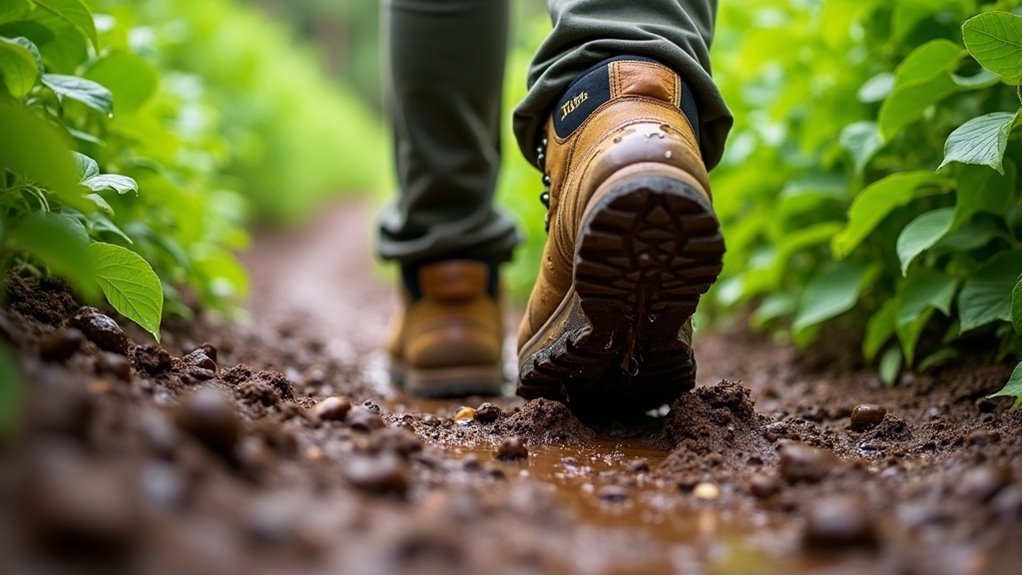
To navigate muddy hiking trails without causing damage, stick to the center of the trail and walk directly through mud to prevent widening. Wear waterproof boots with good tread and consider using gaiters for extra protection. Trekking poles can help maintain stability on slippery surfaces. Always check local trail conditions before heading out, and be mindful of lingering snow or ice. There are more tips and best practices to guarantee a sustainable hiking experience.
Key Takeaways
- Stick to the center of the trail and step directly through mud to prevent widening and protect surrounding vegetation.
- Wear waterproof footwear with lug soles to enhance grip and keep your feet dry while navigating slippery conditions.
- Utilize trekking poles for added stability, especially on uncertain footing, and to help reduce soil erosion.
- Research trail conditions beforehand and opt for well-constructed, lower elevation trails that are less prone to mud.
- Follow Leave No Trace principles to minimize environmental impact and promote sustainable hiking practices.
Understanding Mud Season
As spring approaches and temperatures rise, many hikers find themselves facing the challenges of mud season. This period, lasting about six weeks, brings melting snow and spring rains that saturate trails.
During mud season, hiking on muddy paths can lead to soil compaction and erosion, harming not just the trail but the entire ecosystem. To protect trail integrity, it’s essential to walk through mud instead of around it, which prevents widening the trails and damaging vegetation.
Always check local trail manager websites for current trail conditions and closures, ensuring you’re informed before you head out into the great outdoors.
Essential Gear for Muddy Trails
When you’re tackling muddy trails, having the right gear makes all the difference.
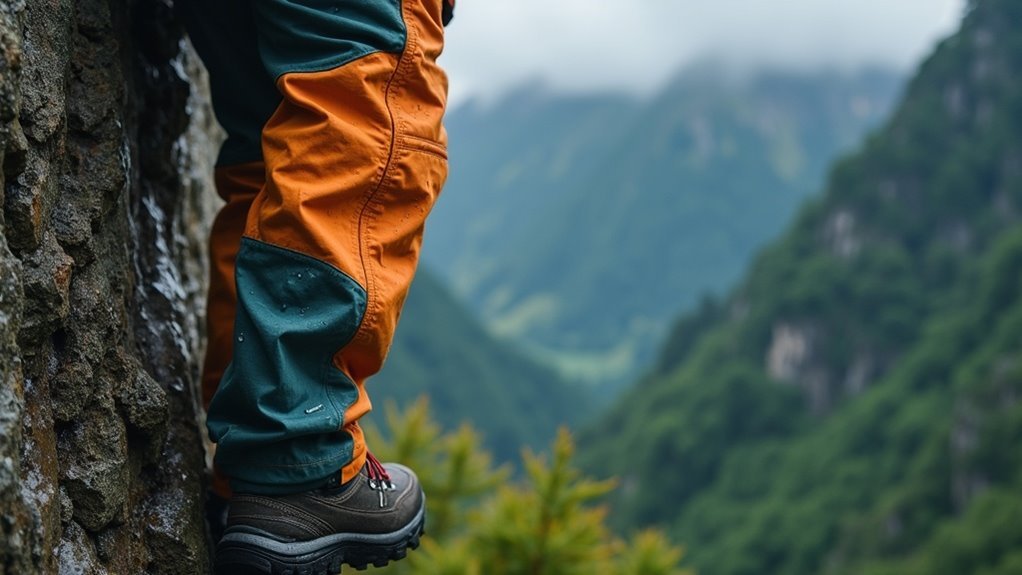
Waterproof footwear keeps your feet dry, while gaiters shield your legs from mud and debris.
Plus, trekking poles can boost your stability, helping you navigate slippery spots with confidence.
Waterproof Footwear Recommendations
Choosing the right waterproof footwear is essential for conquering muddy hiking trails, as it keeps your feet dry and comfortable while minimizing the risk of blisters and discomfort.
Opt for sturdy waterproof hiking boots with lug soles to enhance stability and traction in muddy conditions. Knee-high rubber boots may not provide the support you need for longer treks, so consider pairing your hiking boots with gaiters for added mud protection.
Alternatively, knee-high waterproof socks can offer insulation and flexibility.
With the right waterproof boots, you’ll enjoy your hike while keeping your feet happy and dry.
Trekking Poles Usage Tips
Maneuvering muddy trails can be tricky, but using trekking poles can make a significant difference in your stability and safety.
These poles provide extra support on slippery surfaces, helping you navigate uncertain footing. Consider using rubber tips to minimize soil erosion and protect delicate trail ecosystems.
Additionally, trekking poles can help you probe the depth of mud, guiding you toward safer paths while reducing trail damage.
However, be mindful of not overusing them in very soft mud, as this can contribute to wear.
Gaiters for Mud Protection
As you tackle muddy trails, gaiters can be your best ally in keeping your feet and lower legs dry and protected. These effective barriers extend from your waterproof boots to just below the knee, preventing mud and debris from seeping in.
Many gaiters are made from waterproof and breathable materials, allowing sweat to escape while blocking moisture. They also shield against scratches from vegetation, enhancing your comfort and safety.
When choosing gaiters, look for adjustable straps and ankle closures to guarantee a snug fit with your footwear, maximizing performance on those challenging muddy trails. Your feet will thank you!
Best Practices for Trail Navigation
When traversing muddy trails, it’s essential to stick to the center of the path to protect surrounding vegetation and prevent erosion.
If you encounter mud, step right through it rather than around, as this helps maintain the trail’s integrity.
Following these simple practices guarantees you enjoy your hike while minimizing your impact on the environment.
Stick to Center
Sticking to the center of the trail is essential for preserving both your hiking experience and the environment.
By walking in the center of the path during muddy conditions, you help prevent trail widening and protect surrounding vegetation. This minimizes erosion and keeps the trail intact.
When encountering mud patches, it’s best to walk directly through them rather than around, as this avoids creating new paths that cause further damage.
Remember, utilizing rocks or stable surfaces can also enhance your footing on slippery terrain.
Following these practices embodies the Leave No Trace principles, ensuring a sustainable hiking experience for everyone.
Step Through Mud
Maneuvering muddy trails can be a challenge, but following a few best practices makes it manageable and enjoyable.
When you encounter mud, walk directly through it instead of around, as this prevents trail widening and protects the surrounding vegetation. Stick to the center of the trail to minimize impact on edges.
Wear waterproof footwear and gaiters to keep your feet dry and comfortable. If the mud is deep, use trekking poles to maintain balance and probe the depth.
Stay informed about local trail conditions to make responsible choices and help preserve these beautiful hiking paths for everyone.
Safety Tips for Slippery Conditions
As you prepare for a hike on muddy trails, prioritizing safety is essential to enjoy your adventure without unnecessary risks.
Slow down and pay attention to your footing, as muddy conditions can lead to slips. Opt for water-proof boots with lug soles for better grip, but be cautious of mud buildup.
Slow your pace and watch your step on muddy trails; waterproof boots with lug soles enhance grip while preventing slips.
Consider using trekking poles for added stability; just make sure they’re fitted with rubber tips to reduce soil erosion.
Plan shorter hikes to minimize exposure to hazards, and always assess trail conditions, especially in shaded or high-altitude areas where ice may still linger.
Stay safe and enjoy your journey!
The Importance of Trail Preservation
While staying safe on muddy trails is a priority, it’s also essential to contemplate the impact of your hike on the environment.
Trail preservation is vital, especially during mud season when increased trail use can lead to severe erosion and damage. By walking through mud instead of around it, you help us maintain trail integrity and prevent further widening that disrupts local vegetation.
Remember, responsible hiking practices not only protect the landscape but also reduce costly repairs for land managers.
Engage in trail stewardship and follow guidelines from trail management organizations to support the long-term health of our beloved trails.
Recognizing Elevated Water Levels
When you’re out on the trail, recognizing elevated water levels is essential for your safety. Snowmelt and spring rains can create hazardous conditions, leading to washed-out paths and tricky crossings.
Always check for trail closures in your National Forest before heading out. Look for trails with bridges to guarantee safe passage.
If you encounter water, use trekking poles for stability and test the depth before crossing. Avoid going barefoot, as injuries can occur; instead, bring shoes that offer traction.
Stay vigilant about rising waters and flash floods, and always check local weather updates to keep yourself and others safe.
Managing Lingering Snow and Ice
How can you safely navigate trails still covered in lingering snow and ice? Start by walking in the center of the trail, as this minimizes damage to surrounding vegetation and reduces erosion.
If you encounter mud, avoid stepping on the edges where the ground is more vulnerable. Enhance your stability with trekking poles, especially on slippery sections.
Consider using traction devices like crampons or MICROspikes to reduce slipping risk on icy surfaces. Always check local avalanche forecasts and trail conditions before heading out, particularly in areas known for snowpack instability.
Safety and preservation go hand in hand on your hiking journey!
Embracing the Spring Hiking Experience
As spring unfolds, you can immerse yourself in the vibrant beauty of blooming wildflowers and the melodies of nesting birds, all while guiding through the unique challenges that come with the season.
Spring hiking often means traversing muddy trails, which can lead to erosion and harm to delicate vegetation. To protect the ecosystem, walk through muddy patches instead of around them.
Opt for well-constructed trails at lower elevations for drier conditions and minimize trail damage. Prepare for varying trail conditions by using appropriate footwear and gear, ensuring you can enjoy the beauty of spring while caring for the environment.