To snowshoe efficiently on winter hiking trails, start with the right gear: well-fitted snowshoes, insulated boots, and trekking poles. Maintain a proper stance with your feet wide apart to prevent tangles. Use short strides and adjust techniques based on terrain. When going uphill, drive your toes into the snow for traction, while for downhill, take controlled steps and center your weight. Stay safe by being aware of conditions and following trail etiquette. Discover more tips to enhance your snowshoeing adventure!
Key Takeaways
- Maintain a wide stance and use short, quick strides to enhance balance and stability on winter hiking trails.
- Utilize trekking poles at chest height for better leverage and support while navigating varying snow conditions.
- Employ the toe kick technique when ascending to create stable steps and ensure efficient movement uphill.
- Take small, controlled steps while descending, planting heels first to minimize fall risk and maintain stability.
- Stay informed about trail conditions and adjust techniques based on snow texture for optimal traction and performance.
Essential Gear for Snowshoeing
When you hit the trails for snowshoeing, having the right gear can make all the difference in your experience.
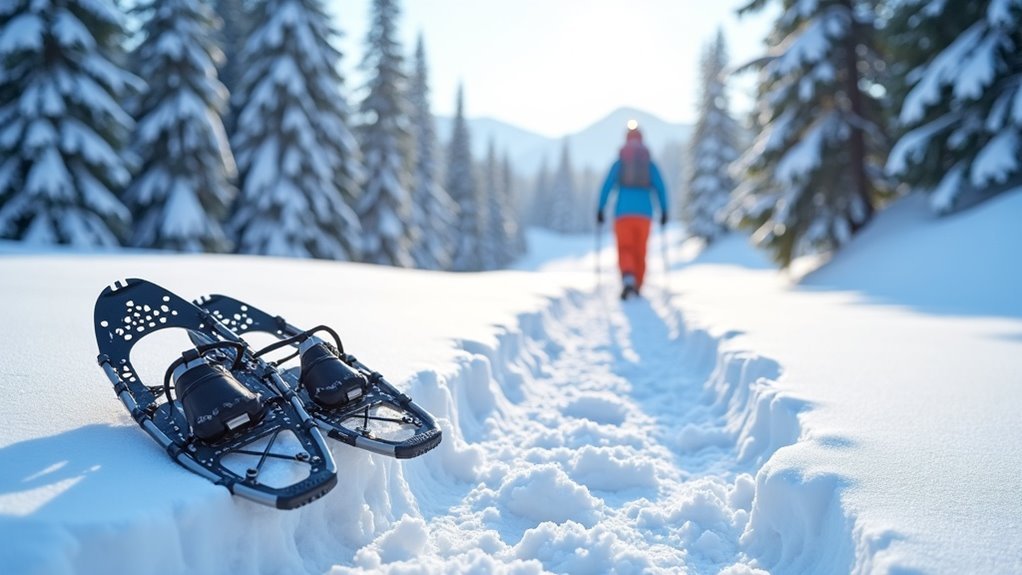
Essential gear for snowshoeing includes well-fitted snowshoes, like the TSL 305 for beginners or the TSL HIGHLANDER INSTINCT for more challenging terrains.
Don’t forget insulated, waterproof winter boots to keep your feet warm and dry.
Snowshoeing poles enhance balance and can improve your cardiovascular workout.
A durable backpack is crucial for carrying water, nutrition, and safety gear.
Finally, layering your clothing—moisture-wicking base layers, insulating mid-layers, and waterproof outer layers—ensures you stay comfortable and dry in the snow.
Basic Snowshoeing Techniques
To snowshoe effectively, mastering your stance and balance is essential, so keep your feet wide apart to avoid tangles.
You’ll also want to refine your uphill and downhill techniques to navigate different snow conditions smoothly.
If you do take a tumble, knowing how to get back up safely will keep your adventure going without a hitch.
Proper Stance and Balance
Maintaining proper stance and balance is essential for efficient snowshoeing, especially for beginners.
Start by adopting a wide stance to prevent your snowshoes from tangling. Keep your feet pointed straight ahead and take short, quick strides to enhance your stability.
If you’re using poles, form an “X” close to your chest for added leverage and support. In deeper snow, compact the area with your poles before standing up, ensuring a solid base for pushing yourself.
If you fall while descending, shift your position to face uphill, which will help you get back up more efficiently.
Happy snowshoeing!
Getting Up After Falls
Falling while snowshoeing can be a part of the adventure, but getting back up doesn’t have to be a struggle. To effectively rise, form an “X” with your poles close to your chest, providing essential leverage.
If you find yourself in deep snow, use your poles to compact the area before attempting to stand, creating a more stable base. When descending, face uphill to make recovery easier.
If you’re alone and struggle, press your hands into the snow for support. Remember to maintain a wide stance to prevent your snowshoes from tangling while getting up after falls.
Uphill and Downhill Techniques
Snowshoeing efficiently on varied terrain requires mastering uphill and downhill techniques that adapt to snow conditions.
When heading uphill, use the toe kick technique in soft snow to create steps or the foot stomp technique on hard-packed surfaces for better traction. Maintain a steady pace and adjust based on snow conditions to minimize fatigue.
For downhill, shift your weight back and stick your butt out to relieve knee pressure. Take small, controlled steps, planting your heels first for balance. Using poles at chest height can provide added support, helping you navigate steep slopes safely and confidently.
Tips for Snowshoeing Uphill
When you’re tackling uphill terrain, mastering techniques can make all the difference.
Use the toe kick technique in soft snow to create stable steps, and don’t forget to adjust your approach based on the snow conditions.
Maintaining a steady pace will help you conserve energy, ensuring you reach the top efficiently.
Toe Kick Technique
As you tackle those uphill trails, mastering the toe kick technique can make a world of difference in your snowshoeing experience.
In soft snow, drive your toes into the snow to create small steps, which helps pack the snow and maintain traction. Remember to lean your weight forward while kicking; this enhances penetration and reduces slipping.
Consistently repeat this motion to compact the snow beneath you, establishing a solid base for your ascent. Adjusting your technique based on conditions is vital, so stay mindful of the snow’s texture to guarantee a safer, more enjoyable journey uphill.
Maintain Steady Pace
Maintaining a steady pace while climbing can greatly enhance your snowshoeing experience. For your first time uphill, focus on rhythm; it’s key to conserving energy.
Use the toe kick technique in soft snow to create secure steps, while on hard-packed snow, employ the foot stomp technique for stability. Adapt your steps based on conditions—smaller steps in soft snow can prevent sinking.
If you’re using trekking poles, keep them at chest height for added support and balance. By keeping a steady pace and adjusting your technique, you’ll find the climb more manageable and enjoyable, allowing you to serve others with your enthusiasm!
Adjust for Snow Conditions
To effectively tackle uphill snowshoeing, it’s crucial to adjust your techniques based on the conditions you encounter.
In soft snow, use the toe kick technique by driving your toes into the snow to create secure steps. For hard-packed snow, employ the foot stomp technique, stamping down to compact the surface.
Maintain a steady pace and rhythm to conserve energy while optimizing traction. Keep your weight centered over your feet, and use poles at chest height for support.
Take smaller, controlled steps, especially in deeper snow, to guarantee stability and prevent slipping—adapting your snowshoeing technique to the terrain is key!
Tips for Snowshoeing Downhill
Descending on snowshoes can be challenging, but with the right techniques, you can navigate downhill safely and efficiently.
Stick your butt out to reduce knee pressure and center your weight over your feet. Take small, controlled steps, planting your heels first to absorb impact and maintain stability.
Use snowshoe poles at chest height for extra support and balance while going downhill. Keep a steady pace—rushing increases the risk of falls.
Adjust your technique based on snow conditions, employing a toe kick in soft snow and a foot stomp on hard-packed surfaces for maximum traction.
Enjoy your snowshoeing adventure!
Safety Considerations While Snowshoeing
While snowshoeing can be a thrilling way to explore winter landscapes, prioritizing safety is essential for an enjoyable experience.
Keep these safety considerations in mind:
- Stay updated on avalanche conditions and trail reports.
- Gear up with appropriate snowshoes and poles for better traction.
- Maintain a steady pace to prevent exhaustion and poor decisions.
- Carry essential emergency supplies, like extra layers and food.
Snowshoe Trail Etiquette
Snowshoe trail etiquette is essential for ensuring that everyone enjoys the beauty of winter landscapes without compromising the experience for others.
When snowshoeing on packed trails, avoid creating post holes, as they can make the trail unsafe for others. Stick to designated snowshoe trails to help maintain their quality, respecting cross-country ski tracks. If you find a packed trail, consider turning back rather than snowshoeing on it.
Use a wide stance to prevent your snowshoes from tangling, and always yield to hikers and skiers, who may need extra stability.
Favorite Snowshoeing Trails in the Rockies
The Rockies offer a stunning array of snowshoeing trails that cater to all skill levels, making it easy to find the perfect route for your winter adventure.
Discover the breathtaking snowshoeing trails in the Rockies, perfect for every skill level and winter adventure.
Here are some favorite trails:
- Chester Lake: Breathtaking views and well-maintained paths for all.
- Rawson Lake: Family-friendly, perfect for introducing kids to snowshoeing.
- Hogarth Lakes: Tranquil, less crowded trails enhance your winter hiking experience.
- eBook Resource: “Take A Hike With Your Children” offers tips for enriching family snowshoeing.
Each of these trails guarantees a rewarding experience, fostering a love for nature in everyone.
Embrace the snow and explore the Rockies!