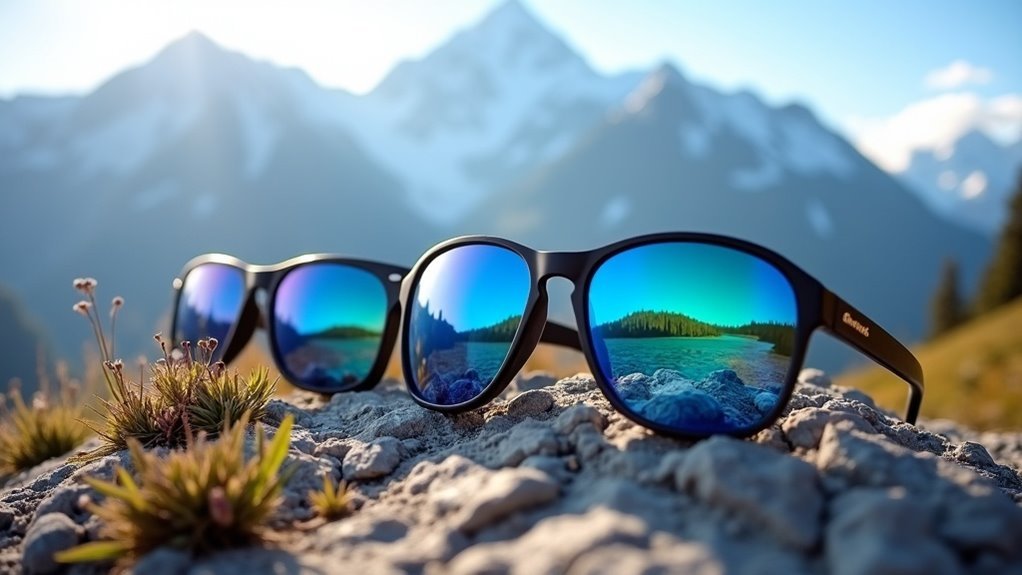
When selecting sunglasses for high altitude hiking, prioritize Category 3 or 4 lenses to guarantee maximum UV protection. Look for wraparound frames to block peripheral light and reduce glare, especially from snow. Lightweight materials under 30g will enhance comfort on long treks. Consider high-contrast polarized lenses for better visibility. Make sure they fit securely with adjustable features. By following these guidelines, you can enhance your outdoor experience and protect your eyes effectively. Keep exploring for more insights!
Key Takeaways
- Choose sunglasses with Category 4 lenses to block 92-97% of visible light and provide maximum UV protection at high altitudes.
- Opt for wraparound frames to minimize peripheral light exposure and enhance comfort during hikes.
- High-contrast polarized lenses are essential to reduce glare from snow and rocky surfaces, improving visibility.
- Ensure sunglasses are lightweight (under 30g) for comfort on long treks and extended wear.
- Look for adjustable features like nose pads and temple grips to ensure a secure and comfortable fit.
Importance of Sunglasses for High Altitude Hiking
When you hike at high altitudes, protecting your eyes becomes essential due to the increased UV radiation. For every 1,000 meters you ascend, UV exposure rises by 10%.
Snow reflects 80-90% of solar radiation, greatly elevating the risk of snow blindness. Quality sunglasses provide vital UV protection, shielding your eyes from harmful rays and preventing photokeratitis.
Opt for sunglasses with Category 4 lenses, which filter 92-97% of visible light, making them perfect for extreme conditions. Additionally, choose mountaineering glasses with wraparound frames to block peripheral light, enhancing both comfort and safety during your challenging hikes.
Key Features to Look for in Hiking Sunglasses
Choosing the right sunglasses for hiking is vital for protecting your eyes and enhancing your outdoor experience.
Look for Category 3 or 4 lenses, which provide ideal UV protection by filtering 92-97% of visible light. Wraparound frames are important, as they block peripheral light and reduce glare from reflective surfaces.
Opt for lightweight materials under 30g for comfort on long hikes. High-contrast polarized lenses effectively filter glare from snow and rock, improving clarity and reducing eye strain.
Finally, adjustable features like nose pads and temple grips guarantee a secure fit, preventing slippage and enhancing comfort during your adventures.
Categories of Sunglasses and Their Suitability
Understanding the different categories of sunglasses is vital for selecting the right pair for your hiking adventures.
For high-altitude hiking, focus on sunglasses available in Category 3 and Category 4. Category 3 (8%-17% VLT) is perfect for sunny days and mountain use, providing solid protection against UV rays.
However, for extreme brightness, especially at high altitudes, you’ll need Category 4 (3%-8% VLT) mountaineering sunglasses. These filter out intense light levels but are unsuitable for driving.
For the ultimate protection against extreme brightness at high altitudes, opt for Category 4 mountaineering sunglasses.
A mix of Category 3 and Category 4 lenses guarantees you have the right light transmission for varying hiking conditions and elevations.
Top Recommendations for High Altitude Sunglasses
When you’re hiking at high altitudes, choosing sunglasses with Category 4 lenses is essential for blocking intense UV rays.
You’ll want wraparound frames for thorough protection against light, wind, and cold, along with features that enhance fit and comfort.
Consider models that offer high-contrast polarized lenses to reduce glare from snow and ice, making your outdoor experience safer and more enjoyable.
Lens Category Importance
As you plan your high-altitude hiking adventure, selecting the right lens category for your sunglasses is essential for protecting your eyes from intense solar radiation. Category 4 lenses are significant, filtering 92-97% of visible light, while Category 3 lenses may not suffice above 2,000 meters due to increased UV light. Polarized lenses are also important to reduce glare from reflective surfaces like snow, enhancing visibility. Below is a summary of lens categories for high altitude:
| Lens Category | Light Transmission | Recommended Use |
|---|---|---|
| Category 4 | 3-8% | Extreme conditions |
| Category 3 | 8-18% | Sunny days below 2,000m |
| Polarized | Varies | Glare reduction |
Frame Features to Consider
Selecting the right frame features for your high-altitude sunglasses is essential for ideal performance and comfort during your hikes.
Focus on these key aspects:
- Wraparound frames for extensive UV protection against high-altitude exposure.
- Adjustable temples with non-slip rubber grips to guarantee a secure fit during vigorous activities.
- Lightweight materials that keep the sunglasses between 25-32g (0.9-1.1oz) for comfort on long treks.
- Removable side shields to enhance protection from wind and glare in snowy conditions.
These frame features will help you stay comfortable and focused on your adventure while providing excellent eye protection.
Additional Protection Features
To maximize eye protection during your hikes at high altitudes, consider additional features that enhance your sunglasses’ performance.
Look for Category 4 lenses that filter 92-97% of visible light, vital in UV-rich environments. Wraparound frames block peripheral light and harmful rays, while removable side shields provide extra protection against glare and wind, especially in bright, snowy conditions.
High-contrast polarized lenses cut reflections, improving visibility and reducing eye strain. Adjustable temples and goggle-inspired retainer straps guarantee a secure fit during physical activity, helping you protect your eyes effectively while enjoying the breathtaking views that high-altitude hiking offers.
Care and Maintenance of Your Sunglasses
To keep your sunglasses in prime condition for hiking, you need to adopt regular cleaning techniques, proper storage practices, and lens inspection tips.
Start by using a microfiber cloth to clean your lenses and store them in a protective case when not in use.
Regularly inspect for wear and tear to guarantee they perform at their best on your outdoor adventures.
Regular Cleaning Techniques
Caring for your sunglasses is essential for maintaining their performance and longevity, especially during outdoor activities like hiking.
To guarantee lens clarity and avoid scratches, follow these regular cleaning techniques:
- Use a microfiber cloth to gently wipe the lenses.
- Rinse under running water to remove loose debris.
- Apply a gentle lens cleaning solution or warm soapy water for stubborn smudges.
- Store your sunglasses in a protective case when not in use.
Proper Storage Practices
Proper storage practices are essential for preserving the integrity of your sunglasses, especially during hiking trips.
Always store your sunglasses in a protective case when not in use to prevent scratches and damage. Avoid leaving them in extreme temperatures, like a hot car, as heat can warp the frame and damage lens coatings.
Regularly clean your sunglasses with a microfiber cloth and lens cleaner to maintain peak visibility. Keep them away from sharp objects in your pack to prevent scratches or breakage.
If your sunglasses have removable features, store those components separately in the case for safekeeping and condition.
Lens Inspection Tips
How often do you take a moment to inspect your sunglasses for signs of wear?
Regular lens inspection is essential for high-altitude hiking. Follow these lens inspection tips to maintain peak performance:
- Check for scratches that could impair vision and increase eye strain.
- Clean lenses with a microfiber cloth and lens cleaner to guarantee clarity.
- Assess frame durability; look for loose hinges or cracks.
- Replace lenses if they’re overly scratched to maintain UV protection.
Additional Considerations for Optimal Eye Protection
While hiking, ensuring ideal eye protection goes beyond simply choosing stylish sunglasses; it involves selecting features that enhance your visual experience and safety.
| Feature | Importance |
|---|---|
| 100% UV Protection | Essential due to increased UV exposure at altitude |
| Wraparound Frames | Blocks light from the sides for complete coverage |
| Lightweight Materials | Reduces discomfort during long hikes |
| Polarized Lenses | Minimizes glare from reflective surfaces |
| High Contrast Lenses | Improves navigation on rocky or snowy terrain |