To maintain your hiking boots for longevity, start by ensuring a proper fit for comfort and stability. Clean them regularly, removing laces and insoles, and using a soft brush with lukewarm water. Reproof every three to four months to keep them waterproof and nourished. Avoid direct heat when drying; air dry in a well-ventilated space. Store them in a cool, dry place and check components like insoles and laces for wear. You’ll find more essential tips ahead.
Key Takeaways
- Ensure a proper fit by visiting physical stores for expert advice on width, arch support, and sock thickness.
- Regularly clean boots using a soft nylon brush and lukewarm water to remove dirt and debris.
- Reproof hiking boots every three to four months to maintain waterproofing and nourish materials.
- Air dry boots at room temperature, avoiding direct heat to prevent damage, and stuff them with newspaper to absorb moisture.
- Regularly inspect and replace worn components like insoles, soles, and laces to enhance comfort and support.
Get the Fit Right
Getting the fit right in your hiking boots is essential for a comfortable and safe hiking experience. A boot that’s too small can damage the waterproof membrane, while one that’s too large may crease, leading to cracks.
Visit a physical store for expert fitting advice and try on various models to find the best fit for your foot shape. Don’t forget to take into account the thickness of your hiking socks, as this impacts overall comfort.
Pay attention to width and arch support too, as these factors are vital for stability and can help prevent discomfort and injuries on your adventures.
Clean Them (Even Inside)
Regular cleaning of your hiking boots, including the insides, is essential for maintaining their performance and longevity.
Regularly cleaning your hiking boots, both inside and out, is crucial for ensuring their durability and optimal performance.
To care for your hiking boots effectively, follow these steps:
- Remove the laces and insoles before cleaning.
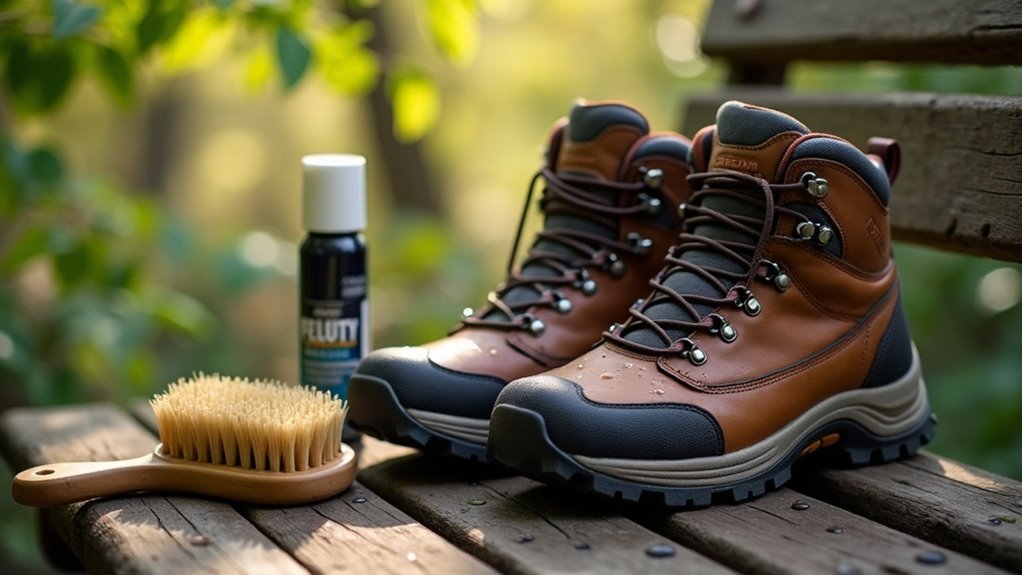
- Use a soft nylon brush and lukewarm water to clean the exterior.
- Check for and remove any debris or stones inside the boot.
- Stick to gentle cleaning solutions; avoid chemical detergents.
- For deeper cleaning, consider a mild detergent mixed with water.
Reproof Regularly
To keep your hiking boots in top shape, reproof them regularly using the right products for each material.
Aim to reproof every three to four months, especially if you hike frequently, and apply the treatment while the boots are still damp for ideal absorption.
This simple maintenance step not only maintains waterproofing but also nourishes the materials, extending the life of your boots.
Choose Appropriate Proofer
Choosing the right proofer for your hiking boots is essential for maintaining their performance and longevity.
Different materials demand specific treatments, so consider the following:
- Full-grain leather boots benefit from rub-in wax.
- Nubuck or fabric boots require a spray-on solution.
- Apply proofer while boots are damp for better absorption.
- Always follow the manufacturer’s instructions for application methods.
- Verify proofer compatibility with your boot material to avoid damage.
Frequency of Application
While you might be tempted to skip reproofing your hiking boots, doing so every three to four months is vital for keeping them in prime shape. Regular reproofing enhances waterproofing, ensuring your boots withstand the elements while maintaining breathability. Neglecting this significant step can lead to increased wear and tear, ultimately compromising their longevity. Remember to apply the treatment while your boots are still damp for ideal absorption.
| Material Type | Recommended Reproofing Agent | Application Frequency |
|---|---|---|
| Full-grain Leather | Rub-in Wax | Every 3-4 Months |
| Nubuck | Spray-on | Every 3-4 Months |
| Fabric | Spray-on | Every 3-4 Months |
| Synthetic | Spray-on | Every 3-4 Months |
Application Techniques Explained
Applying the right reproofing techniques is essential for maintaining the performance and longevity of your hiking boots.
To guarantee peak waterproof protection, follow these guidelines:
- Use rub-in wax for full-grain leather.
- Apply spray-on treatments for nubuck or synthetic fabrics.
- Reproof while boots are still damp for better absorption.
- Reproof every three to four months, especially if you hike frequently.
- Test new products on a small, inconspicuous area first.
Never Force Dry
When your hiking boots get wet, resist the temptation to dry them with direct heat sources like radiators.
Instead, let them air dry at room temperature in a well-ventilated space to preserve their materials.
This approach helps maintain the boots’ shape and prevents damage from excessive heat.
Avoid Direct Heat
To keep your hiking boots in top shape, it’s crucial to avoid direct heat sources like radiators and hairdryers, as these can cause the leather to crack and lose its durability.
Instead of forcing the drying process, follow these tips to maintain your boots:
- Allow boots to dry naturally at room temperature.
- Stuff your boots with newspaper to absorb moisture.
- Place them in a well-ventilated area to prevent moisture buildup.
- Avoid rapid moisture removal to protect bonding materials.
- Regularly check for signs of cracking and address them promptly.
Natural Air Drying
Natural air drying is the best method for maintaining the integrity of your hiking boots after they get wet. To effectively dry your boots, stuff them with crumpled newspaper and replace it as it absorbs moisture.
Always keep your boots out of direct sunlight and avoid storing them until they’re completely dry to prevent mold growth. A well-ventilated area is ideal, promoting airflow and ensuring the materials remain intact.
Store Them Properly
Properly storing your hiking boots is essential for their longevity and performance, especially since exposure to unsuitable conditions can lead to material degradation.
Proper storage of your hiking boots is crucial for maintaining their durability and ensuring optimal performance on the trails.
To guarantee your boots stay in peak condition, follow these guidelines:
- Store hiking boots in a cool, dry place (ideally 18-20°C).
- Make sure they’re completely dry before storage to prevent mold.
- Use ventilated storage instead of plastic bags to avoid moisture buildup.
- Tie laces loosely to maintain their shape and prevent deformation.
- Regularly check for wear or damage to keep them ready for your next adventure.
Check and Replace Components
While you might not think about it often, regularly checking and replacing components of your hiking boots is vital to maintaining their performance and comfort. Here’s a quick guide to help you:
| Component | When to Check | Replacement Tips |
|---|---|---|
| Insoles | Every few hikes | Replace if worn or compressed to enhance comfort. |
| Soles | Monthly | Monitor for wear patterns; consider resoling early. |
| Laces | Before each hike | Replace frayed laces to guarantee proper support. |
Keeping these components in top shape not only prolongs boot life but also improves your overall hiking experience.