To clean your hiking hydration reservoir thoroughly, start by disconnecting the drinking tube and rinsing the reservoir with warm soapy water. For deeper cleaning, reverse the reservoir and scrub its interior using a cleaning kit. Use cleaning tablets for stubborn stains and a specialized brush for the tube and bite valve. Make certain everything dries completely before storage, ideally with the bladder hung upside down. By following these steps, you’ll maintain hygiene and longevity in your gear. More insights await you.
Key Takeaways
- Rinse the reservoir with warm water and mild soap or lemon juice after each use to prevent mold and odors.
- Deep clean quarterly using a cleaning kit, warm water, and soap, ensuring thorough scrubbing.
- Use Bottle Bright Cleaning Tablets dissolved in warm water for tough stains and residue.
- Clean the drinking tube with a specialized brush and inspect bite valves regularly for mold.
- Ensure the reservoir is completely dry before storage, hanging it upside down or using a drying rack.
Preparing Your Hydration Reservoir for Cleaning
Before you plunge into cleaning your hydration reservoir, it’s essential to prepare it properly to guarantee thorough sanitation.
Start by disconnecting the drinking tube and removing the Widepac closure; this allows full access. Rinse the reservoir with warm water and a mild soap or lemon juice to eliminate any residual tastes or odors.
After rinsing, make sure the bladder dries completely—prop it open with kitchen tongs for enhanced drying efficiency. You can also use a paper towel to pat the interior surface dry, which helps prevent moisture buildup and maintains peak hygiene for your next adventure.
Essential Cleaning Methods for Hydration Bladders
To guarantee your hydration bladder remains clean and free from contaminants, employing effective cleaning methods is essential.
Regularly rinse and dry the reservoir after each use to prevent mold and odors. For a deep clean, use soap and water a few times a year.
To avoid mold and odors, rinse and dry your hydration reservoir after each use, and deep clean with soap and water periodically.
Consider cleaning tablets like Bottle Bright for stubborn stains—dissolve them in warm water and let the solution sit for 15 to 30 minutes before rinsing.
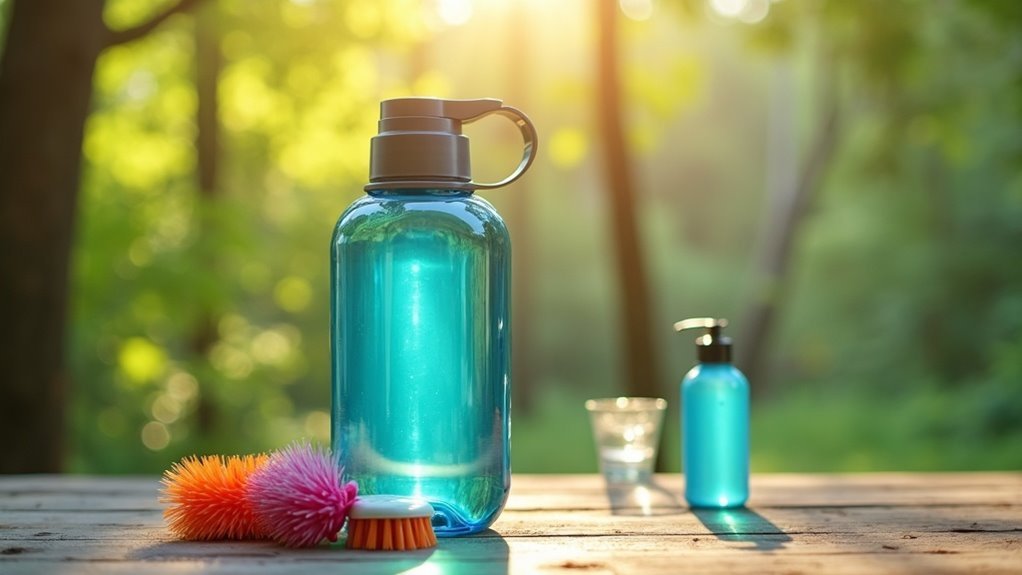
Don’t forget to clean the tube with a specialized brush, ensuring you scrub thoroughly.
If your hydration pack is dishwasher safe, you can also wash it there for added convenience.
Deep Cleaning Techniques for Stubborn Stains
While stubborn stains in hydration reservoirs can be frustrating, effective deep cleaning techniques can restore your gear to its ideal condition.
Start by reversing the reservoir for easier access. Use a cleaning kit with a mixture of soap and warm water to scrub the interior thoroughly, rinsing well.
For tougher stains, dissolve Bottle Bright Cleaning Tablets in warm water and let it sit for 15 to 30 minutes.
If you’ve used nutrition mixes, clean immediately with baking soda and water, soaking for 20 minutes.
Regularly using a specialized brush for the tube and bite valve helps prevent stubborn residue buildup in your hydration system.
Proper Drying and Storage Practices
Making certain your hydration reservoir is completely dry before storage is essential, as moisture can lead to mold and bacteria growth.
Hang the bladder upside down or use a drying rack with the opening facing down to facilitate thorough air drying.
Once dry, store the reservoir, drinking tube, and valve connected to maintain shape and prevent kinks.
Make sure all components are clean and dry prior to storage.
Avoid direct sunlight and extreme temperatures to protect the materials.
Periodically check your stored reservoir for cleanliness and dryness to maintain hygiene and readiness for future hydration needs.
Maintaining Freshness and Preventing Mold
After properly drying and storing your hydration reservoir, maintaining its freshness and preventing mold becomes a key focus. To achieve this, follow these essential steps:
Maintaining your hydration reservoir’s freshness and preventing mold is crucial after proper drying and storage.
- Rinse your hydration bladder with warm water and mild soap after each use, ensuring it air-dries completely with the mouth open.
- Use a mixture of lemon juice, warm water, and baking soda or vinegar to eliminate any funny tastes.
- Regularly inspect and clean bite valves and tubes for mold or residue.