To prevent altitude sickness during high elevation hiking, take gradual ascents, ideally limiting elevation gain to 1,000 feet daily above 8,200 feet. Hydrate well by drinking at least 0.5 liters of water per hour and choose electrolyte-rich fluids. Schedule rest days every third day and use the “climb high, sleep low” strategy. Be alert for symptoms like headache or dizziness, and don’t hesitate to descend if needed. There’s more important information waiting, so keep going!
Key Takeaways
- Ascend gradually, limiting elevation gain to 1,000 feet daily above 8,200 feet to allow for proper acclimatization.
- Schedule rest days every third day to enhance adjustment to high altitudes.
- Stay well-hydrated by drinking at least 0.5 liters of water per hour during vigorous hikes.
- Consider taking Acetazolamide (Diamox) 24 hours before ascent for prevention of altitude sickness.
- Monitor for early symptoms like headache and dizziness; be prepared to descend if symptoms worsen.
Understanding Altitude Sickness
Altitude sickness, or acute mountain sickness (AMS), often strikes when you ascend above 2,500 meters (8,300 feet) due to decreased oxygen levels and atmospheric pressure.
To prevent altitude sickness, you need to understand its causes and risk factors. At higher altitudes, your body may struggle to acclimatize, increasing the risk of developing mild altitude sickness.
Understanding the causes and risk factors of altitude sickness is crucial for safe high-altitude adventures.
Implementing acclimatization strategies like gradual ascents and scheduled rest days is vital. These methods help your body adapt, considerably reducing the likelihood of severe symptoms.
Recognizing early signs is essential for maintaining your health and ensuring a successful high elevation hiking experience.
Symptoms of Altitude Sickness
When you ascend to high altitudes, you might experience common symptoms like headaches, nausea, and fatigue within the first day.
Be alert for more severe signs, such as dizziness and shortness of breath, which could indicate a serious condition.
Early recognition of these symptoms is crucial to prevent complications, so always monitor how you’re feeling as you gain elevation.
Common Symptoms Experienced
Experiencing altitude sickness, or Acute Mountain Sickness (AMS), can be uncomfortable and challenging for many travelers.
At high altitudes, common symptoms often include headache, nausea, loss of appetite, fatigue, and general malaise, which typically appear within the first day. Approximately 75% of individuals may experience these symptoms when ascending above 8,000 feet.
Insomnia and sleep disturbances can also occur, making prevention vital. Understanding these common symptoms is important for anyone planning high elevation hikes, as addressing them early can enhance your experience and guarantee the safety of those around you.
Be mindful of your body and prepare accordingly.
Severe Symptoms Warning Signs
Severe symptoms of altitude sickness can escalate quickly, posing serious risks to your health.
Look out for confusion, clumsiness, or slurred speech, as these may indicate severe altitude sickness, potentially leading to High Altitude Cerebral Edema (HACE).
If you experience trouble breathing, chest tightness, or a persistent cough, you could be facing High Altitude Pulmonary Edema (HAPE).
Should symptoms like severe headache, nausea, or dizziness worsen, it’s essential to descend to a lower elevation immediately.
Rapid symptom deterioration requires medical emergency assistance to prevent life-threatening conditions associated with altitude sickness.
Your safety is paramount—act swiftly.
Acclimatization Strategies
Acclimatization is essential for preventing altitude sickness, as your body needs time to adapt to lower oxygen levels at high elevations.
Acclimatization is crucial for avoiding altitude sickness, allowing your body to adjust to reduced oxygen at high altitudes.
To guarantee a safe ascent, consider these strategies:
- Gradually ascend, limiting elevation gain to 1,000 feet daily above 8,200 feet.
- Schedule rest days every third day to enhance acclimatization.
- Utilize the “climb high, sleep low” strategy for ideal adjustment.
Monitor for symptoms like headache, nausea, or dizziness, and be ready to descend if they occur.
Staying well-hydrated and allowing your body the necessary time to adjust will greatly help prevent altitude sickness during your hike.
Importance of Hydration
Staying hydrated is essential for acclimatization at high altitudes, as it directly affects your body’s ability to adapt.
Dehydration can worsen symptoms like headaches and fatigue, making it vital to monitor your fluid intake and urine color.
Hydration’s Role in Acclimatization
Hydration plays an essential role in your body’s ability to adapt to high altitudes. To effectively acclimatize, focus on these key hydration strategies:
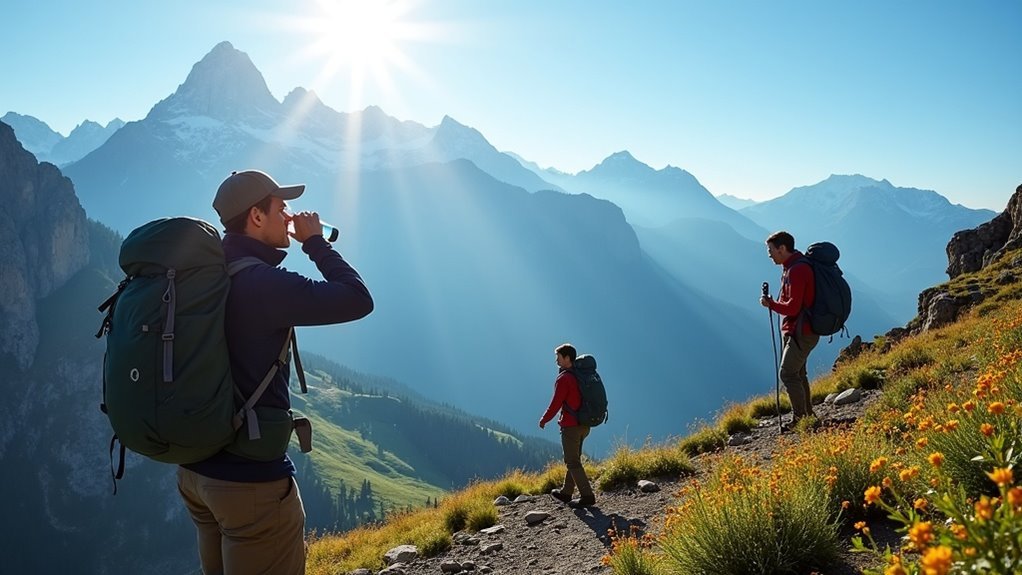
- Drink at least 0.5 liters of water per hour during vigorous hikes.
- Choose electrolyte-rich fluids to maintain balance and prevent dehydration.
- Recognize and respond to thirst signals promptly, even if you don’t feel thirsty.
Staying hydrated helps minimize symptoms of altitude sickness, such as headache and fatigue.
As you navigate high elevation trails, remember that balanced hydration is vital for your health and performance, ensuring a safer and more enjoyable hiking experience.
Symptoms of Dehydration Effects
When you’re hiking at high altitudes, failing to stay hydrated can lead to a range of dehydration symptoms that worsen your overall experience.
Headaches, fatigue, and dizziness are common symptoms, exacerbating the risk of altitude sickness. It’s vital to drink about 0.5 liters of water per hour, especially in dry mountain air.
Monitor your urine; dark yellow indicates dehydration, while light straw suggests you’re hydrated. Staying properly hydrated also aids acclimatization, helping you adjust to high elevation.
Nutrition Tips for High Altitudes
As you prepare for high-altitude adventures, focusing on your nutrition can substantially impact your well-being and performance. Here are some essential nutrition tips:
- Prioritize carbohydrates for energy and stamina.
- Stay hydrated; aim for at least 0.5 liters of water per hour.
- Avoid heavy, fatty foods that can slow digestion.
Monitoring your hydration levels is vital; dark urine indicates dehydration, while clear urine shows proper hydration.
Incorporate natural remedies like ginger tea or crystallized ginger chews to alleviate nausea.
Medications and Natural Remedies
Preventing altitude sickness often involves a combination of medications and natural remedies that can effectively support your body at high elevations. Acetazolamide (Diamox) should be taken at least 24 hours before your ascent, while Dexamethasone can alleviate severe symptoms if necessary. Incorporate natural remedies like ginger tea for nausea and traditional options like coca leaves. Additionally, maintain proper hydration and a carbohydrate-rich diet to enhance effectiveness.
| Medication | Use | Natural Remedy |
|---|---|---|
| Acetazolamide | Prevents altitude sickness | Ginger |
| Dexamethasone | Alleviates severe symptoms | Coca leaves |
| Hydration | Supports medication efficacy | Mate de coca |
| Carbohydrates | Improves energy levels | – |
When to Seek Medical Attention
How can you tell if your altitude sickness is becoming serious? It’s essential to recognize severe symptoms that require immediate medical attention:
- Shortness of breath or chest pain
- Confusion, clumsiness, or slurred speech
- Symptoms that persist or worsen after resting and descending at least 984 feet
If you experience any of these, don’t hesitate to descend and consult a healthcare provider.
Individuals with a history of altitude sickness should be especially vigilant about early signs.
Those with a history of altitude sickness must stay alert for early warning signs.
Always keep your trekking companions informed about any concerning symptoms for effective management of altitude sickness.
Early intervention can save lives.