To keep your food odor-free while hiking, choose non-perishable, low-odor items like beef jerky and dried fruits. Pack food in vacuum-sealed or odor-proof bags to minimize scent leakage. Separate food from gear and regularly inspect your storage methods. Always pack out waste and keep cooking equipment clean to avoid attracting wildlife. For extra protection in bear country, consider using bear canisters and hang food properly. There’s plenty more to explore on effective hiking practices.
Key Takeaways
- Choose non-perishable, low-odor foods like beef jerky and dried fruits to minimize smells while hiking.
- Use odor-proof bags like OPSAK or LOKSAK to contain food odors and prevent wildlife encounters.
- Vacuum-seal perishable items and double-bag any smelly foods for extra odor protection.
- Store all food in a dedicated compartment of your backpack, away from clothing and gear.
- Regularly check and clean food storage bags to ensure effective odor management after each trip.
Choosing the Right Food for Odor Control
When you’re hiking, choosing the right food is essential for keeping odors at bay. Opt for non-perishable, low-odor foods like beef jerky, salami, and dried fruits. These items provide calorie density without attracting wildlife.
Avoid strong-smelling items like certain cheeses or fish that can linger in your gear. Use vacuum-sealed bags or smell-proof containers to minimize odor escape and keep your food fresh.
Practice portion control by packing small servings, reducing exposure when you open bags. Additionally, consider placing odor absorbers, like baking soda, in your food storage areas to neutralize any potential smells.
Effective Packing Techniques
To keep food odors contained while hiking, effective packing techniques are crucial.
Start by using odor-proof bags, like OPSAK or LOKSAK, to prevent wildlife encounters. For perishables, opt for vacuum-sealed bags, confirming they’re sealed properly to minimize air exposure.
Double-bagging smelly items in additional plastic bags offers extra security against odor escape. Store all food in a dedicated compartment of your backpack, separate from clothing and gear, to maintain cleanliness and avoid cross-contamination.
Finally, regularly inspect and clean your food storage bags after each trip to guarantee ongoing effectiveness in keeping odors at bay.
Utilizing Odor-Proof Bags and Containers
To keep food odors contained while hiking, you should consider using odor-proof bags and containers.
Options like OPSAK and LOKSAK are great for preventing scent leakage, especially in wildlife areas.
Make sure to seal your bags properly, as effective sealing is key to minimizing odors during your trek.
Types of Odor-Proof Bags
While hiking, using the right odor-proof bags and containers can considerably reduce the risk of attracting wildlife. OPSAK and LOKSAK bags are excellent for odor containment, ensuring food smells stay sealed away.
If you’re in bear country, consider smell-proof bear bags for additional protection. Vacuum-sealed bags effectively minimize odors, but make sure the sealing area is dry for a proper seal.
Rigid food containers with rubber seals also help prevent odors but may add weight.
Finally, employing double-bagging methods with plastic trash bags enhances odor protection and guards against leaks from the inner bags, keeping your hike safe and enjoyable.
Proper Sealing Techniques
Using odor-proof bags and containers is just the beginning; proper sealing techniques play an important role in keeping food odors contained during your hike.
Consider using OPSAK or LOKSAK bags for ideal odor containment. Vacuum-sealing perishable items minimizes odor release, ensuring discreet packing.
For sturdier options, choose rigid food containers with rubber seals to maintain shape and prevent smells from escaping. When storing smellier foods, zip-lock freezer bags offer enhanced sealing capabilities.
Don’t forget to regularly inspect your bags and containers for signs of wear, replacing them as needed to maintain effective odor management and food storage during your adventures.
Strategies for Storing Scented Items
When you’re out on the trail, keeping scented items securely stored is essential to avoid attracting wildlife. Use odor-proof bags to store both food and non-food items like toothpaste and soap, ensuring they’re sealed tight.
Always keep these scented items at least 100 feet away from your sleeping area to minimize animal encounters.
Don’t forget to pack out all trash, including wrappers and hygiene products, in sealed bags to eliminate any scents that could draw animals.
Regularly inspect and replace your storage bags to maintain their effectiveness.
Implementing these strategies helps keep you and the wildlife safe while enjoying nature.
Managing Food Waste and Cleanliness
To keep your hiking area clean and odor-free, always pack out all food waste and trash.
Use sealed bags for hygiene products to prevent smells from escaping and attracting wildlife.
After cooking, clean your equipment thoroughly to eliminate any food particles that could lure animals.
Proper Waste Disposal
Keeping your hiking area clean is vital not only for your enjoyment but also for protecting wildlife. Always pack out all trash, including food scraps and packaging, to prevent attracting animals.
Use resealable or odor-proof bags to store food waste until you can properly dispose of it in designated receptacles. Opt for biodegradable trash bags that are securely sealed to prevent leakage and odors.
After cooking, clean your equipment thoroughly and store it away from your sleeping area to minimize food odors. Practicing proper waste disposal helps maintain the wilderness and guarantees a pleasant experience for you and future hikers.
Hygiene Practices During Hiking
Maintaining hygiene during your hike is essential not just for your well-being, but also for protecting the environment. Proper food waste management helps keep wildlife at bay and guarantees a clean hiking area.
| Practices | Tips |
|---|---|
| Dispose of Food Waste | Use sealed bags for packing out waste |
| Clean Cooking Equipment | Use biodegradable soap, hot water |
| Maintain Cooking Area | Store utensils and food away from sleeping space |
| Check Food Storage | Replace damaged bags/containers |
| Use Odor Absorbers | Consider baking soda in your pack |
Best Practices for Cooking and Eating
When you’re out hiking, cooking away from your sleeping area is essential for keeping food odors at bay. Aim to cook at least 100 feet from your tent.
Use your camping utensils and clean thoroughly with hot water and soap after each use to eliminate food particles. Store food preparation items in odor-proof bags to prevent scent leakage. Choose meals that require minimal cooking and reduce strong-smelling ingredients.
After eating, pack out all food scraps immediately to avoid attracting animals to your campsite. By following these practices, you’ll maintain a pleasant hiking experience for yourself and your fellow adventurers.
Tips for Hiking in Bear Country
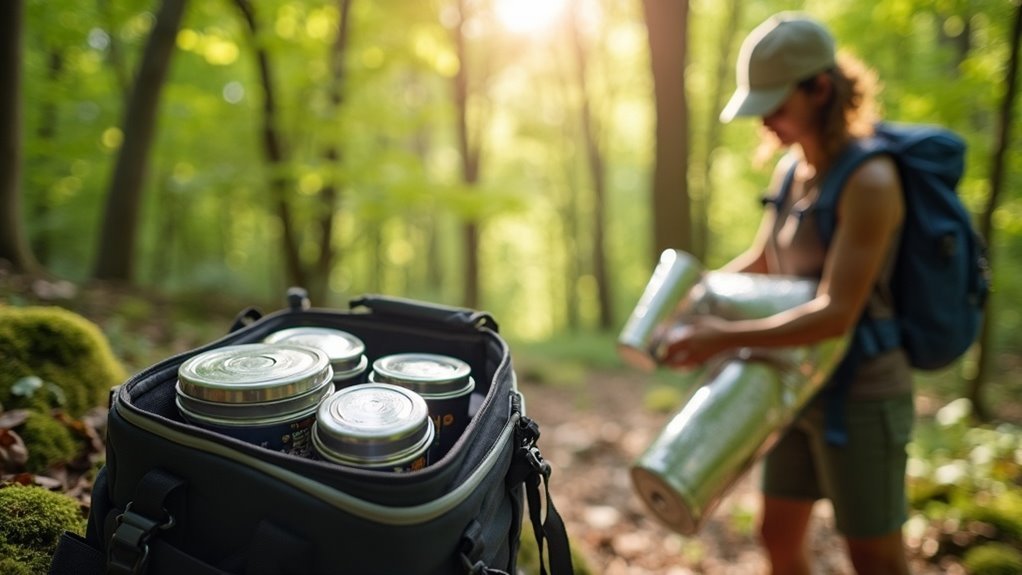
Hiking in bear country requires careful planning and awareness to guarantee your safety and the protection of wildlife. Always pack food in odour-proof bags like OPSAK or LOKSAK to minimize smell. Use bear canisters where required, as they’re bear-proof and meet regulations. Remember to hang food and trash at least 10 feet off the ground and 4 feet from tree trunks to deter bears. Store all scented items at least 100 feet away from your sleeping area to reduce the risk of encounters. Regularly check your food storage methods to assure effective odour containment.
| Action | Purpose | Impact |
|---|---|---|
| Use odour-proof bags | Minimize bear attraction | Safeguard wildlife |
| Hang food | Deter bear access | Protect supplies |
| Store trash away | Reduce risks | Enhance safety |
| Regularly check | Maintain effectiveness | assure security |