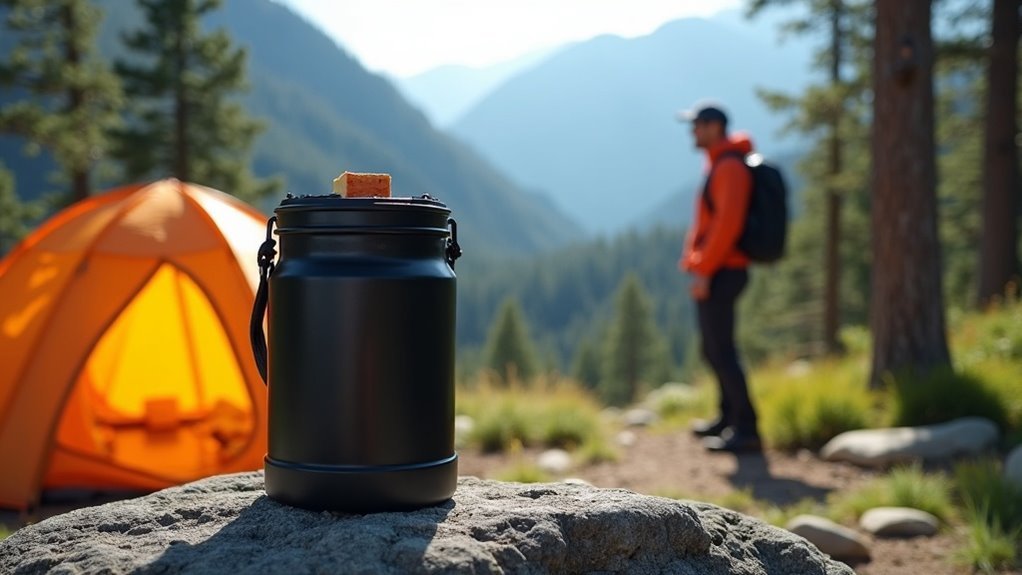
To use a bear canister correctly on hiking trips, choose a durable, lightweight model that fits your backpack. Pack it efficiently with measured meals and dense, high-calorie foods. Place the canister at least 200 feet from your campsite, downwind if possible. Maintain a clean cooking area and store utensils inside the canister after use. Secure the canister well and inspect it regularly. Follow your local regulations for bear safety and get ready to discover more tips!
Key Takeaways
- Select a durable, bear-resistant canister that fits your backpack and complies with local regulations for effective food storage.
- Pack efficiently by pre-measuring meals, using dense foods, and organizing items for easy access while minimizing bulk.
- Place the canister at least 200 feet from the campsite and downwind to reduce food odors and enhance safety.
- Maintain a clean cooking area at least 100 feet away from the campsite, disposing of scraps properly to deter bears.
- Regularly inspect the canister for wear, lock it securely when not in use, and practice opening mechanisms before your trip.
Selecting the Right Bear Canister
When you’re gearing up for a hiking trip, selecting the right bear canister is essential to keeping your food safe from wildlife.
Consider the weight of the canister; most weigh around three pounds, which can affect your overall pack weight. Choose a durable, bear-resistant canister that meets the capacity requirements for your group and trip duration.
Guarantee it fits well in your backpack, ideally centered for better balancing. Practicing the opening and closing mechanisms before your trip can save frustration later.
Packing Your Canister Efficiently
Efficiently packing your bear canister is essential for maximizing space and ensuring you have everything you need for your hiking trip.
Follow this packing system to fit everything comfortably:
- Pre-measure meals and repackage items to reduce bulk and enhance organization.
- Opt for dense, high-calorie food with minimal packaging to boost nutrition while conserving space.
- Press out any air from bags to create more room for your essentials.
Proper Placement of Bear Canisters
How can you guarantee your bear canister is placed safely and effectively during your hike? Start by ensuring proper placement at least 70 big steps—about 200 feet—away from your campsite.
Choose a flat, stable location to secure the canister, wedging it between rocks or tree trunks to prevent movement. Avoid positioning it near trails or popular spots to enhance safety.
Always store it downwind from the campsite to disperse food odors.
Utilize the “Bearmuda Triangle” concept by arranging the canister in a triangle with your cooking area and sleeping area to reduce the likelihood of bear encounters.
Cooking Practices to Deter Bears
When you’re cooking on a hiking trip, keep your cooking area at least 100 feet away from your campsite to minimize food odors that could attract bears.
It’s also essential to clean up thoroughly after meals, disposing of food scraps and trash properly to avoid enticing these curious creatures.
Cooking Distance Guidelines
To keep bears at bay while cooking on your hiking trips, it’s essential to follow specific distance guidelines.
Here are three key points to remember:
- Cook and clean dishes at least 100 feet away from your campsite to minimize food scent.
- Maintain a distance of at least 70 big steps from your sleeping area, ideally downwind.
- Place your cooking area, food storage (like your bear canister), and sleeping area at least 70 feet apart to reduce bear interactions.
Avoid leaving food scraps or trash near your cooking area, and always secure scented items in your bear canister for effective food storage.
Clean-Up Best Practices
While enjoying the great outdoors, it’s essential to follow clean-up best practices that help deter bears from approaching your campsite.
Always cook and clean at least 100 feet away to minimize scents. Pack out all food scraps and trash to prevent bears from associating human presence with easy meals.
When washing dishes, use biodegradable soap and guarantee all food residues are thoroughly cleaned to eliminate odors. After cooking activities, store utensils and dishes inside your bear canister to avoid lingering scents.
Maintaining and Securing Your Canister
To keep your bear canister effective, always lock it securely when not in use.
Position it carefully by wedging it between rocks or tree trunks to prevent it from moving.
Don’t forget to regularly inspect your canister for any wear and tear to guarantee it remains a reliable barrier against hungry bears.
Canister Locking Mechanism
A secure locking mechanism is essential for your bear canister, as even a partially closed lid can invite unwanted animal visitors.
To guarantee your canister is effective for food storage and bear safety, follow these steps:
- Familiarize yourself with the specific locking instructions for your canister model before your trip.
- Practice opening and locking the canister multiple times, ensuring efficiency when it matters.
- Check for any signs of wear or damage on the locking mechanism, and consider adding reflective tape for improved visibility in low light.
Stabilizing Canister Placement
Ensuring your bear canister is securely placed is essential for effective wildlife management during your hiking trip.
Choose a flat area for canister placement, keeping it at least 100 feet away from your campsite to minimize odors that attract wildlife.
Wedge your canister securely between rocks or tree trunks to prevent it from rolling away or being disturbed.
Always check that it’s closed and locked when not in use, as bears can learn to associate sounds with food.
For easy retrieval in low light, consider using reflective tape on your canister to enhance visibility.
Regular Inspection Checklist
After stabilizing your bear canister, it’s important to keep it in prime shape throughout your hiking trip.
Follow this regular inspection checklist for ideal safety:
- Check the locking mechanism: Verify it functions properly to prevent accidental openings by bears.
- Inspect for damage: Look for any signs of a damaged canister that could compromise its effectiveness.
- Clean thoroughly: Make sure there’s no food residue inside or out, as even faint odors can attract bears.
Also, verify the placement of your canister is securely wedged, at least 70 steps away from your campsite, and downwind to minimize bear encounters.
Understanding Local Regulations
While hiking in areas known for bear activity, it is crucial to understand and comply with local regulations regarding food storage. Many regions, especially the Green Mountain National Forest, enforce strict food storage regulations. Familiarize yourself with these guidelines to enhance safety and minimize bear interactions. The Green Mountain Club even offers a bear canister lending program, making it easier for you to secure your food. Here’s a quick overview of food storage methods:
| Method | Security Level |
|---|---|
| Locked Vehicle | Highest |
| Bear Box | High |
| Bear Canister | Moderate |
| Hanging Bear Bag | Low |
| Ground Storage | Lowest |
Tips for a Successful Hiking Experience
To have a successful hiking experience, you should focus on proper preparation and safety measures. Here are three tips to enhance your trip:
Proper preparation and safety are key for a successful hiking experience. Enhance your trip with these essential tips.
- Strategically pack your bear canister: Make sure it holds all food and scented items, like pasta and fixings, for safety.
- Store your bear canister: Keep it at least 100 feet from your campsite and ideally downwind, creating a “Bearmuda Triangle” to deter bears.
- Practice opening it: Familiarize yourself with your canister for quick access during camping, making certain of proper balance and comfort while managing your gear.
With these strategies, you’ll create a safer hiking environment for everyone.