To hang a bear bag while hiking in forested areas, choose a tree at least 200 feet from your campsite. Find a sturdy branch about 15 feet high and at least 10 feet from the trunk. Use a strong rope, like Spectra cord, to securely hang your food bag. Tie it using the PCT method for effective protection. Don’t forget to practice your technique beforehand. Continue on to discover more tips and tricks for safe hiking!
Key Takeaways
- Choose a sturdy tree at least 200 feet from your campsite with a branch about 15 feet high and 10 feet from the trunk.
- Use the PCT method: throw a rope over a branch and secure the bear bag at the midpoint with a toggle.
- Select durable, slippery rope like Spectra cord to prevent wildlife from chewing through it.
- Practice hanging techniques with shorter ropes before your trip to build confidence and ensure effectiveness.
- Engage with the hiking community for tips and modifications to improve your bear bag hanging skills.
Importance of Hanging a Bear Bag
When you’re out in the wilderness, hanging a bear bag is essential for preventing unwanted bear encounters. By securely storing food, trash, and scented items, you not only protect your supplies but also help maintain a clean campsite.
This minimizes wildlife attraction and preserves natural animal behaviors. To be effective, use the proper hang method, ensuring your bear bag is at least 15 feet off the ground and 10 feet away from the tree trunk.
In many areas, like the Pacific Crest, regulations require bear bags or canisters, making it vital for responsible camping and enhancing safety for everyone.
Selecting the Right Tree
When selecting the right tree for your bear bag, make sure it’s at least 200 feet away from your tent to reduce bear encounters.
Look for a sturdy branch about 15 feet high, ensuring it can support the weight of your food.
Additionally, keep the bag at least 10 feet from the trunk to prevent bears from climbing up and reaching it.
Ideal Tree Characteristics
Selecting the right tree for hanging your bear bag is essential for keeping your food safe from curious bears.
Look for a sturdy tree with a branch at least 15 feet off the ground, making it hard for bears to reach your food bag. Confirm the branch can support the weight of your bear bags without breaking.
Additionally, hang your bag at least 10 feet away from the trunk to prevent bears from climbing up.
Be flexible in your choices, as ideal trees may not always be available, and adapt your strategy based on the surrounding tree configurations.
Distance From Campsite
Choosing a tree for hanging your bear bag means ensuring it’s at least 200 feet away from your campsite to minimize bear encounters.
Look for a sturdy tree branch that’s about 15 feet off the ground; this height keeps your bear bag out of reach. Additionally, position the bag at least 10 feet away from the trunk, as bears are skilled climbers and can easily access food if it’s too close.
Techniques for Hanging a Bear Bag
To effectively protect your food from bears while hiking, mastering the right techniques for hanging a bear bag is essential.
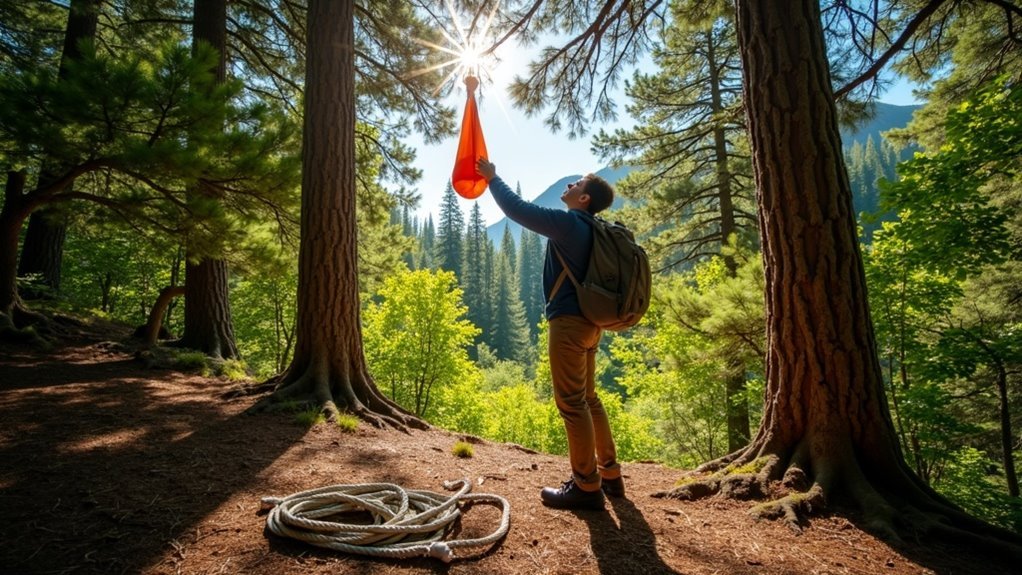
The PCT method is a favored approach; use a single rope over a sturdy tree limb at least 15 feet off the ground and 10 feet away from the trunk. Hang your food at a midpoint using a toggle to secure it.
Consider using Spectra cord, as its slippery texture prevents damage to tree bark and deters animals from chewing.
Practice bear bagging techniques in advance with shorter ropes to build confidence, ensuring your food remains safe while you enjoy the outdoors.
Recommended Gear and Tips
When hanging a bear bag, having the right gear is essential for safety and effectiveness.
You’ll want to choose a strong, slippery rope like Spectra cord, a waterproof stuff sack, and a durable mesh bag for your rock.
Essential Gear Checklist
An effective bear bag setup requires a few essential items that can greatly enhance your safety while hiking.
Here’s a checklist to get you started:
- Nylon Stuff Sack: Use a durable stuff sack or Ursack with a drawstring cord to store your food bags securely, minimizing wildlife attraction.
- Strong Rope: Select a sturdy, slippery line like Spectra cord for hanging your bear bag, ensuring it can withstand animal chewing.
- Weighted Stuff Sack: Consider filling a stuff sack with rocks or sand for stability when hanging your bear bag at least 15 feet high, following the PCT method.
Recommended Rope Types
Choosing the right rope for hanging your bear bag is essential, as it can make the difference between a secure setup and a potential disaster. Opt for Spectra cord for its impressive breaking strength and resistance to chewing. A slippery line protects tree bark, ensuring your trees stay healthy. Avoid small diameter strings, which can tangle easily. The Kelty Triptease guyline is thicker, making untangling simpler. Incorporate reflective elements for nighttime visibility, aiding in quick retrieval.
| Rope Type | Benefits |
|---|---|
| Spectra Cord | High strength, chew-resistant |
| Slippery Line | Protects tree bark |
| Kelty Triptease | Easy handling, tangle-free |
| Reflective Elements | Enhanced visibility at night |
Safe Hanging Techniques
To guarantee your bear bag is hung safely, it’s crucial to follow effective techniques and use the right gear. Here are some tips to help you hang a bear bag effectively:
- Use a slippery line, like 2mm spectra cord, to prevent tree damage and deter bears from chewing through.
- Opt for a waterproof stuff sack made of cuben fiber or silnylon to keep your food dry.
- Ensure your bag is at least 15 feet off the ground and 10 feet away from the tree trunk, using a toggle system with the PCT method for added security.
Practice these steps early in the day for best results!
Community Insights and Advice
How can you guarantee your bear bag hanging technique is both effective and safe? Engaging with the hiking community can provide valuable insights into various hanging methods, especially those recommended by experienced hikers on the PCT.
Many emphasize practicing techniques before your trip to build confidence. Don’t hesitate to share your personal experiences and modifications; this collective knowledge enhances everyone’s success.
Discussing best practices at the trailhead guarantees all campers are informed. Remember to adapt your methods to specific trail conditions and bear behavior, as flexibility is key to effective bear bag hanging in forested areas.
Preparation and Practice
Building on the insights shared by fellow hikers, preparation and practice are key to mastering the bear bag hanging technique. Here are three essential steps to enhance your skills:
- Practice Mechanics: Use a short rope over a shower curtain rod to simulate tree limbs, honing your technique.
- Search Early: Scout for suitable hanging spots early in the day, preventing last-minute stress.
- Weighted Stuff Sack: Fill a stuff sack with rocks or sand during practice to improve accuracy and consistency.
Familiarize yourself with various tree configurations and adjust your hanging techniques accordingly to guarantee a successful outing.