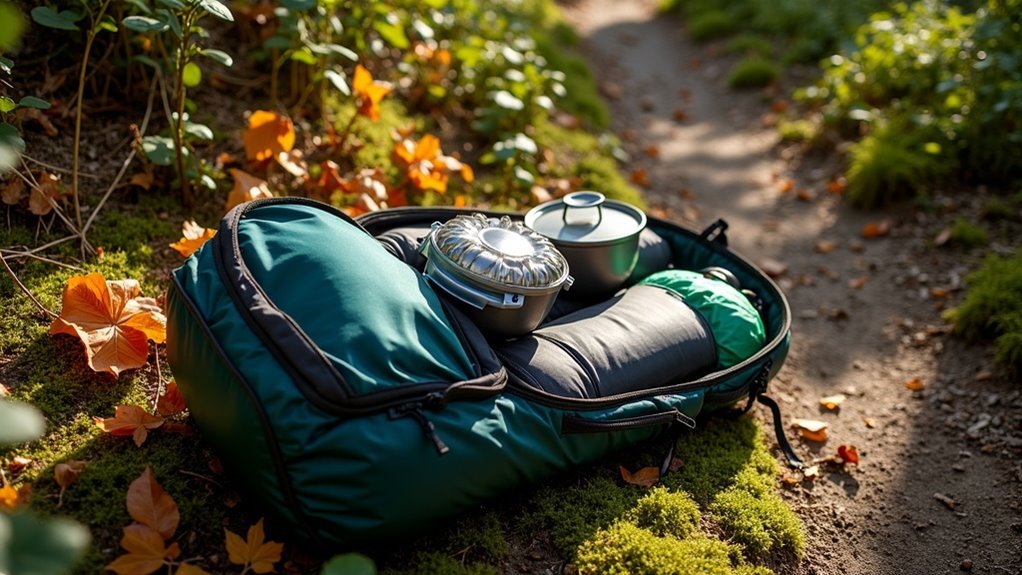
To reduce pack weight for long hiking days, focus on multi-use gear like a cooking pot that can double as a bowl or water container. Prioritize lightweight essentials, choosing a tent under 2 lbs and a sleep system below 1.5 lbs. Minimize non-essential items and pack only what you truly need. Optimize food choices by selecting lightweight, high-calorie options and consider water sources to limit carried water. There’s more to discover on making your hike simpler and lighter.
Key Takeaways
- Choose lightweight, multi-use gear to minimize weight and maximize functionality, such as a cooking pot that doubles as a bowl.
- Prioritize a lightweight sleep system and tent, aiming for a total weight under 3.5 lbs for both.
- Minimize clothing to one set of hiking clothes and a couple of socks to reduce bulk and weight.
- Plan meals with high-calorie, dehydrated options that require minimal cooking to save weight and simplify meal prep.
- Review water sources along your route to carry only necessary water and use lightweight filtration systems for easy refills.
Focus on Multi-Use Gear
When you aim to reduce pack weight for hiking, focusing on multi-use gear can make a significant difference.
Consider a cooking pot that doubles as a bowl and a water collection vessel, cutting down on separate items. Trekking poles can serve as tent poles for your ultralight shelter, providing essential weight savings.
Use a stuff sack filled with clothes as a pillow, maximizing space efficiency. Duct tape is a versatile addition, repairing gear and patching tents.
Finally, a smartphone can replace multiple devices, serving as a navigation tool, camera, journal, and e-reader, streamlining your gear and reducing load.
Prioritize Lightweight Essentials
To greatly lighten your pack, prioritize the “big three” essentials: your tent, sleep system, and backpack. Choosing ultralight options will markedly cut pack weight.
- Opt for a lightweight tent under 2 lbs.
- Select a sleep system, like a down bag, weighing under 1.5 lbs.
- Use multipurpose gear, such as a cooking pot that serves as a bowl.
- Implement a lightweight water filtration system for easy refills.
Strategically plan meals with high-calorie dehydrated meals, saving weight while still fueling your adventure.
Minimize Non-Essential Items
As you prepare for your hike, minimizing non-essential items can greatly lighten your load.
Lay out all your gear to identify any duplicates or unnecessary items, ensuring you pack only what you truly need.
Organize your gear to spot duplicates and unnecessary items, ensuring you pack only the essentials for your hike.
Focus on multi-functional gear, like a cooking pot that doubles as a bowl, to reduce the number of individual items you carry.
Stick to minimal clothing—one set of hiking clothes and a couple of socks—unless weather dictates otherwise.
Opt for travel-sized toiletries instead of bulky items, leaving extra weight at home.
This way, you’ll carry only the essentials for your adventure.
Optimize Food Choices
To reduce pack weight, focus on lightweight, high-calorie food options like nuts and energy bars.
Planning your meals in advance helps you carry only what you need, ensuring efficient energy without excess weight.
Consider no-cook meals and dehydrated options to simplify meal prep and eliminate unnecessary cooking gear.
Lightweight Food Options
When you’re hiking, choosing lightweight food options can greatly reduce your pack weight without sacrificing nutrition.
Focus on high-calorie foods that provide essential nutrients while keeping your load light. Consider these options:
- Dehydrated or freeze-dried meals (4-6 ounces per serving)
- Nut butters and dried fruits for quick energy
- Trail mixes for a no-cook option
- Repacking bulk foods in resealable bags to save weight
Aim for a food-to-weight ratio of about 400 kcal per 100 grams to maintain an efficient energy-to-weight balance.
With these choices, you’ll stay fueled and light on your feet!
Meal Preparation Strategies
By planning your meals strategically, you can greatly lighten your pack while ensuring you have the nutrition needed for your hike.
Focus on lightweight, high-calorie food options like nuts, dried fruits, and energy bars to maximize your energy intake. Consider dehydrating or freeze-drying meals to minimize cooking gear and pack efficiently.
Use resealable bags to reduce packaging waste and organize portions based on personal consumption rates. Aim for around 400 kcal per 100g for dry foods.
Opt for no-cook meals or instant options that only need water, further reducing pack weight and preparation time.
Happy hiking!
Evaluate Water Needs
As you plan your hike, evaluating your water needs is essential for reducing pack weight and ensuring you stay hydrated.
Start by reviewing water sources along your route to minimize what you carry. Remember, a typical hiker needs about half a liter per hour, so adjust your water intake based on your hike’s duration and intensity.
Consider these tips:
- Use a lightweight water filter or purification tablets to refill your water supply.
- Carry collapsible water bottles to save space.
- Monitor your hydration needs, especially in hot or high-altitude conditions.
- Always carry less to lighten your load.
Use a Scale for Accurate Weighing
Many hikers overlook the importance of accurately weighing their gear, but using a scale can greatly help in reducing pack weight. A digital kitchen scale is perfect for individual items, while a digital luggage scale helps weigh your fully loaded backpack. Track changes in weight over time to identify unnecessary weight and aim for ultralight gear. Here’s a simple table to guide your weighing process:
| Gear Item | Weight (lbs) |
|---|---|
| Sleeping Bag | 2.5 |
| Tent | 3.0 |
| Backpacking Packs | 4.0 |
| Stove | 1.5 |
| Food | 3.0 |
Keep your base weight under 10-15 pounds!
Organize Your Pack Efficiently
To maximize efficiency, use packing cubes or dry bags to categorize your gear and save space.
Clearly labeling your items helps you quickly locate essentials without digging through your pack.
Use Packing Cubes
Packing cubes are a game changer for organizing your hiking gear. They streamline your packing process by categorizing items, making it easier to find what you need without digging through your entire pack.
Here’s how they help:
- Compress clothing and gear for weight savings
- Enhance weight distribution for better comfort
- Protect your gear with waterproof options
- Facilitate regular reviewing to eliminate unnecessary items
Label Gear Clearly
Organizing your gear doesn’t stop with packing cubes; labeling each item clearly can greatly enhance your efficiency on the trail. Use waterproof tags or markers for quick identification during packing and unpacking. This saves time and reduces frustration when accessing your organized gear.
| Gear Type | Labeling Example |
|---|---|
| Clothing | “Base Layer” |
| Cooking Supplies | “Pot & Utensils” |
| First Aid | “First Aid Kit” |
| Electronics | “Chargers & Cords” |
Maintain a list of pack contents to track items and reduce unnecessary items, ensuring efficient packing for long hiking days.
Invest in Smart Materials
When it comes to reducing pack weight, investing in smart materials can make a significant difference. By choosing ultralight options, you’ll enhance your hiking experience without compromising on functionality.
Investing in ultralight materials transforms your hiking experience, balancing weight reduction with essential functionality.
Consider these materials:
- Dyneema or ripstop nylon for tents and backpacks
- Synthetic sleeping bags for insulation and moisture resistance
- Titanium cookware and carbon fiber trekking poles for lightweight gear
- Breathable, moisture-wicking clothing that dries quickly
Opting for multifunctional gear, like a sleeping pad that doubles as insulation, helps you minimize your load while maximizing comfort.
Embrace these innovations to keep your pack weight down and your spirits high on the trail!