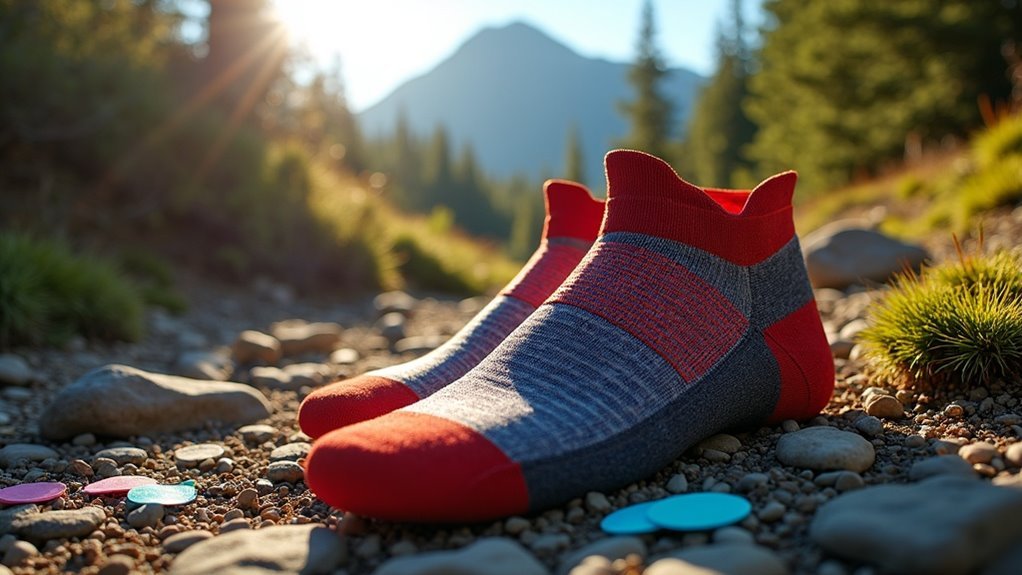
To choose hiking socks that prevent blisters, focus on moisture-wicking materials like merino wool or synthetic fibers. Make sure your socks fit snugly without being too tight, allowing for toe movement. Look for cushioning to absorb shocks and construction features like seamless toes to reduce irritation. Select the correct height to match your boots for added ankle support. With the right choices, your hikes will be more comfortable—explore further to uncover additional tips for ultimate protection.
Key Takeaways
- Choose moisture-wicking materials like merino wool or synthetic fibers to keep feet dry and reduce blister risk.
- Ensure a snug fit without being tight to prevent sock bunching and friction during hikes.
- Select appropriate sock thickness based on conditions; thicker socks provide more cushioning, while thinner socks offer warmth.
- Look for seamless toe construction to minimize irritation and friction in blister-prone areas.
- Match sock height to boot height for optimal ankle support and to prevent debris entry.
Understanding the Importance of Sock Material
When you’re out on the trails, the material of your hiking socks plays an essential role in your comfort and blister prevention.
Opt for moisture-wicking options like merino wool and synthetic fibers, which keep your feet dry and minimize friction. Avoid cotton, as it retains moisture and increases blister risk.
Choose moisture-wicking materials like merino wool and synthetics to keep feet dry and reduce blister risk. Avoid cotton!
Merino wool is especially effective, regulating temperature and wicking away sweat with its natural antimicrobial properties. Synthetic materials, such as COOLMAX, enhance moisture control and quick drying.
Combine these materials with proper sock construction, like seamless toes, to further reduce irritation and guarantee a blister-free hiking experience.
The Role of Fit and Cushioning
Although it might seem insignificant, the fit and cushioning of your hiking socks are essential in preventing blisters on your adventures.
Make sure your socks fit snugly but aren’t tight; this prevents bunching that causes friction. Opt for thicker socks with cushioning, as they absorb shock and protect your feet during long hikes.
Choose crew-length socks for added ankle protection, especially when hiking rugged trails. Always prioritize moisture-wicking materials like merino wool to keep your feet dry, as dampness contributes to blisters.
Experiment with sock thickness and styles to find the perfect combination for your foot shape and hiking conditions.
Features to Look for in Hiking Socks
Choosing the right features in hiking socks can greatly enhance your comfort and help prevent blisters on the trail. Focus on materials like breathable, moisture-wicking merino wool or polyester, avoiding cotton. Ascertain the height matches your boots for ankle support, and select thickness based on conditions—thinner for warmth and thicker for cushioning. Pay attention to seam construction, opting for flat seams to minimize friction in blister-prone areas. Finally, a snug fit is essential; it prevents slipping and bunching, reducing the chance of blisters.
| Feature | Details |
|---|---|
| Materials | Moisture-wicking, breathable |
| Height | Match with boot height |
| Thickness | Thin for warmth, thick for cushioning |
| Seam Construction | Flat seams to reduce friction |
Recommended Sock Types for Blister Prevention
To effectively prevent blisters on the trail, it’s essential to select the right sock types that cater to your hiking needs.
Opt for moisture-wicking materials like merino wool or synthetic fibers to keep your feet dry, reducing the risk of blisters.
Choose hiking socks with a snug fit that allows for toe movement, ensuring proper fit minimizes friction.
Consider double-layer socks to absorb friction between layers and prevent skin contact.
Look for seamless toe construction to reduce irritation and select the appropriate sock height for your boots, providing ankle protection and keeping debris out while you serve others on the trail.
Tips for Proper Sock Care and Maintenance
Proper care and maintenance of your hiking socks can greatly extend their lifespan and effectiveness in preventing blisters.
Regularly wash your socks in cold water with mild detergent to eliminate sweat and dirt, which can cause odors and wear. Avoid fabric softeners, as they hinder moisture-wicking properties essential for blister prevention.
Always inspect socks for thin spots or holes before long hikes to guarantee they provide adequate protection.
After washing, air dry your quality hiking socks to maintain elasticity.
Store them in a cool, dry place away from direct sunlight to prevent fading and deterioration, keeping those extra cushioning benefits intact.