To locate water sources on long desert hiking routes, check USGS topographic maps for natural springs and creeks. Look for vegetation like willows that indicate nearby water. Technology can help; use apps like Gaia GPS and pctwater.com for real-time updates. Always assess water quality at the source for clarity and odor, and treat it with filters or tablets if necessary. Understanding these strategies will enhance your water-finding skills on the trail.
Key Takeaways
- Consult USGS topographic maps to identify natural springs, creeks, and rivers along your route.
- Look for vegetation indicators like willows and sycamores, which often signal nearby water.
- Observe wildlife behavior; honeybees and songbirds typically gather near water sources.
- Utilize GPS apps like Gaia GPS and pctwater.com for real-time water availability updates.
- Analyze satellite imagery with Google Earth to locate potential water sources like springs and tinajas.
Understanding the Importance of Water for Desert Hiking
When you’re hiking in the desert, understanding the importance of water isn’t just a good idea—it’s vital for your survival.
You’ll need about one liter of water for every five miles, so plan accordingly. Dehydration can lead to fatigue and cognitive decline, making it imperative to find water sources along your route.
Stay hydrated: plan for one liter of water per five miles to prevent fatigue and cognitive decline.
Use tools like GPS and the Far Out app to track real-time water availability. Remember, conditions can change, so always monitor how much water you have and the distance to the next water source.
Consider carrying a water filter and rely on crowd-sourced water information to stay hydrated.
Identifying Reliable Water Sources
Identifying reliable water sources in the desert can make all the difference in your hiking experience. Use these tips to enhance your search:
- Consult USGS topographic maps to pinpoint potential water sources like natural springs, creeks, and rivers.
- Look for vegetation such as willows and sycamores, which indicate nearby water availability.
- Observe wildlife behavior; honeybees and songbirds often gather near water sources.
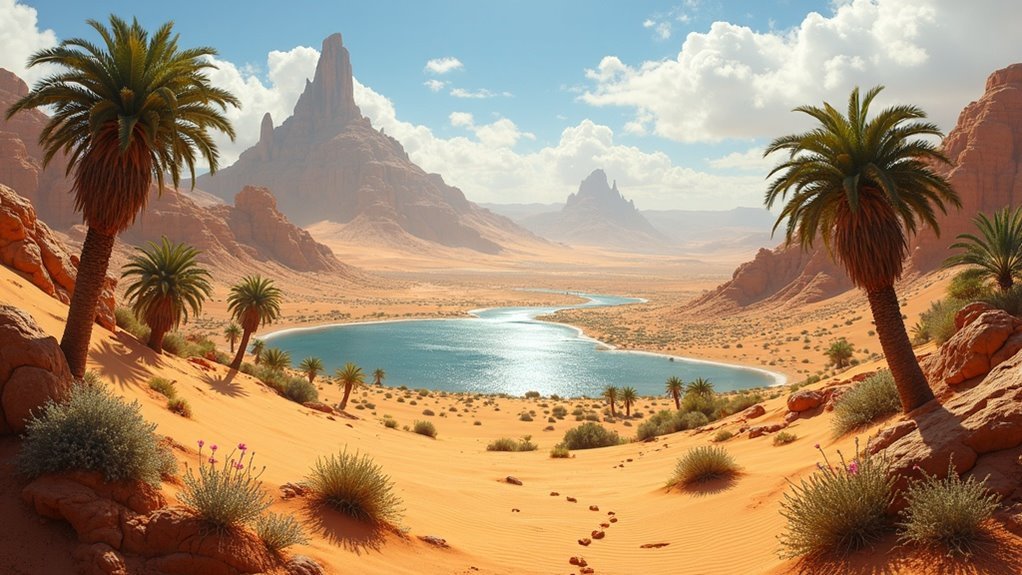
- Search for tinajas in shady areas, where water can collect after rain.
Utilize satellite imagery and a GPS app to monitor water availability and guarantee you’re prepared for your adventure.
Utilizing Technology for Water Location
With reliable water sources in mind, leveraging technology can greatly enhance your ability to locate water on desert hiking routes. Use apps like Gaia GPS to identify potential water sources and assess their reliability. Crowd-sourced platforms provide real-time updates on water availability, while Google Earth helps analyze satellite imagery for springs and creeks. Regularly check online water reports and maintain a Google Sheets document to track conditions. Here’s a quick reference:
| Tool | Purpose | Benefit |
|---|---|---|
| Gaia GPS | Identify water sources | Historical reliability data |
| pctwater.com | Real-time updates on water availability | User comments on flow |
| Google Earth | Analyze satellite imagery | Observe vegetation patterns |
| Bikepacking Roots | Visual rainfall data | Better planning for dry camps |
Assessing Water Quality on the Trail
As you hike through the desert, evaluating water quality becomes essential for your safety and hydration.
Here’s how to assess potential water sources:
- Collect water close to the source to minimize contamination risks from upstream factors like livestock.
- Check for clarity; clear water is preferable, while murky water may indicate contamination.
- Avoid areas with chemical films or dead animals, as these can introduce harmful pathogens.
- Smell the water; unpleasant odors often suggest contamination and unsafe drinking conditions.
Always prioritize using filters or chlorine dioxide treatment on questionable sources before carrying water for hydration.
Effective Water Treatment Methods
When you’re hiking in the desert, effective water treatment methods are essential for guaranteeing safe hydration.
Always carry reliable water bottles and make certain to use a Sawyer Squeeze for likely water sources. This lightweight filter efficiently handles various types of water, providing safe hydration.
For heavily contaminated sources, consider additional treatment options like chlorine dioxide tablets after filtering. Pre-filtering through a bandana improves clarity, protecting your filter from silt.
Always have backup methods, especially in cold temperatures, where chemical treatments like Aquamira can be lifesavers.
Stay prepared, and you’ll guarantee your hydration needs are met safely.