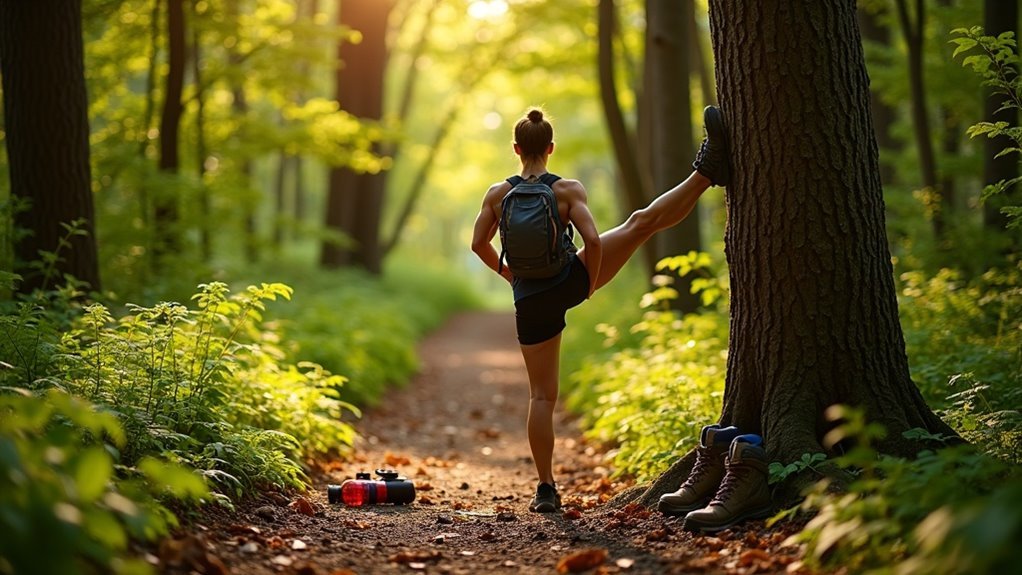
To prevent calf cramps while hiking, you should include both dynamic and static stretches in your routine. Try standing calf stretches and toe taps before hitting the trail to warm up, and follow up with static stretches, like the seated towel stretch, after hiking. Staying hydrated and maintaining a balanced diet also plays a key role in muscle health. Keep an eye on any signs of tightness, and you’ll be ready for your next adventure. There’s more to discover!
Key Takeaways
- Dynamic stretches like calf raises and toe taps warm up calf muscles, increasing blood flow and reducing the risk of cramps during hikes.
- Static stretches such as the standing calf stretch and seated towel stretch relieve muscle tension post-hike, promoting relaxation and flexibility.
- Gradual conditioning through regular hikes helps calves adapt to increased intensity, reducing the likelihood of cramps during physical exertion.
- Staying hydrated and maintaining electrolyte balance with potassium, calcium, and magnesium-rich foods supports muscle function and prevents cramps.
- Incorporating a consistent stretching routine before and after hikes enhances muscle elasticity, contributing to overall calf health and cramp prevention.
Importance of Stretching for Calf Muscles
When you’re gearing up for a hike, stretching your calf muscles isn’t just a good idea—it’s essential. Regular calf stretching improves flexibility and range of motion, helping you prevent cramps during your adventure.
By engaging in stretches before and after your hike, you enhance muscle contraction and relaxation, reducing the risk of cramps from exertion. Techniques like the wall stretch and towel stretch not only alleviate muscle tension but also promote blood flow.
If you’re prone to tightness, incorporating these stretches into your routine can considerably decrease cramps, allowing you to serve others better by staying energized and ready for the journey ahead.
Types of Effective Calf Stretches
To keep your calves strong and flexible, incorporating effective stretches is essential.
Try the standing calf stretch, seated towel stretch, and wall push-up stretch to target different areas of your calves.
These simple exercises can help prevent cramps and enhance your hiking experience.
Standing Calf Stretch
While hiking can be an exhilarating experience, it can also lead to painful calf cramps if you don’t take the time to stretch properly. The standing calf stretch effectively targets your calf muscles, improving flexibility and helping prevent cramps. Stand facing a wall, place one foot behind the other, and press the back heel down while bending the front knee. Hold for 15-20 seconds, repeating 2-3 times on each side.
| Benefits | How to Perform |
|---|---|
| Reduces Tightness | Stand facing a wall |
| Enhances Flexibility | Press back heel down |
| Prevents Cramps | Hold and repeat |
Make stretching a priority!
Seated Towel Stretch
Incorporating the seated towel stretch into your routine can greatly enhance your hiking experience by effectively targeting your calf muscles.
To perform this stretch, sit with your legs extended and loop a towel around the ball of one foot. Gently pull the towel toward your body while keeping your knee straight for a deeper stretch. Hold for 30 seconds and repeat 2-3 times per leg.
This stretch not only improves flexibility but also promotes blood flow, helping to prevent cramps during hiking. Regularly practicing the seated towel stretch prepares your calves for challenging terrains, ensuring you stay comfortable on the trails.
Wall Push-Up Stretch
One effective way to enhance your calf flexibility and prevent cramps during hikes is through the Wall Push-Up Stretch.
This stretch targets your calf muscles effectively, ensuring you’re better prepared for all terrains. Here’s how to do it:
- Stand an arm’s length away from a wall.
- Place your hands on the wall for support.
- Press your back heel down while bending your front knee towards the wall.
- Hold for 15-20 seconds.
- Repeat 3-5 times on each side.
Incorporating this stretch into your routine not only helps alleviate tightness but also boosts your overall leg strength.
Dynamic vs. Static Stretches
Understanding the difference between dynamic and static stretches is key to preventing calf cramps on your hikes.
Dynamic stretches, like leg swings and walking lunges, get your blood flowing and muscles ready for action, while static stretches, such as wall calf stretches, help relieve tension after your trek.
Dynamic Stretching Benefits
While both dynamic and static stretching have their places in a fitness routine, dynamic stretching stands out as a powerful tool for hikers. It prepares your muscles for the demands of the trail, improving flexibility and reducing calf cramps.
Here’s why you should incorporate dynamic stretching:
- Increases blood flow to muscles
- Enhances muscle performance and coordination
- Activates calf muscles, reducing cramp risk
- Prepares your body for uneven terrain
- Boosts power output before strenuous activities
Engaging in a dynamic stretching routine can make a significant difference, ensuring you’re ready to tackle any hiking challenge with confidence!
Static Stretching Techniques
To effectively prevent calf cramps during hiking, incorporating static stretching techniques into your routine is essential.
Unlike dynamic stretches, which warm up your muscles, static stretching involves holding a stretch for 15-30 seconds after your hike. This practice enhances muscle flexibility and reduces tension, considerably lowering your chances of cramps.
Common static stretches like the wall calf stretch and towel stretch target both the gastrocnemius and soleus muscles, promoting elasticity.
Pre-Hike Stretching Routine
Before you lace up your hiking boots, make sure to dedicate some time to a pre-hike stretching routine that can set you up for a successful adventure.
Prior to hitting the trails, take a moment to warm up with a pre-hike stretching routine for a rewarding experience.
This will help reduce calf cramps and muscle fatigue. Here’s a quick routine to follow:
- Wall calf stretch: press your heel down while leaning against a wall.
- Calf raises: lift your heels off the ground, engaging your calves.
- Toe taps: alternate tapping your toes while standing.
- Full body stretches: reach for the sky and bend to touch your toes.
- Dorsiflexion stretches: flex your foot upwards to boost control.
Enjoy your hike!
Post-Hike Recovery Stretches
After an exhilarating hike, your muscles deserve some attention to aid recovery and prevent future discomfort. Engaging in post-hike stretching can greatly benefit your calf muscles. Here’s a quick guide:
| Stretch Type | Description |
|---|---|
| Calf Muscle Stretch | Use a wall for support and stretch the calf. |
| Towel Stretch | Loop a towel around your foot, pull gently. |
| Heel Cord Stretch | Press hips toward a wall with a bent knee. |
| Calf Raises | Strengthen muscles and improve endurance. |
| Consistency | Regular stretching enhances flexibility and recovery. |
Incorporate these stretches to boost performance and reduce cramps.
Hydration and Nutrition for Muscle Health
While you might focus on your gear and route planning for your hike, don’t overlook the importance of hydration and nutrition for muscle health. Staying hydrated is key to preventing calf cramps, as dehydration decreases blood volume and oxygen delivery to your muscles.
To support your muscle health, consider these tips:
- Drink plenty of water throughout your hike.
- Consume potassium, calcium, and magnesium-rich foods like bananas and leafy greens.
- Replenish lost electrolytes with sports drinks during long hikes.
- Aim for about 400 mg of calcium and 800 mg of magnesium daily.
- Maintain a balanced diet to support overall muscle function.
Signs of Tightness and When to Stretch
Recognizing the signs of tightness in your calf muscles is essential for preventing discomfort and cramps during your hikes. Look out for stiffness or difficulty extending your leg, especially after inactivity or intense exertion. Stretching your calves before hitting the trail can enhance flexibility and reduce cramping risks. Incorporate calf stretches into your warm-up routine, holding each for at least 10 seconds. Regular stretching not only alleviates tightness but also boosts overall muscle function and endurance.
| Signs of Tightness | When to Stretch |
|---|---|
| Discomfort | Before hiking |
| Stiffness | After prolonged inactivity |
| Difficulty extending leg | Post intense exertion |
Additional Tips for Preventing Calf Cramps
To effectively prevent calf cramps during your hikes, you can implement several practical strategies.
- Stay hydrated before, during, and after your hike.
- Incorporate foods rich in potassium, calcium, and magnesium for essential electrolytes.
- Perform calf stretching exercises for at least 5 minutes before and after hiking.
- Gradually increase the intensity and duration of your hikes to condition your muscles.
- Use a hydration bladder or powdered sports drinks to keep electrolytes easily accessible.